Using the CGP KS2 Science Study book and workbook, we worked our way through the topic of plants. This covers:
- Parts of a flower
- Plant growth
- Water transport in plants
- Reproductive organs inside a flower
- Pollination and fertilisation
- Seeds
This was more of a revision session as the girls had covered this a while back at school. After covering the detail, we then set about doing some activities to cement what they’d learned.
Activity 1 – proving water travels up a plant
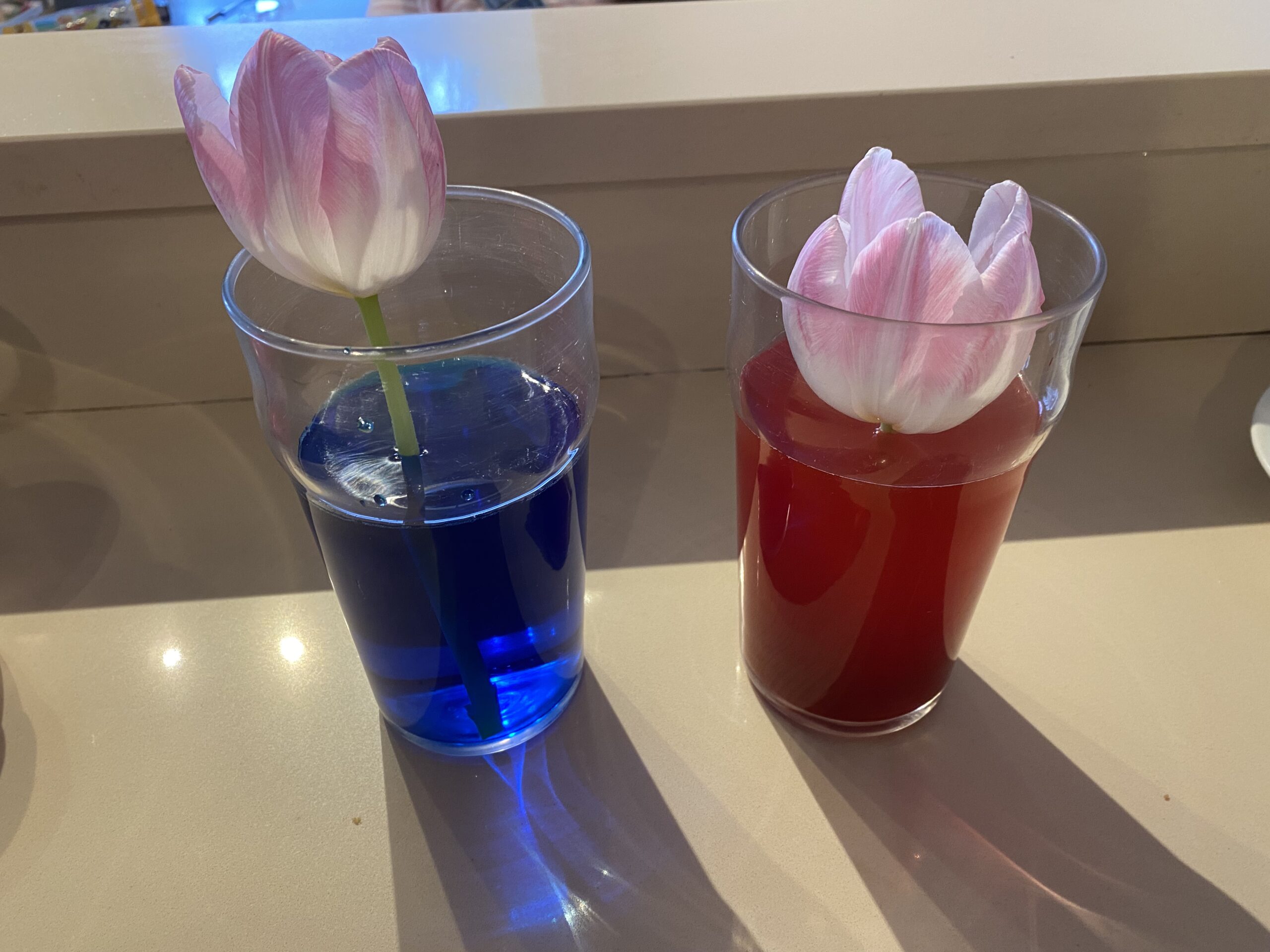
Here we added food colouring to two glasses of water and placed a flower in each one. We used a tulip as this is what we bought for activity 2 but I believe carnations are much better for this.
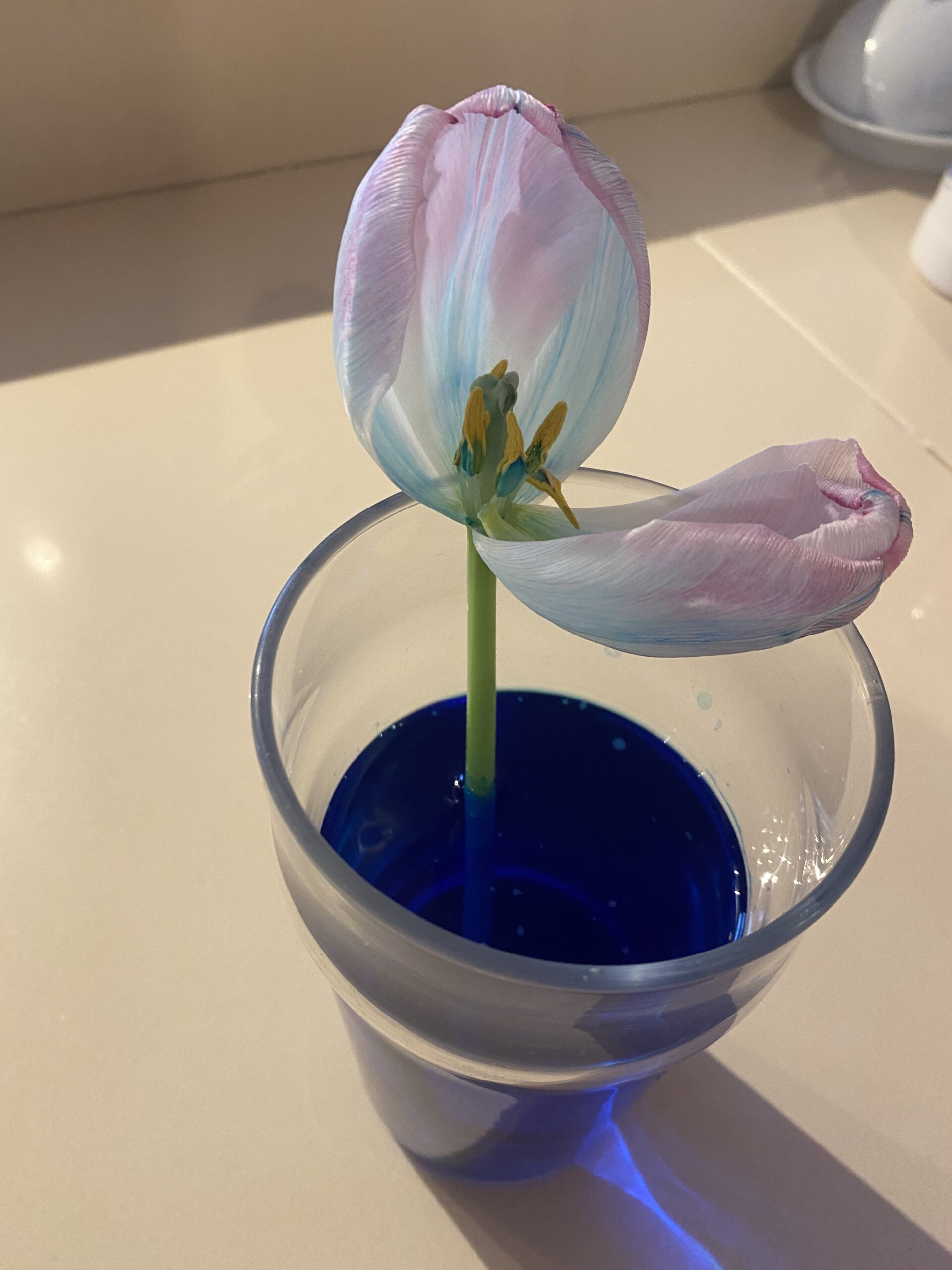
We left them for a couple of days to see what happened. The flower in the red water didn’t really do much other than just disintegrate into a soggy mess; that got put in the bin on day 2! The flower in the blue water, however, gradually turned a blue colour which proved that the water travelled up the stem and into the flower.
Activity 2 – dissecting a flower
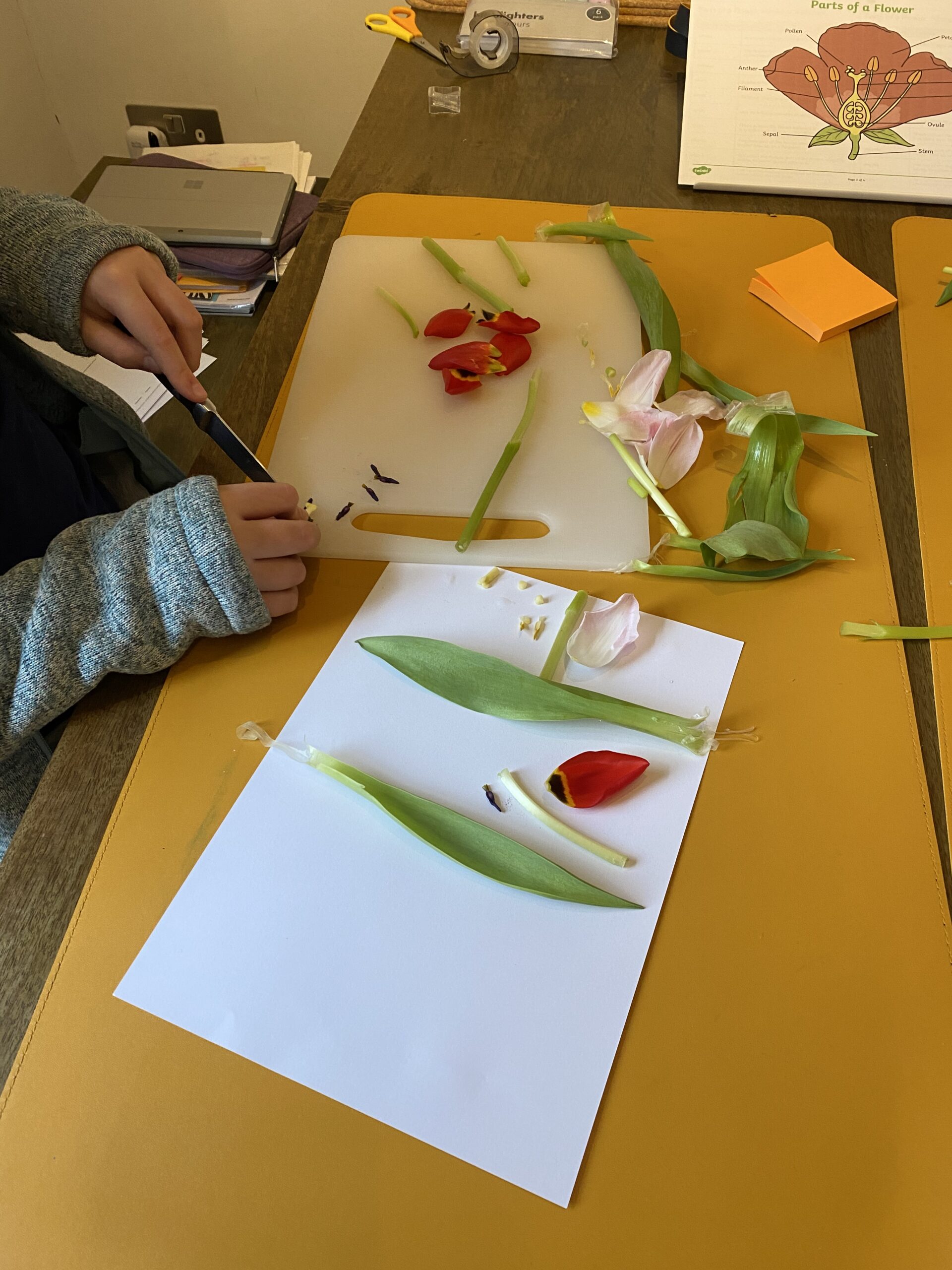
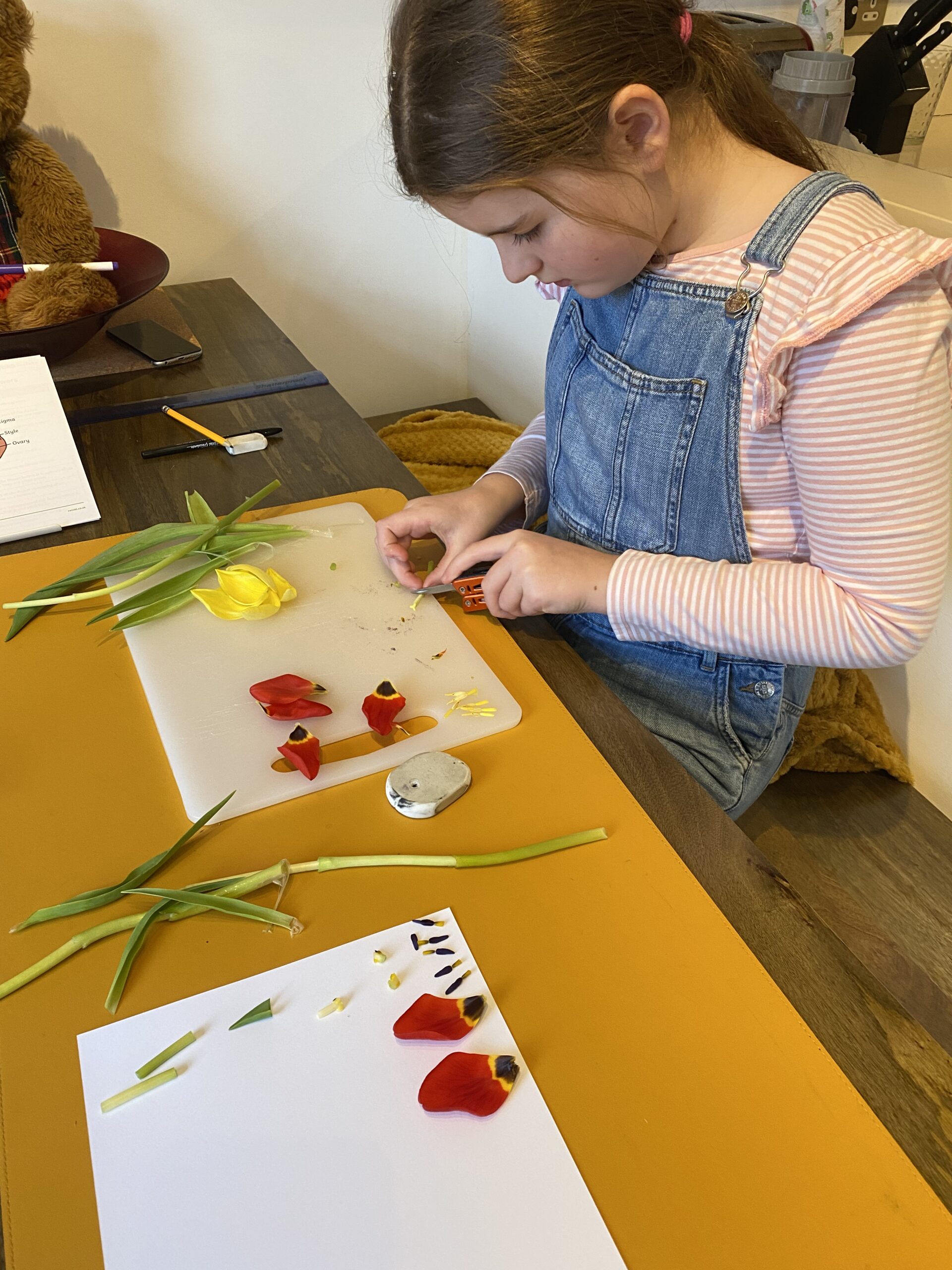
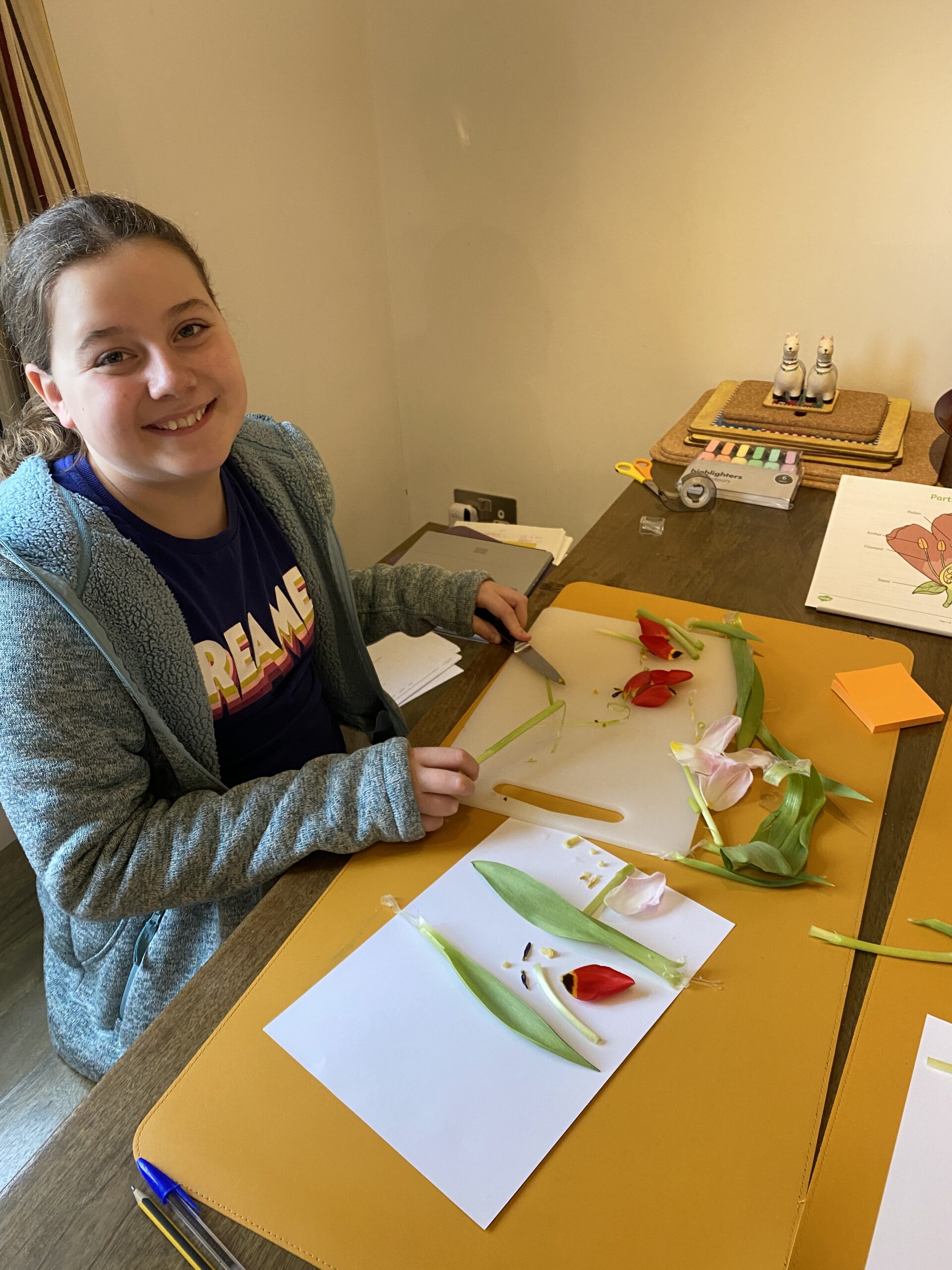
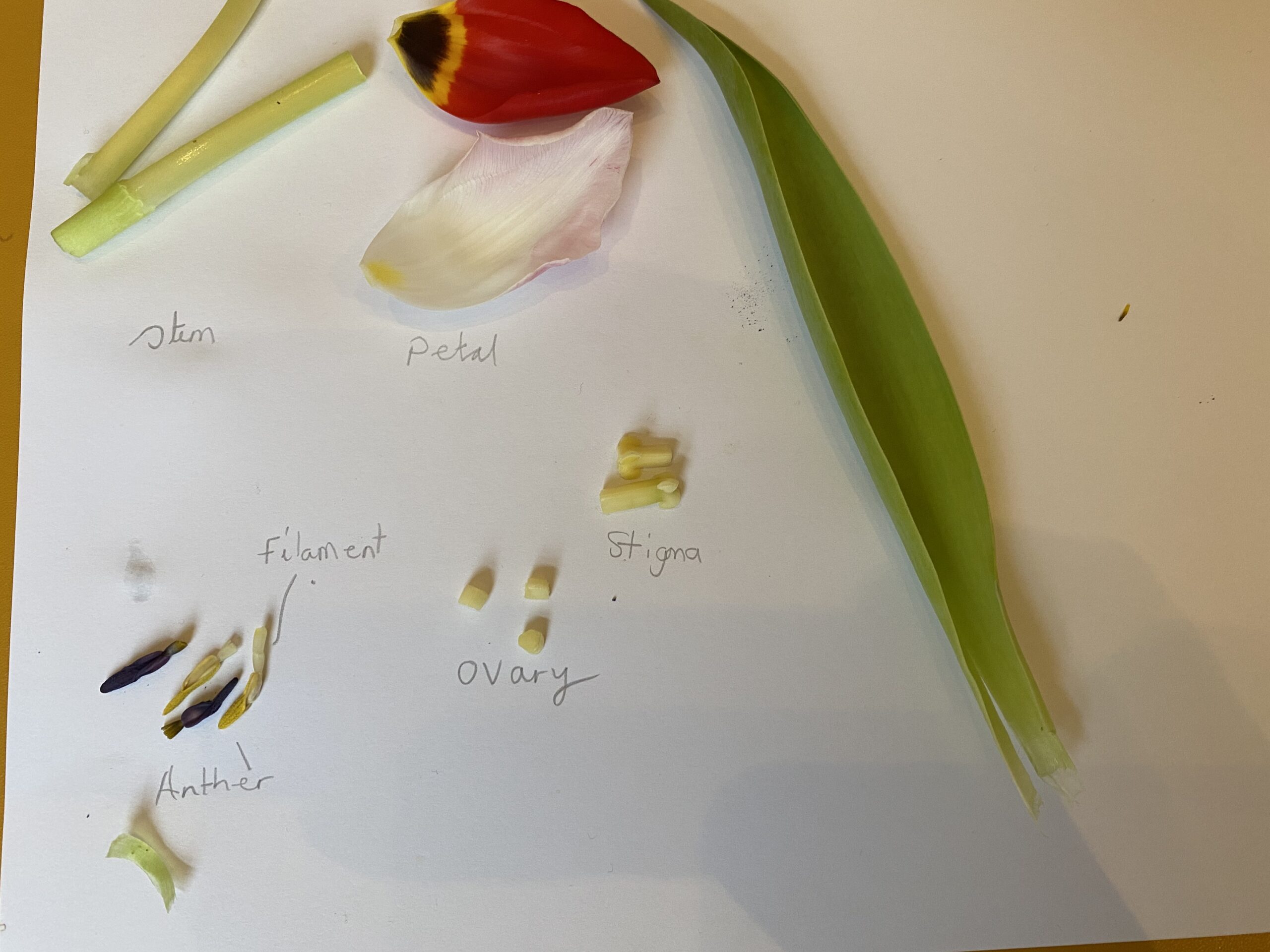
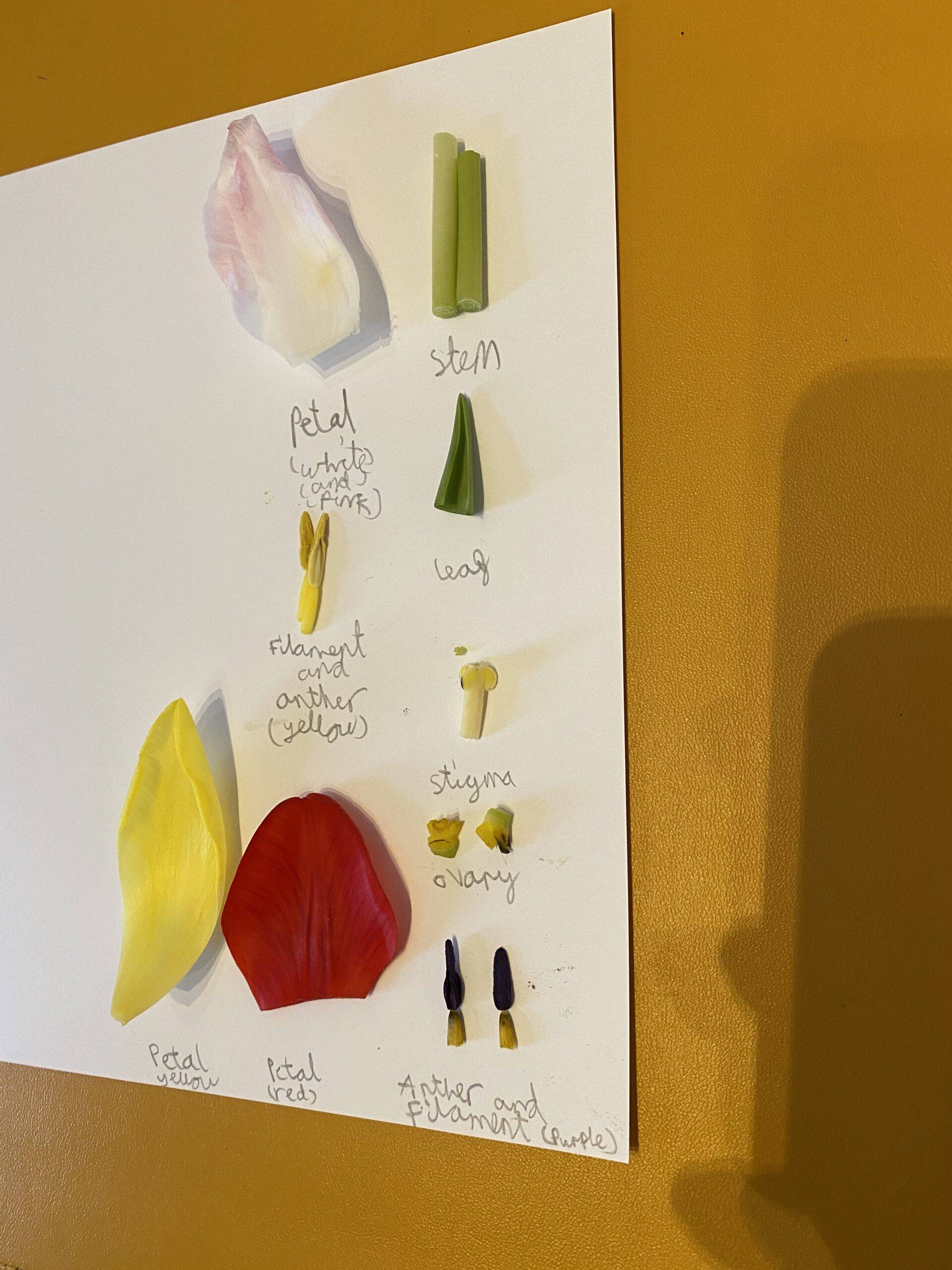
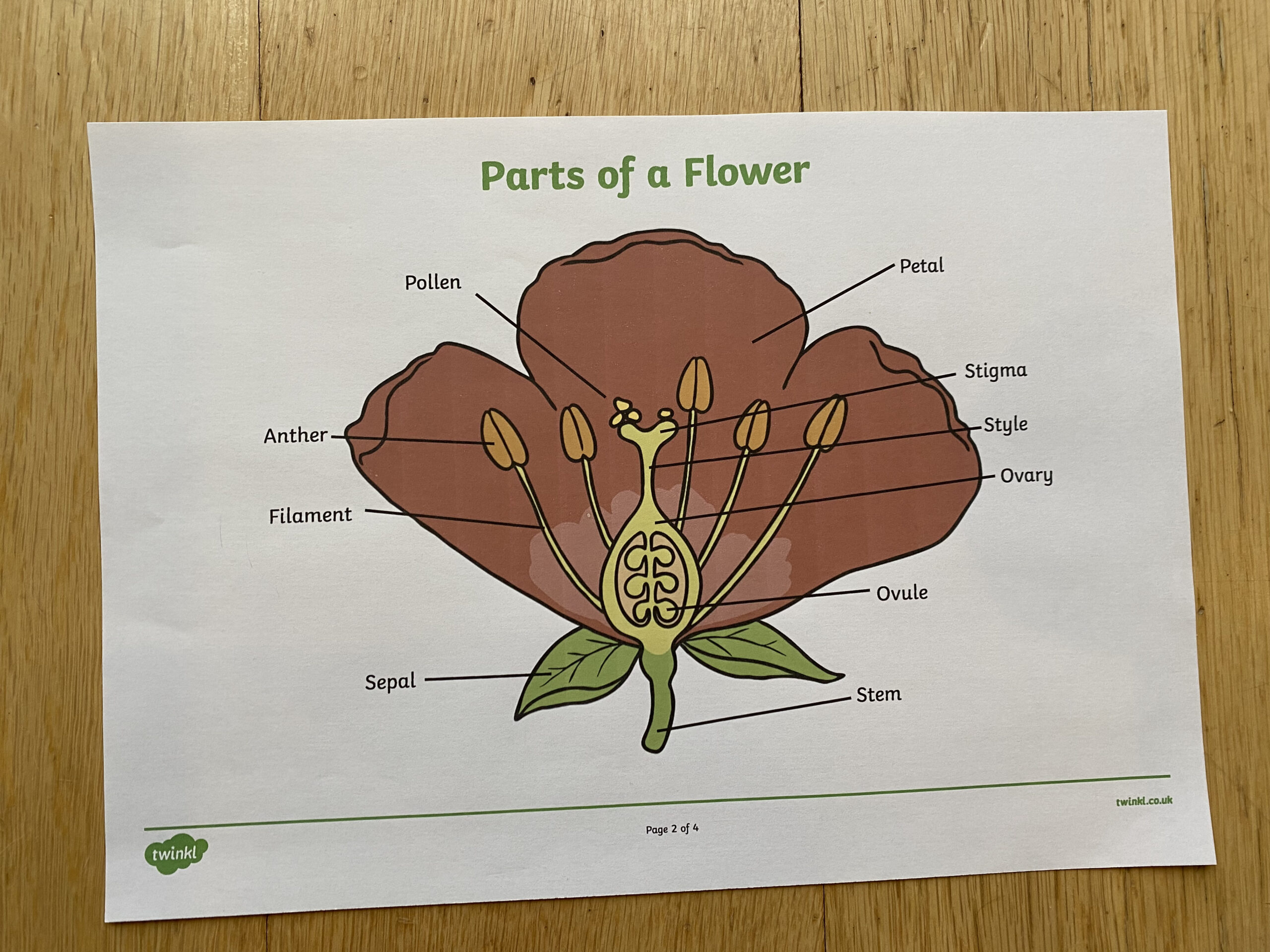
Here we bought a bunch of tulips which the girls then took apart to find the different reproductive organs. We used this big diagram from Twinkl to help us.
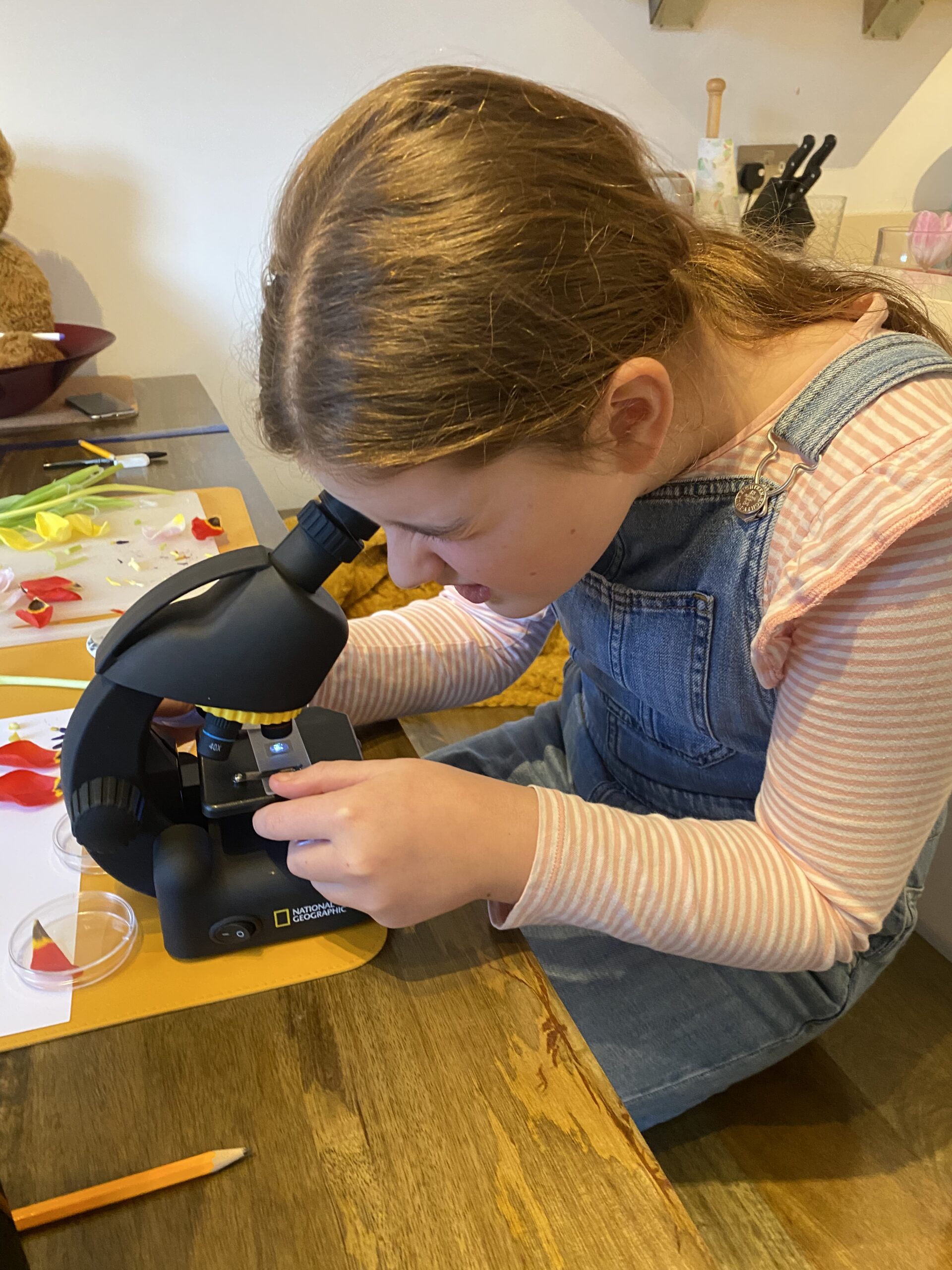
Each different coloured tulip had slightly different flower parts so it was great to dissect a couple of flowers each. The girls used kitchen knives on a chopping board and then put the bits they’d separated out onto a sheet of plain white card (we found paper got soggy). They also looked at some parts under the microscope; the pollen was particularly interesting.
Activity 3 – creating a flower out of playdough
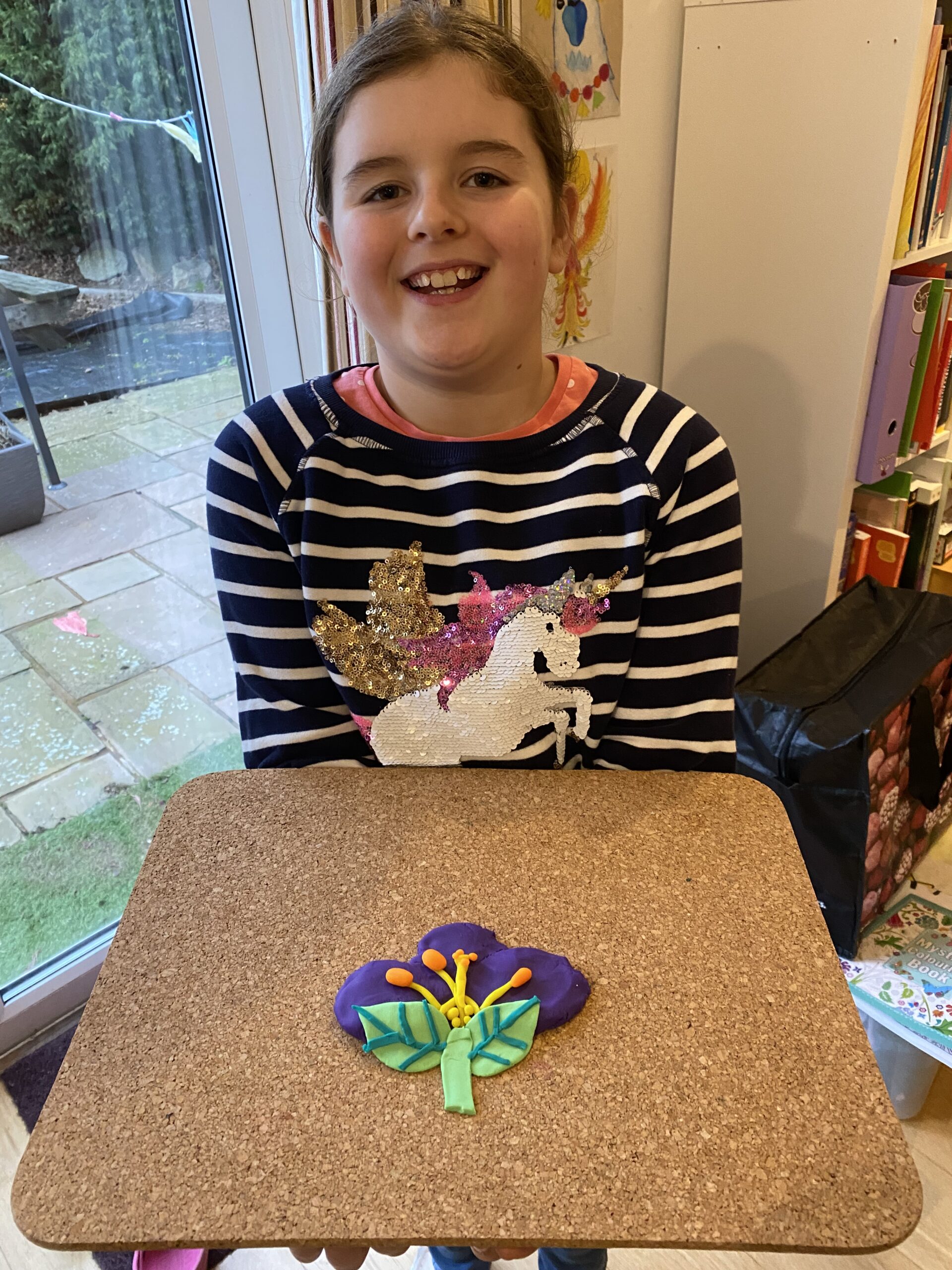
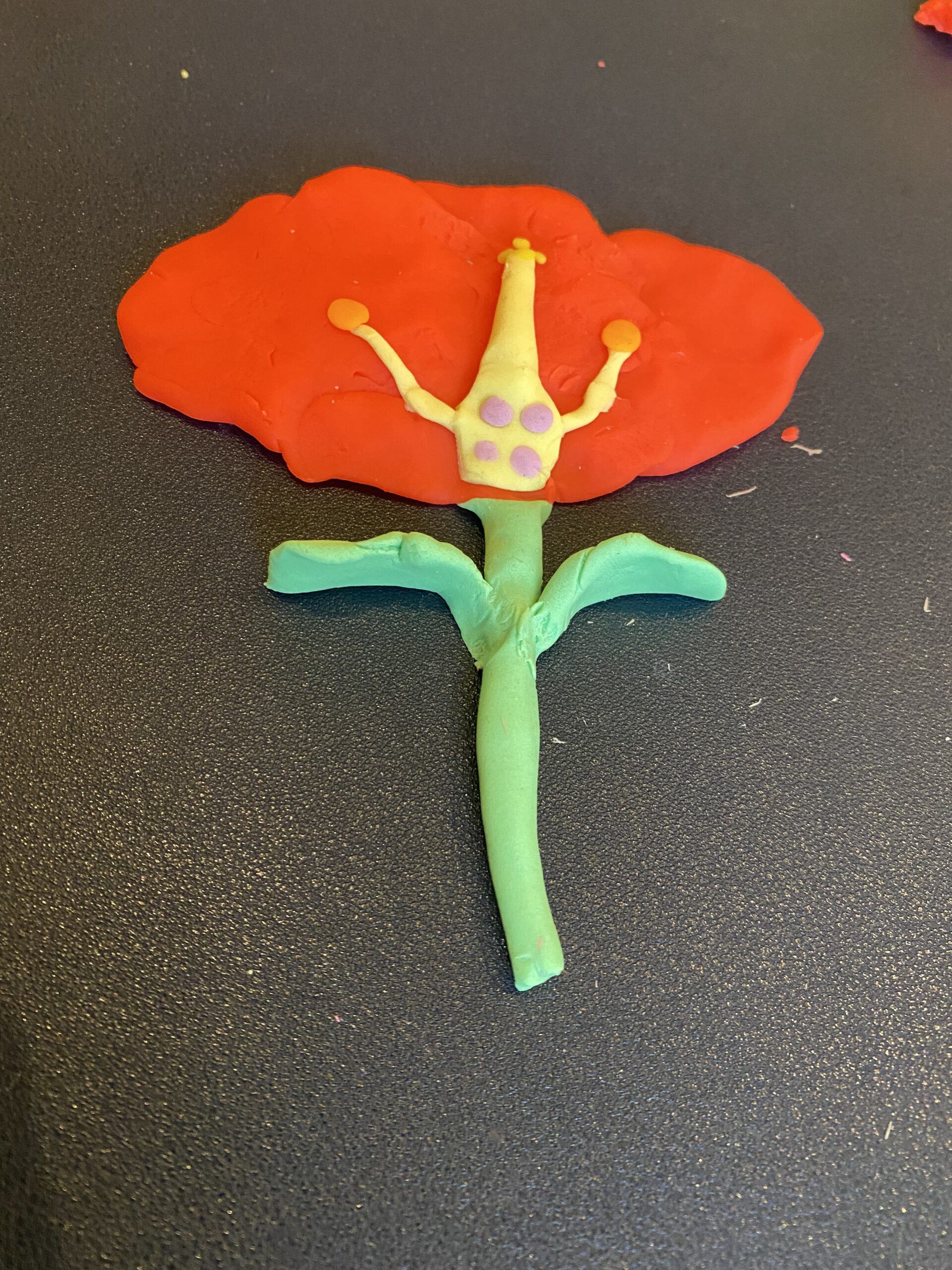
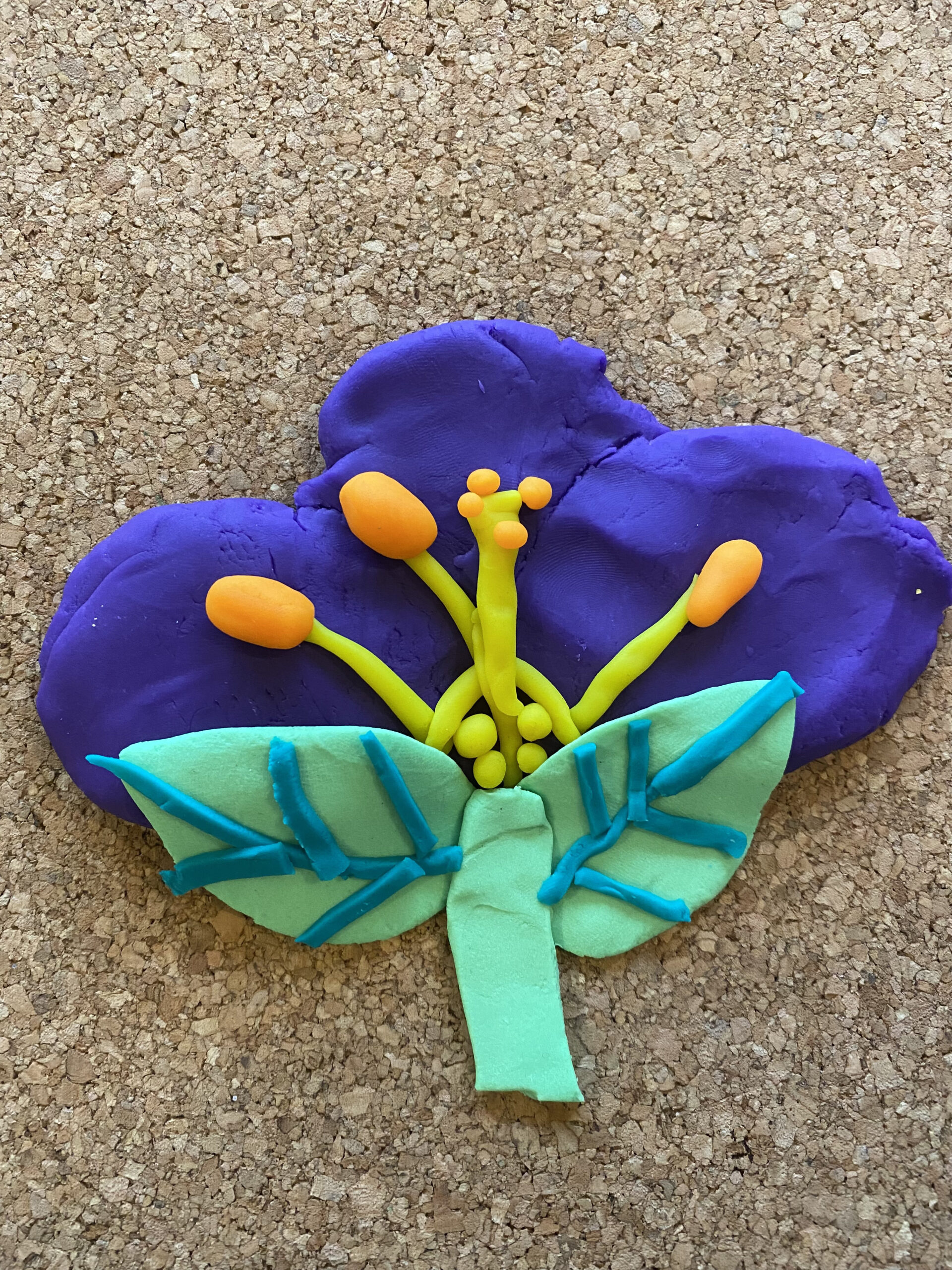
You can’t beat some hands on crafting to finish a topic off. The girls created their own flowers using playdough and did it without the Twinkl diagram to help them (although I suspect there was some peeking!).
Activity 4 – how water affects plants
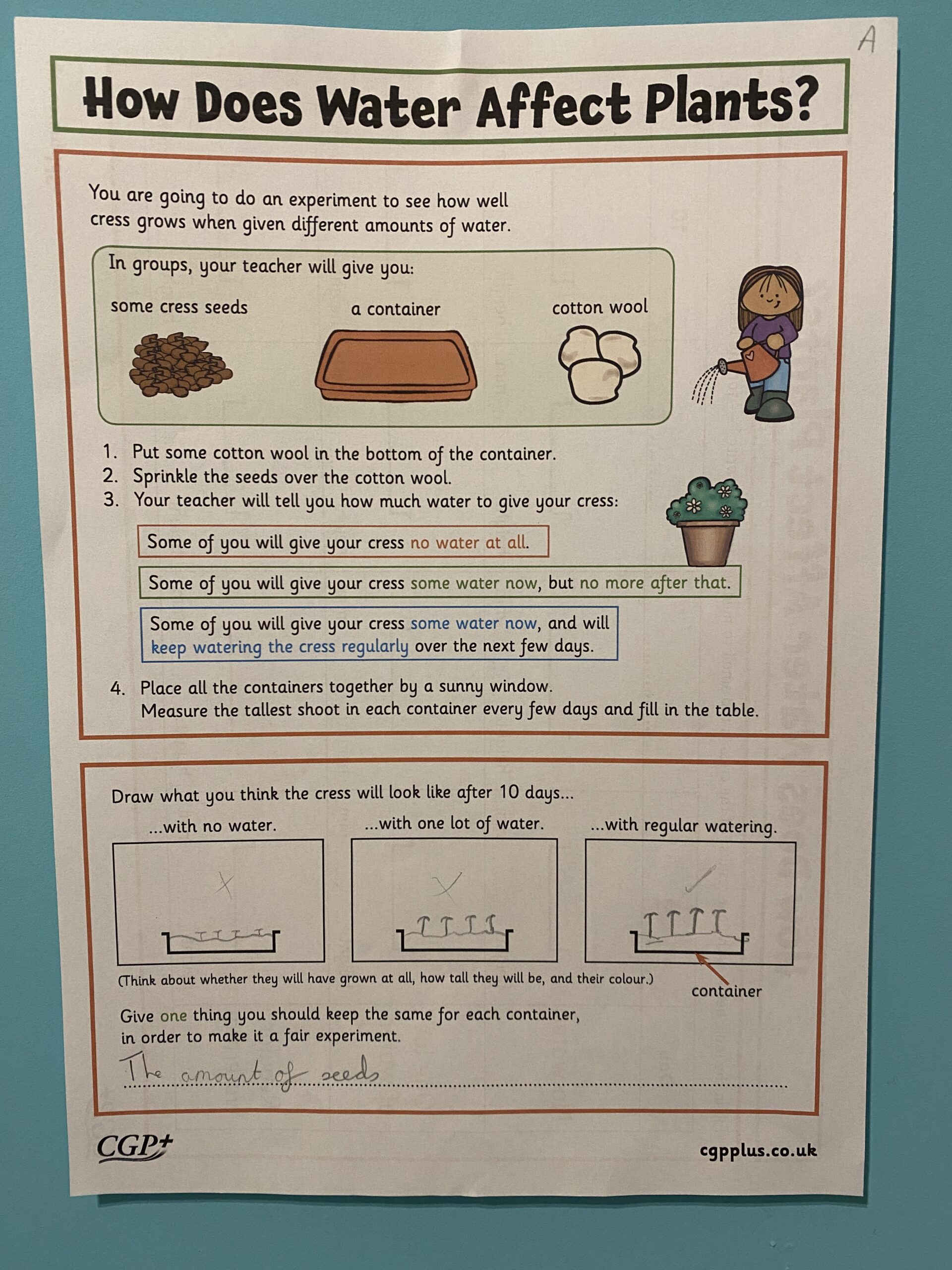
Here we used some worksheets from the new CGP Plus website. This was launched at the start of 2022 and I signed up for the free 3 months trial. We’ve used quite a few resources from here now and I’ve been really impressed: they supplement the CGP books perfectly and they’re colourful and well designed.
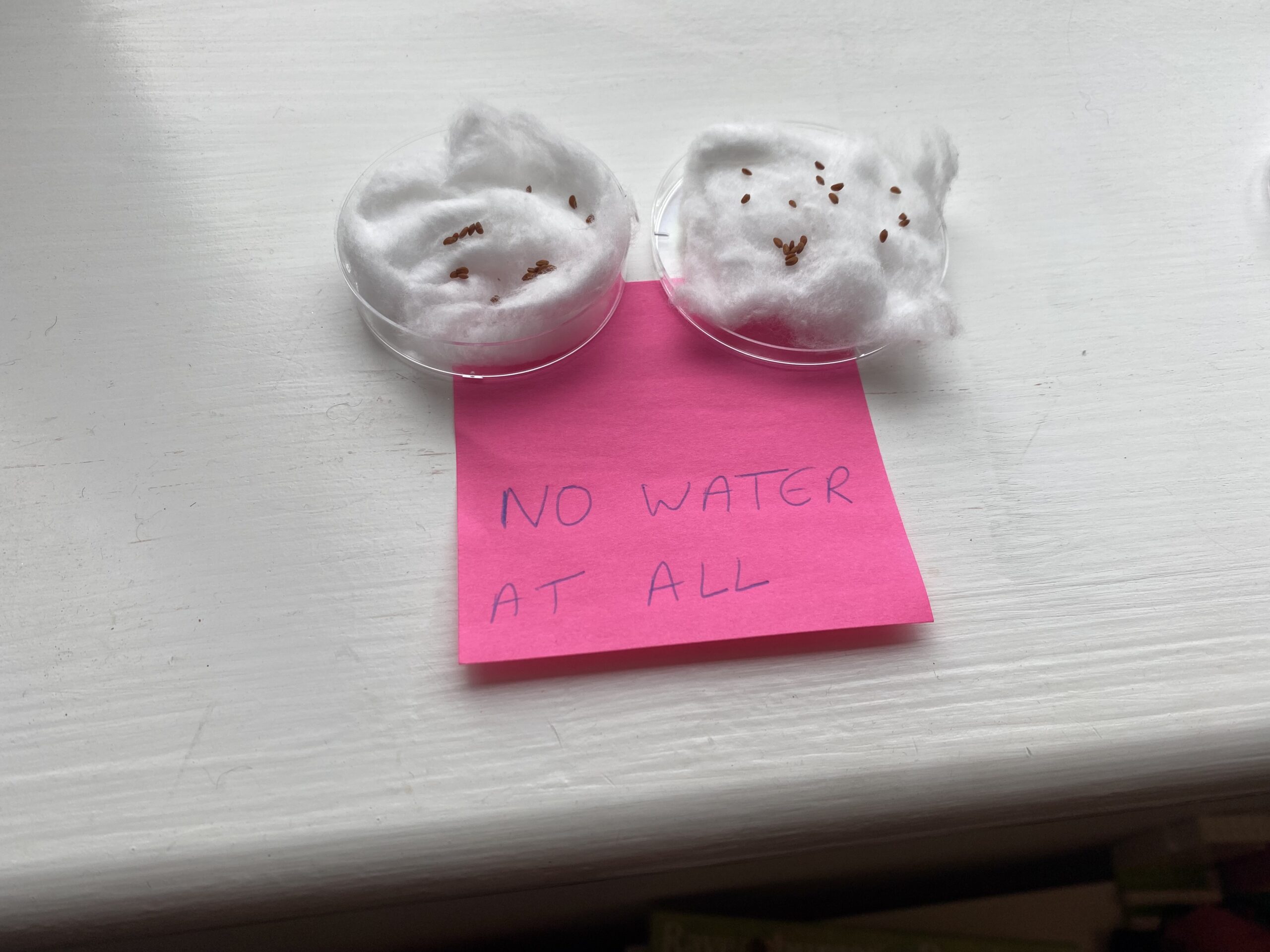
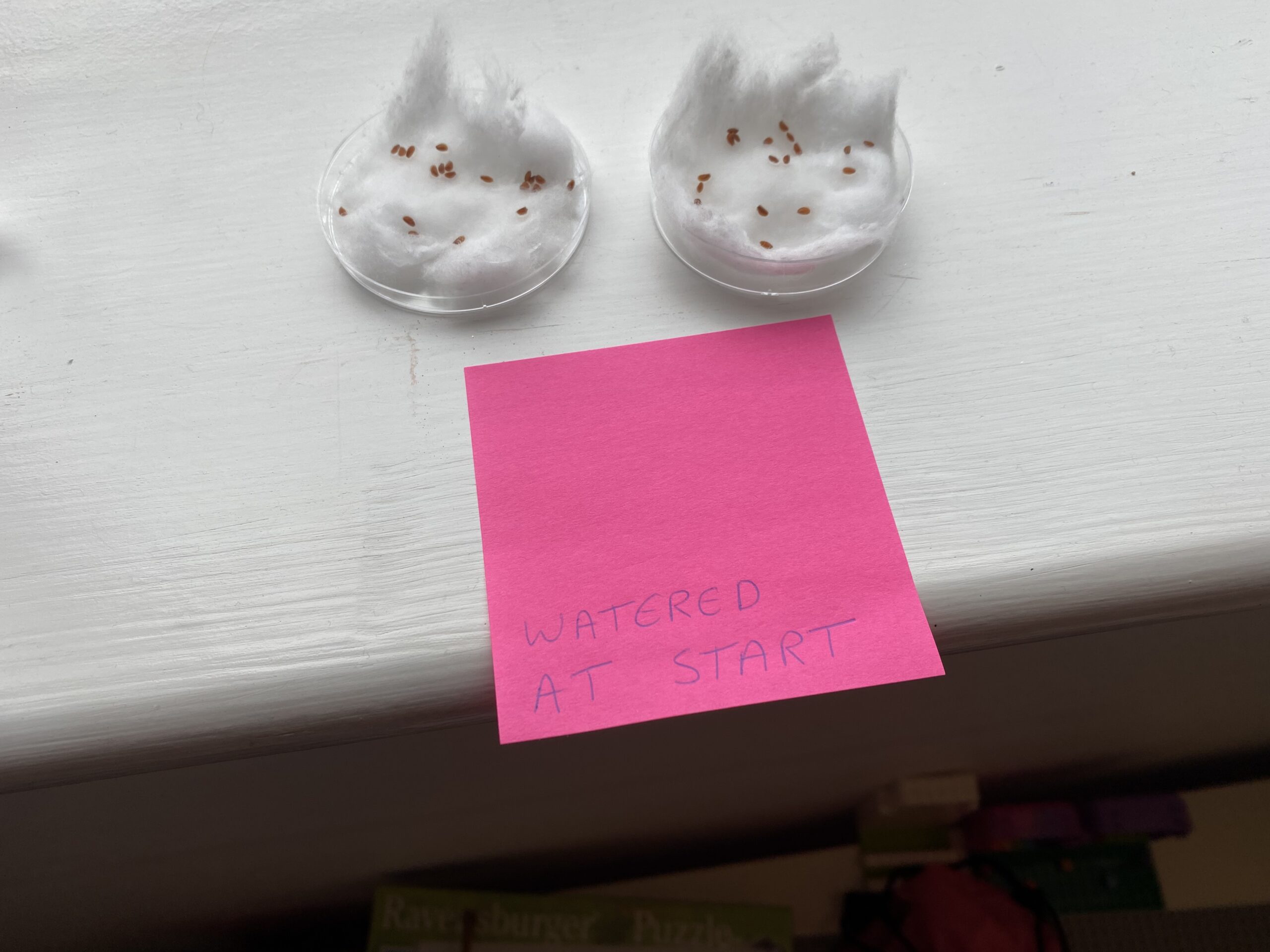
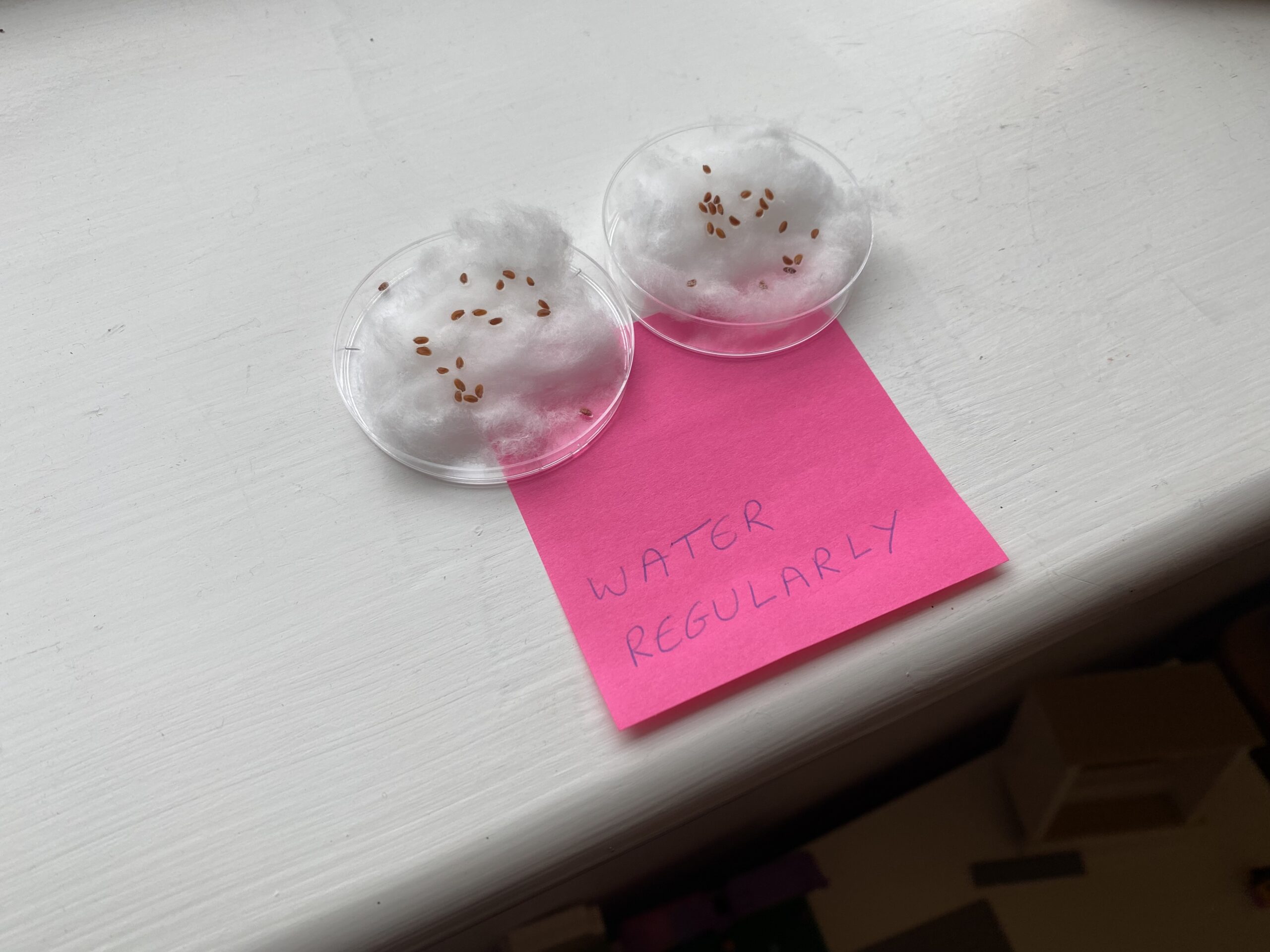
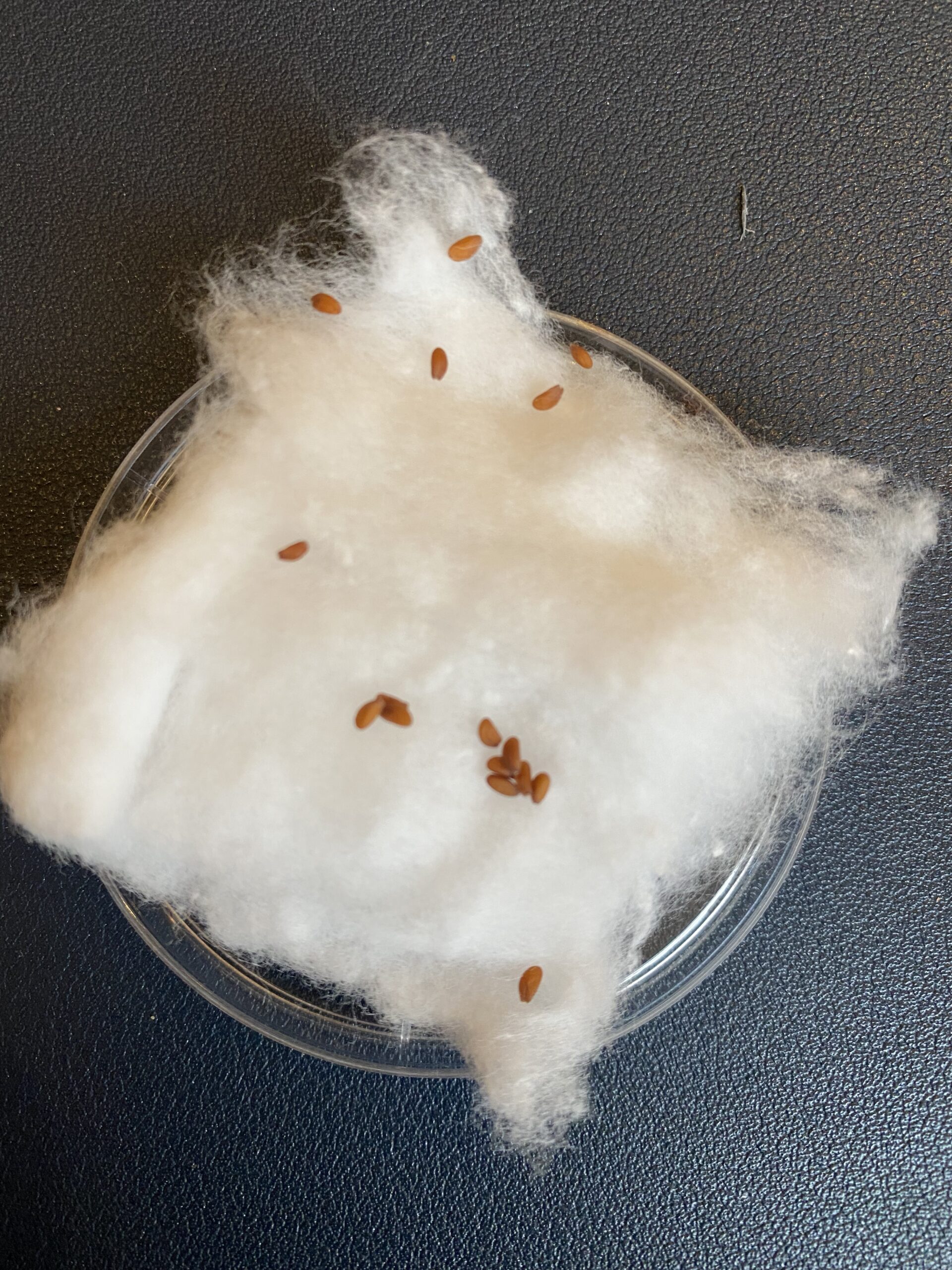
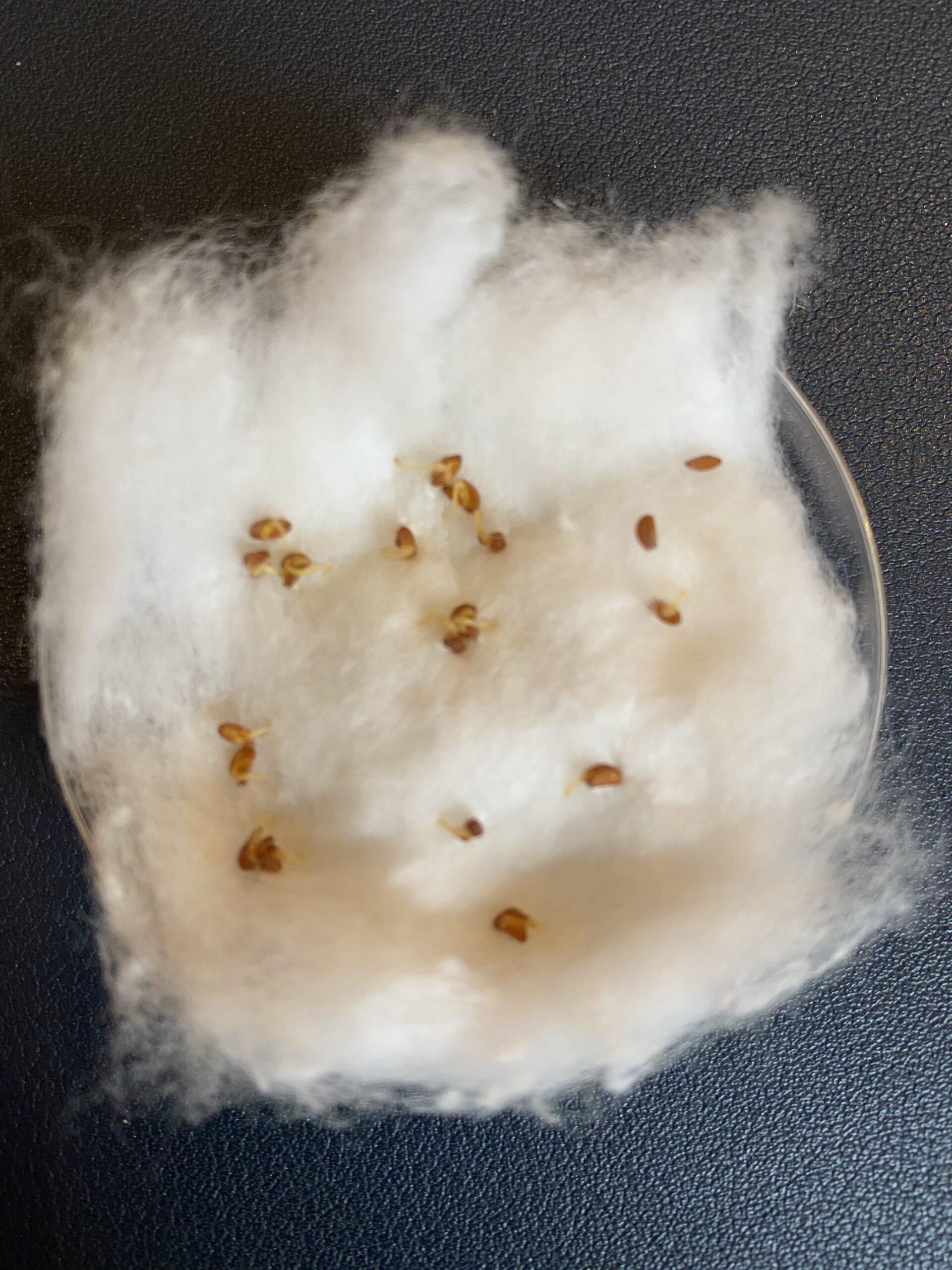
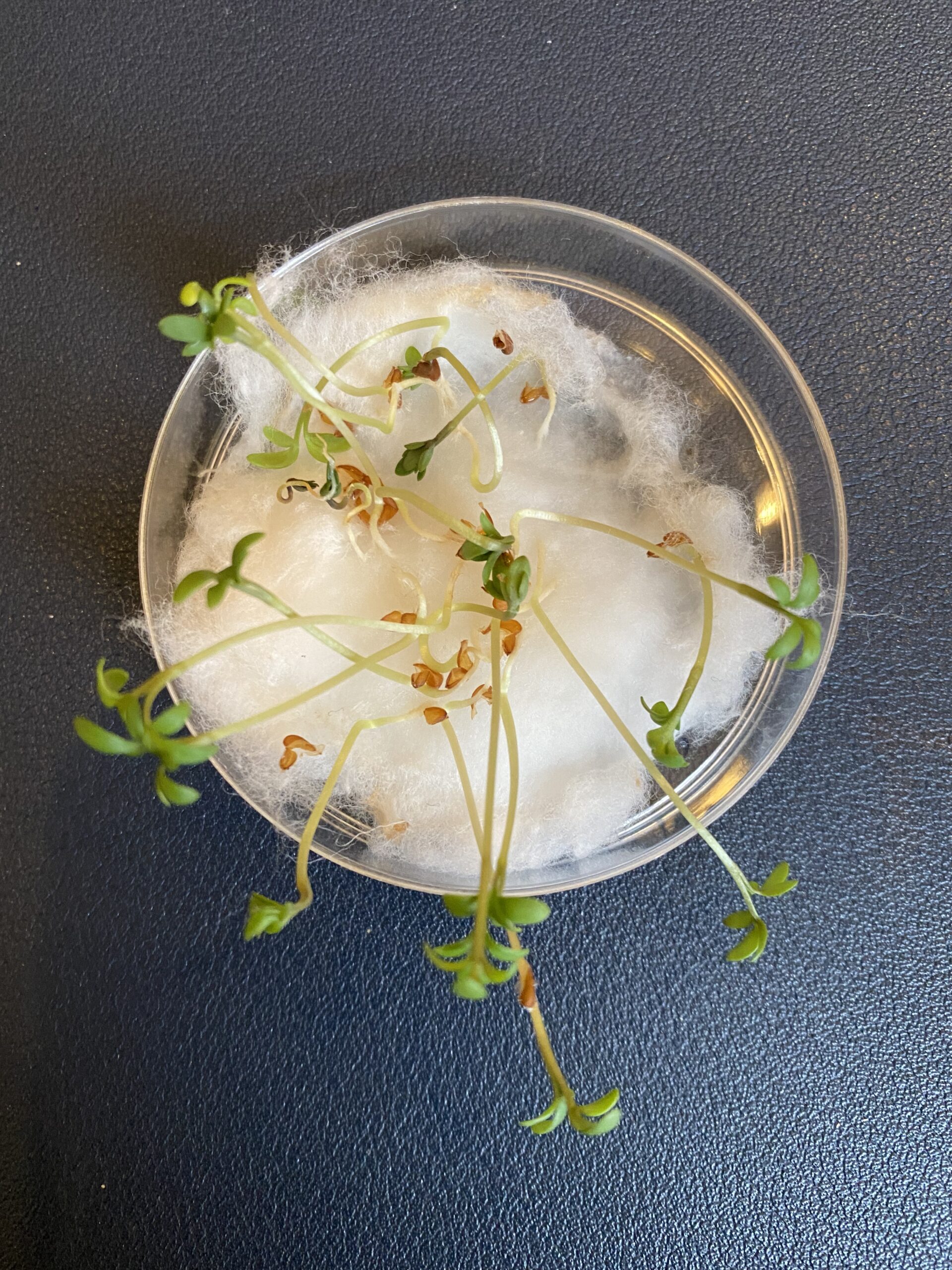
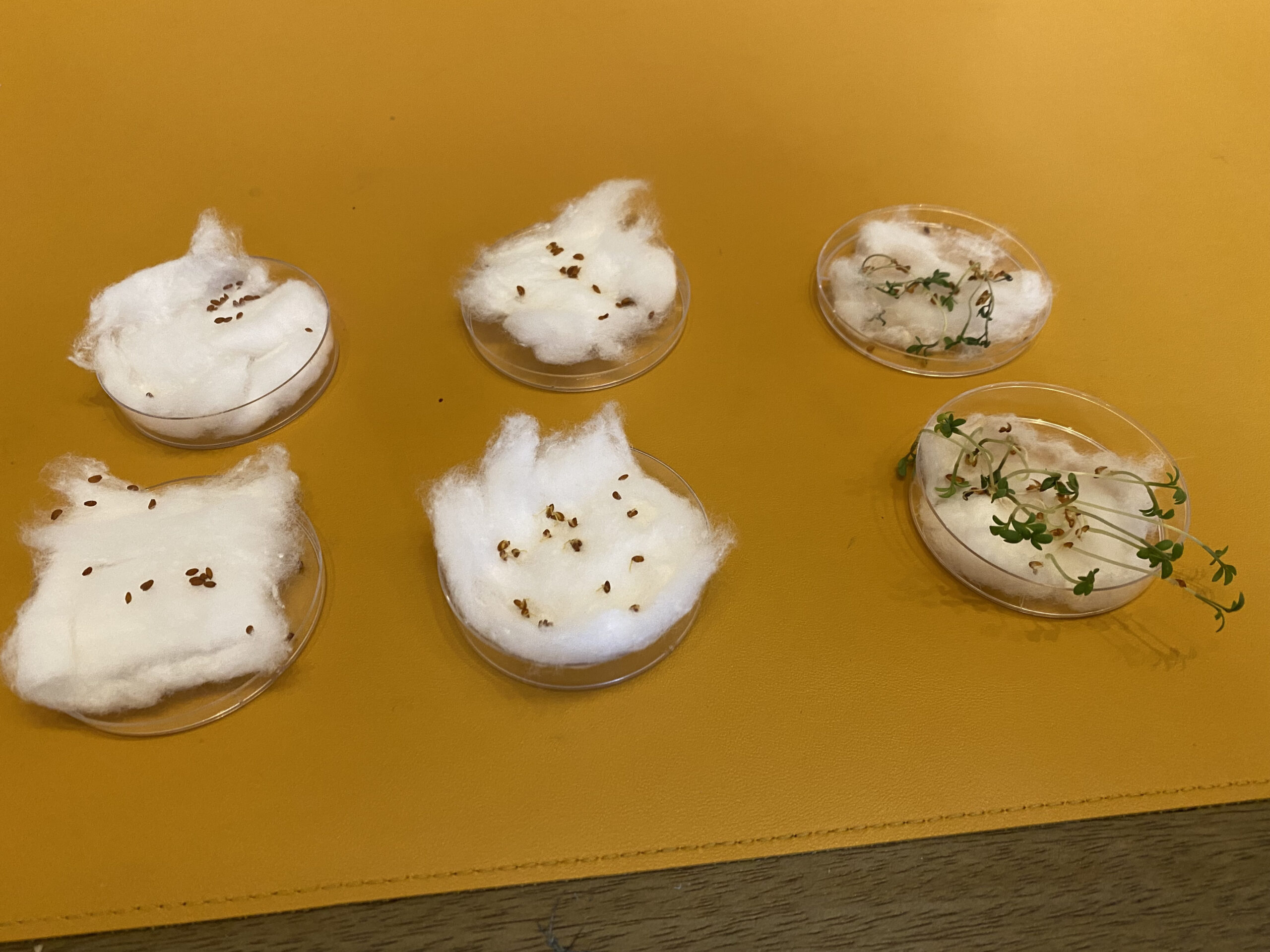
We followed the experiment on this CGP worksheet which involved growing cress seeds with no water at all, water just at the start and then watered regularly; we did two dishes for each. The worksheet got you to make your prediction of how the cress would grow, record the results as the 10 days went by and then form a conclusion at the end. Not bad for just four A4 pages! The conclusion was definitely that the seeds needed regular watering to be green and tall. Here is what happened to our cress:
Activity 5 – how plants respond to light
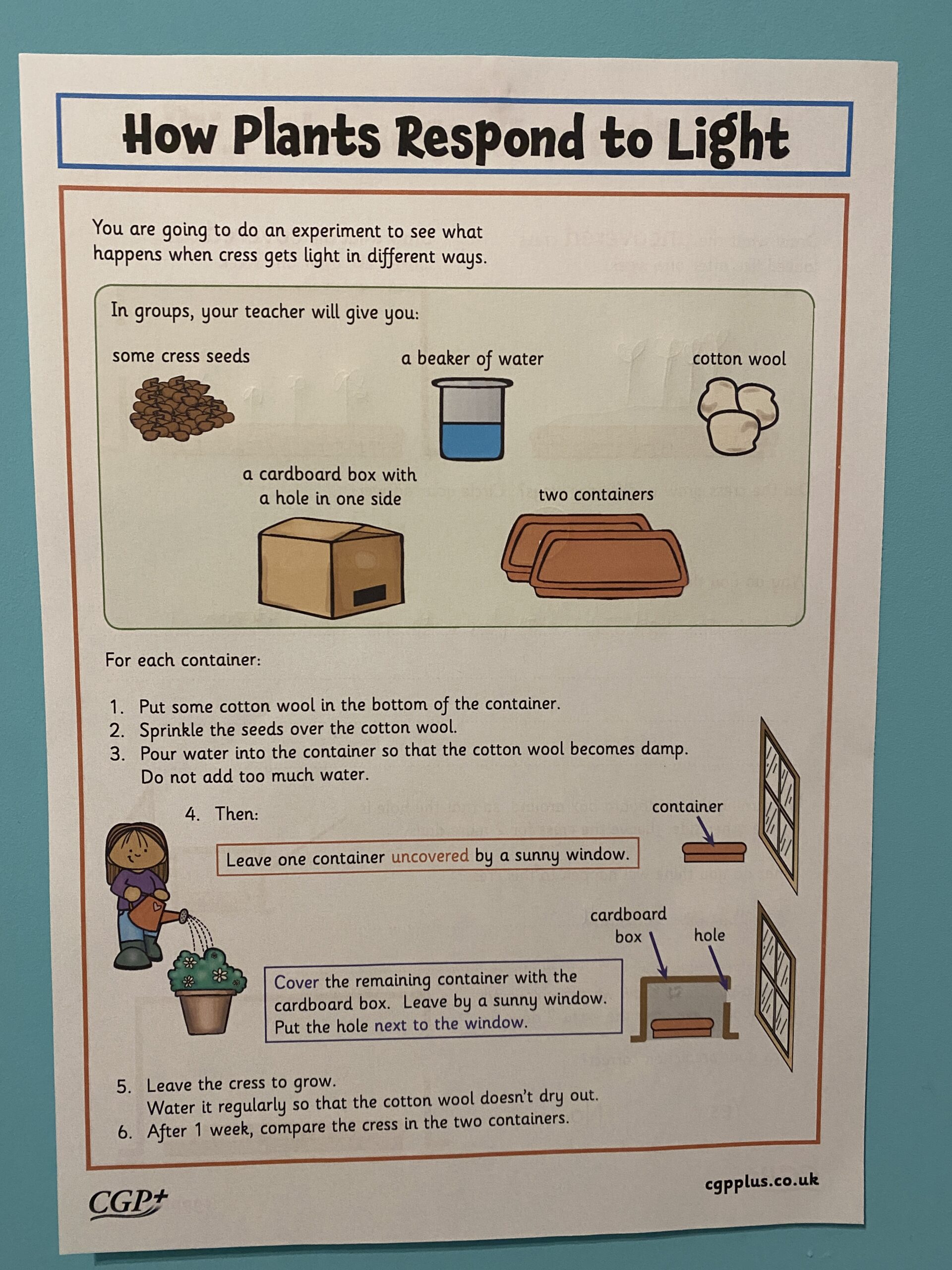
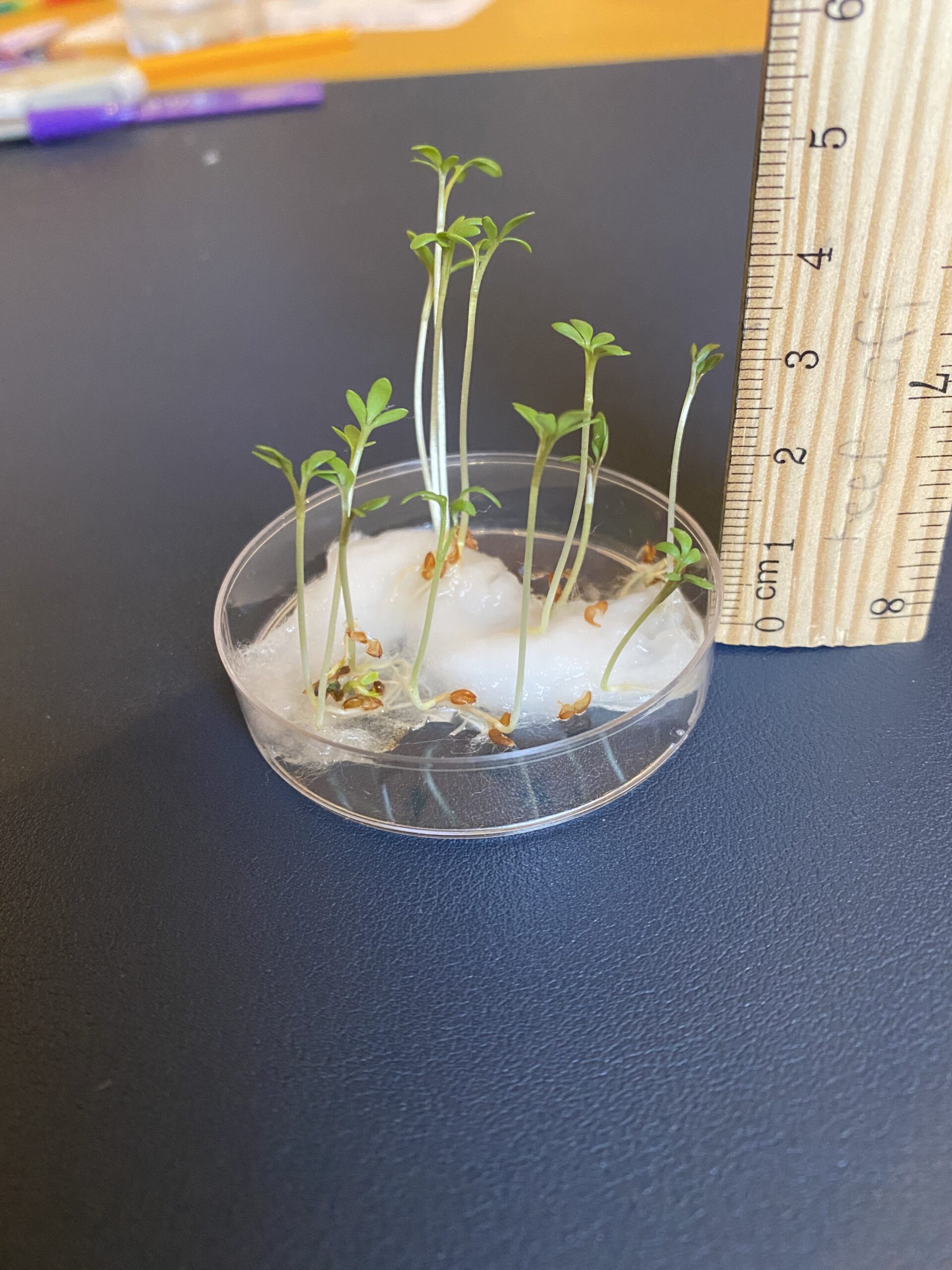
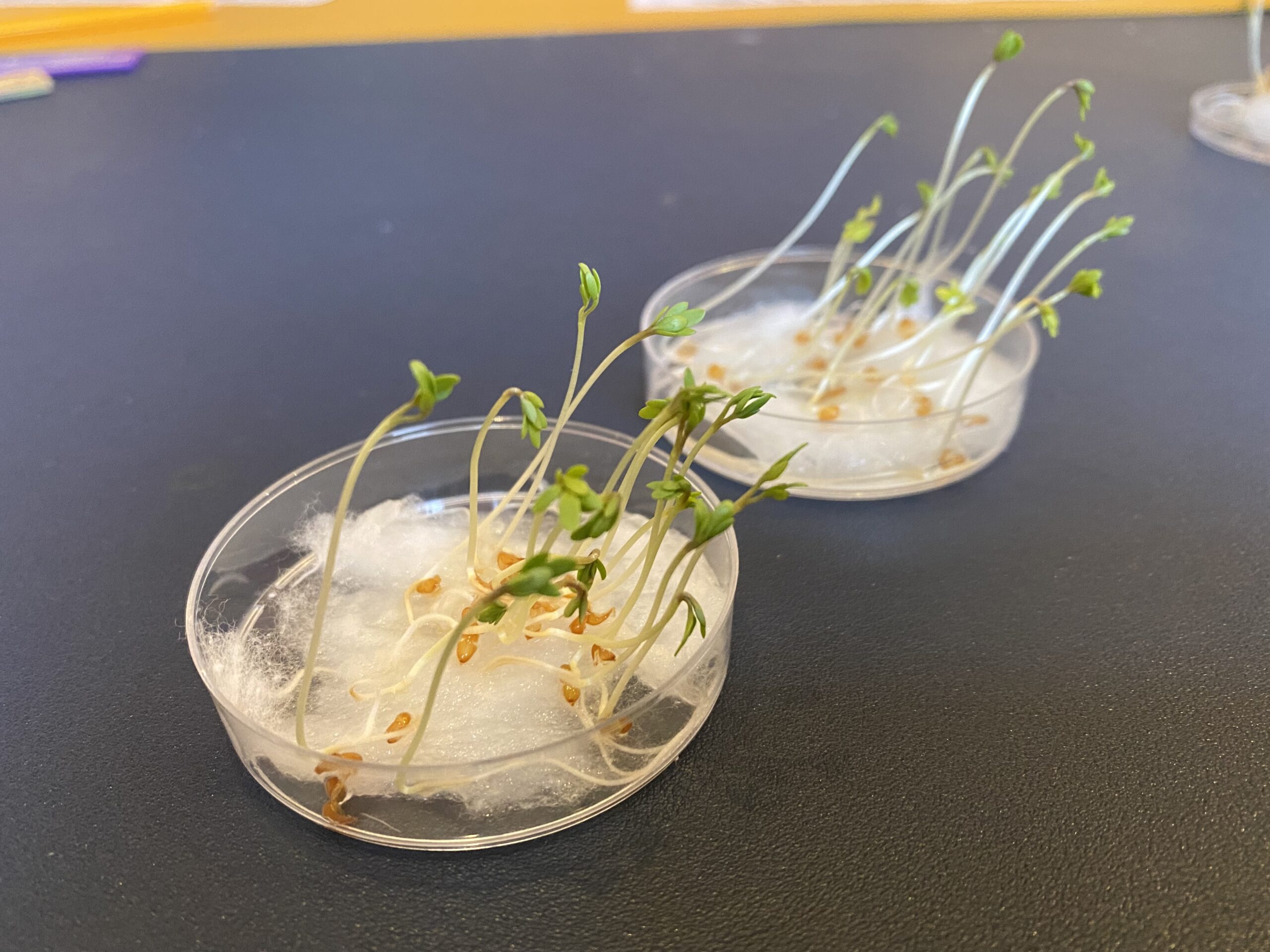
We used another CGP Plus worksheet to look at the affect of light on plants. This involved growing some cress seeds out in the light as normal and then some under a box with a slit in which only let in some light. The cress grows towards this light and so you end up with cress pointing in the direction of the light. Our cress behaved as we expected! Again, this is a great worksheet for making a prediction, recording your results and making a conclusion.
Activity 6 – crossword
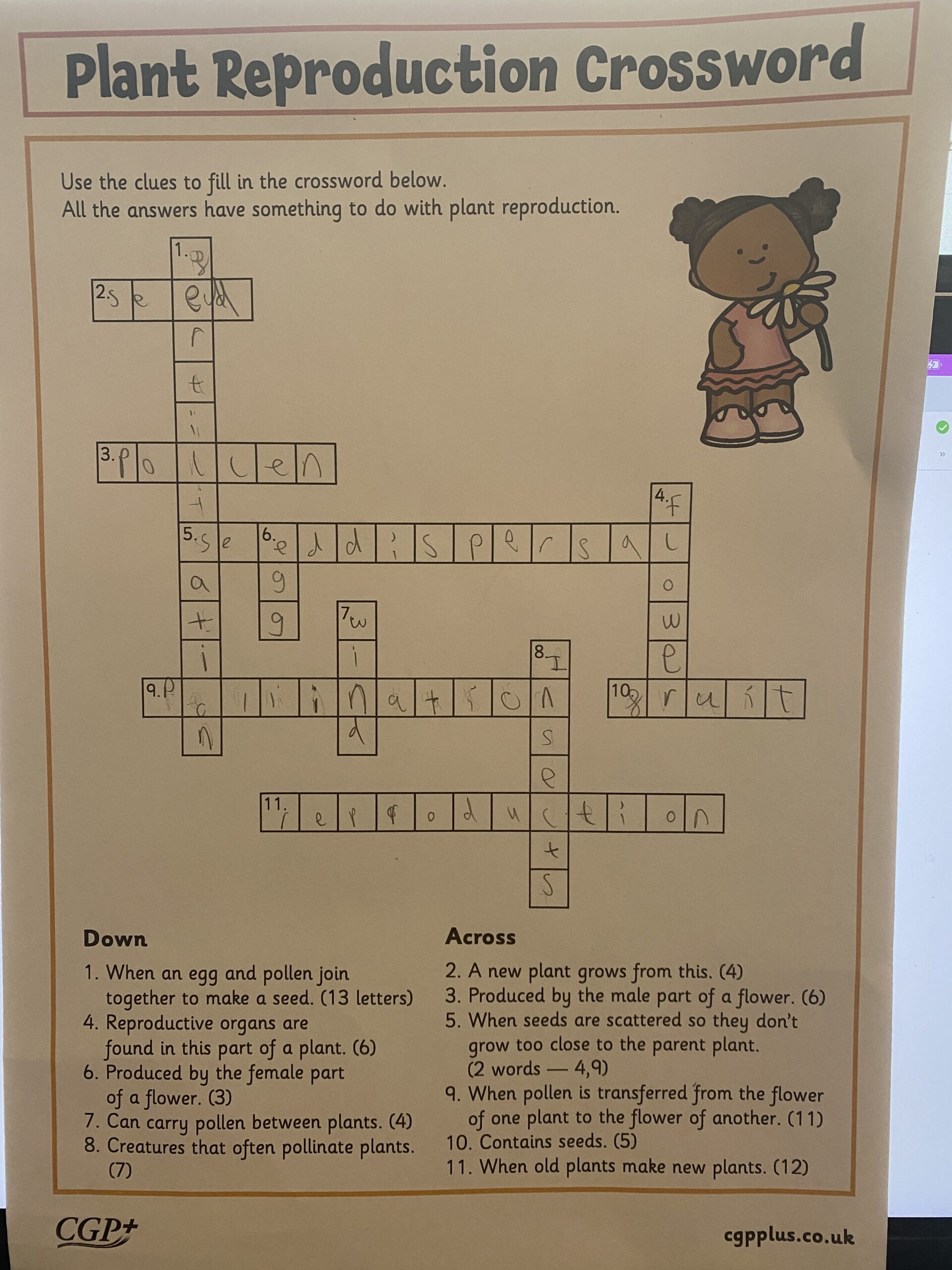
We finished this topic off with a crossword, again from CGP Plus. A few of the clues were challenging so it was a good test of brain power and plant knowledge.