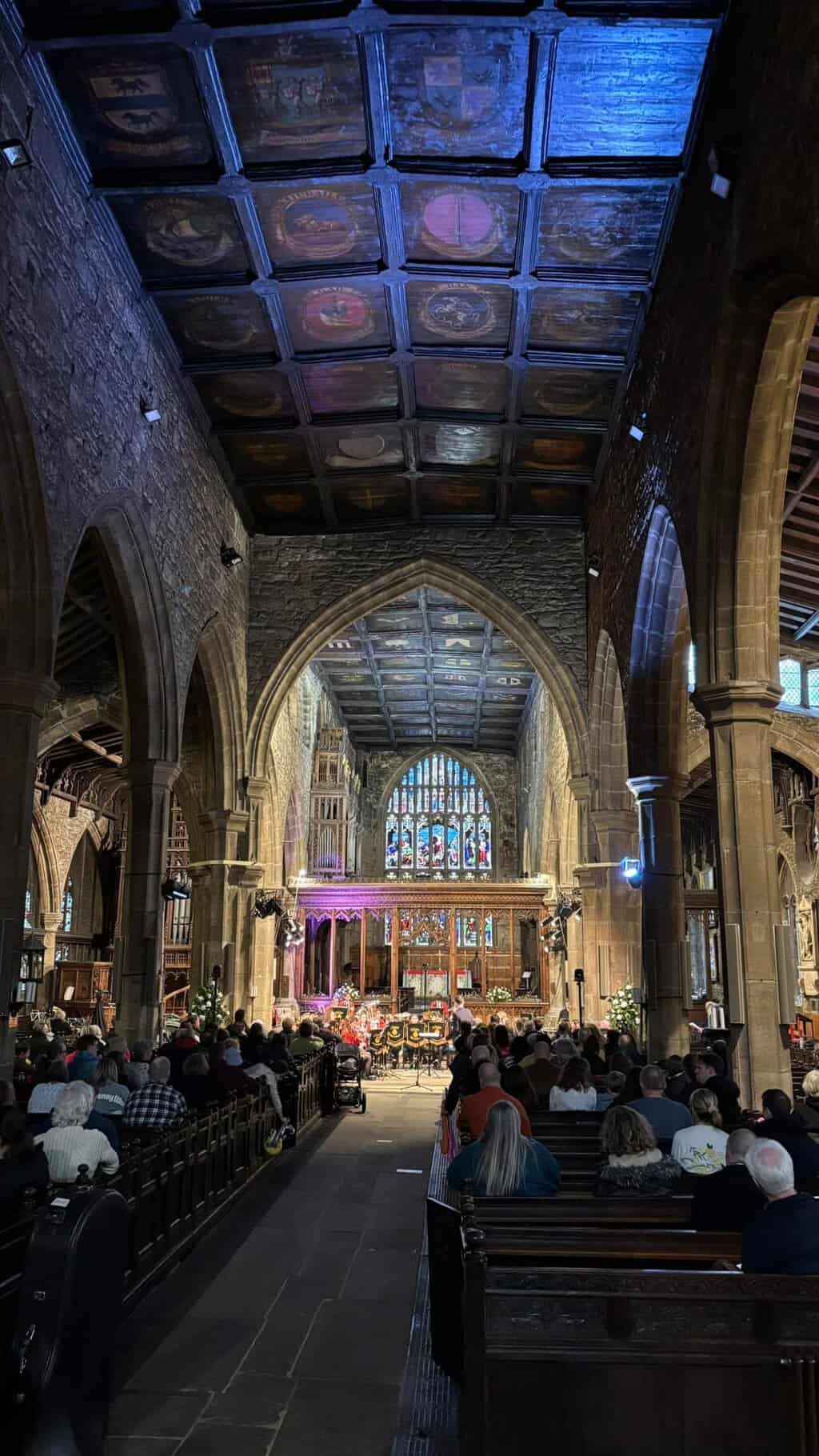
As parents of two daughters, we’re always on the lookout for strong female role models, and they don’t come much stronger than Queen Elizabeth I (not that we’d be keen for our two to emulate all of her activities!).
But Queen Liz has some competition from her namesake Elizabeth Cavendish – better known as Bess of Hardwick. Through a series of marriages and shrewd business moves, Bess rose to become one of the more notable members of Elizabethan society – the second-richest woman in England behind the monarch – and even arranged a marriage which could have put her grandchild in line to the thrones of England and Scotland.
Armed with our National Trust memberships, we headed to Derbyshire to visit both Hardwick Hall – the one that Bess is most famous for – and Hardwick Old Hall, the ruin next door which Bess had also had built.


Hardwick Hall
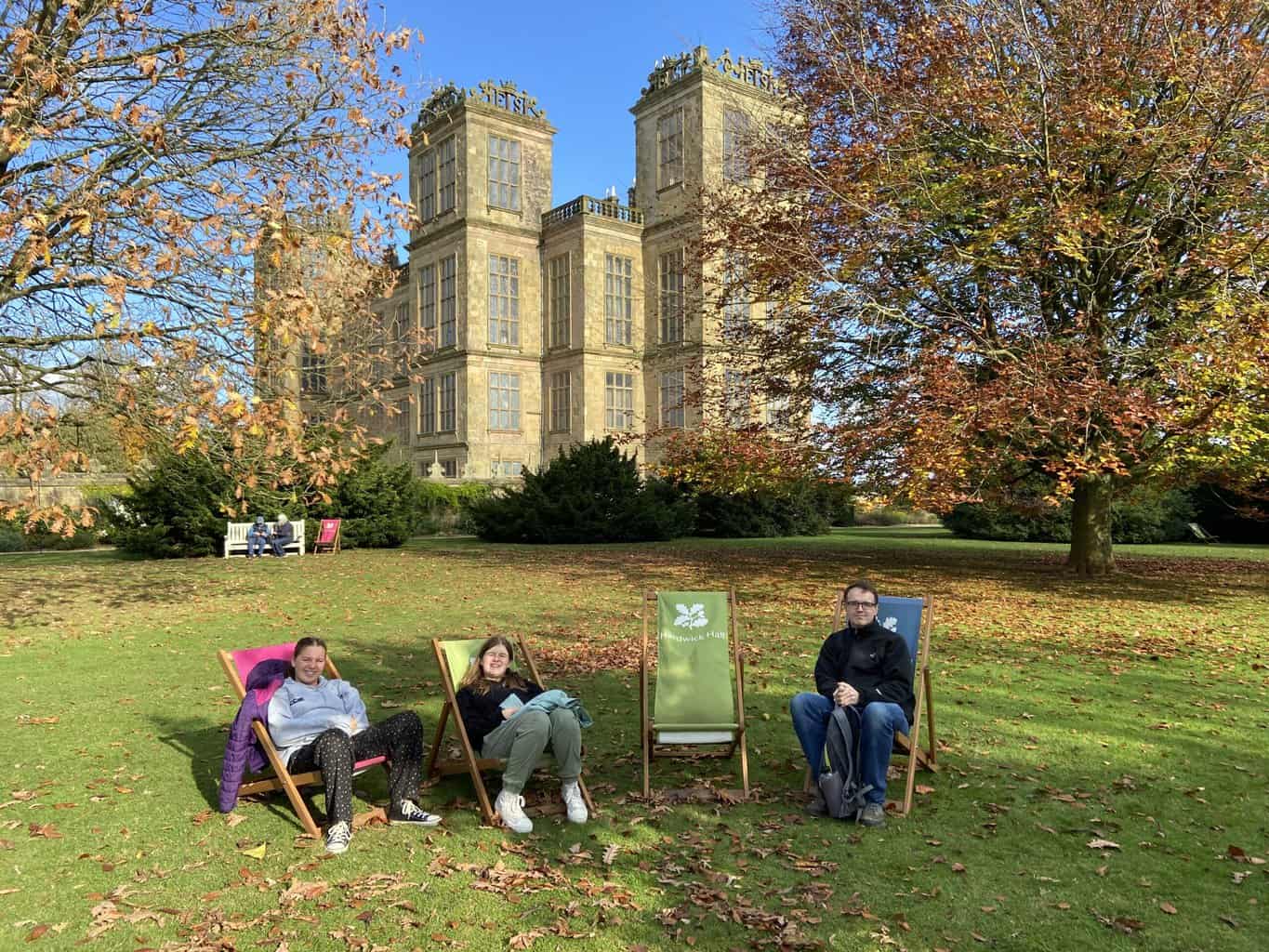
Just a stone’s throw from junction 29 of the M1, and at the end of a massive long approach road, you don’t get the full majesty of the building until you head to what now serves as the front entrance. It’s a really stunning building, helped by the fact that it’s so well preserved. What’s perhaps most amazing is the amount of glass on display, showing just how wealthy Bess must have been.
We arrived just in time for one of the informative talks about the history of the house and of Bess herself, delivered by one of the many very enthusiastic National Trust volunteers. It was a great opportunity to find out exactly how the house came to be, and what role Bess played in the politics of the Elizabethan era.
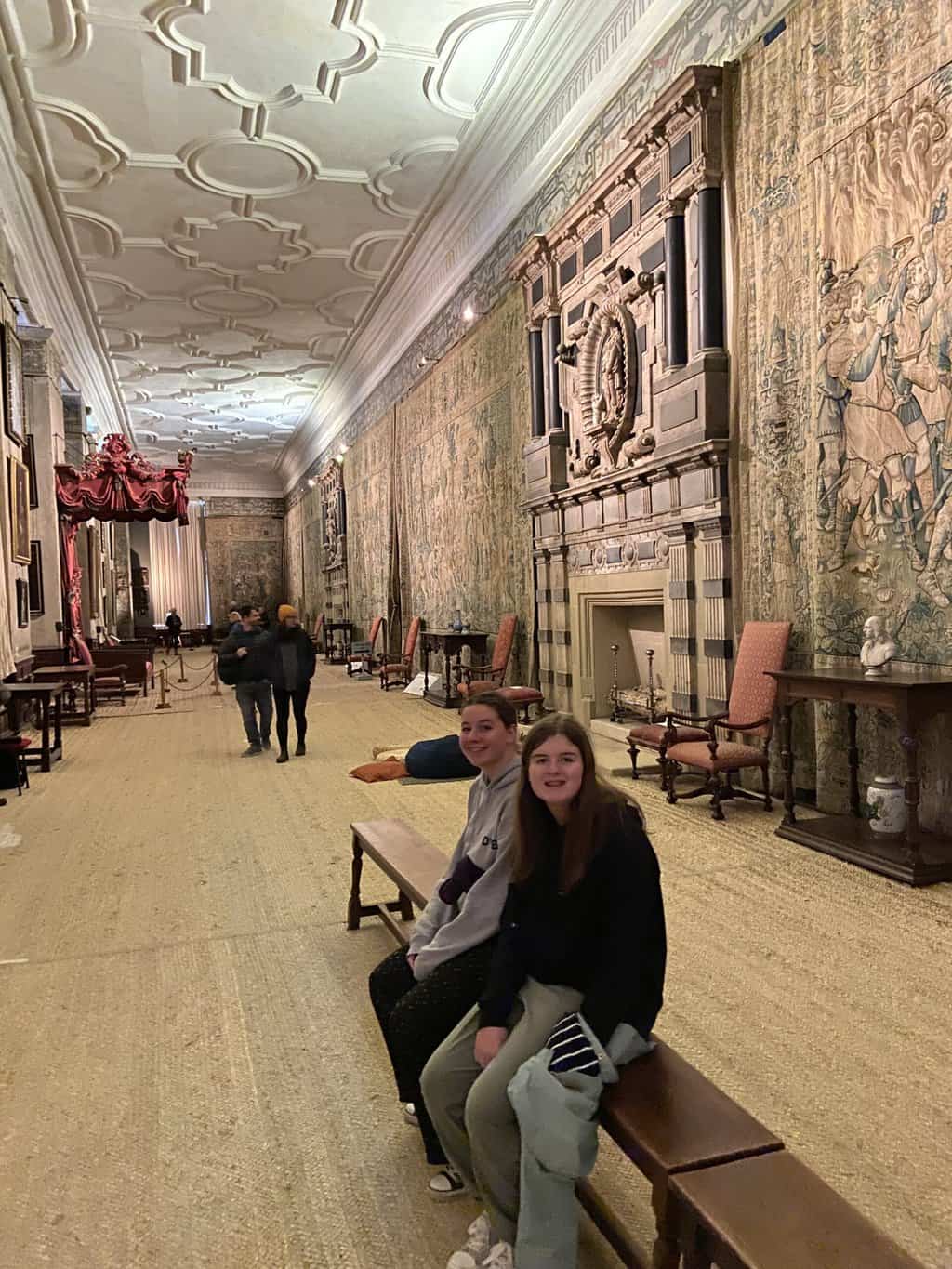
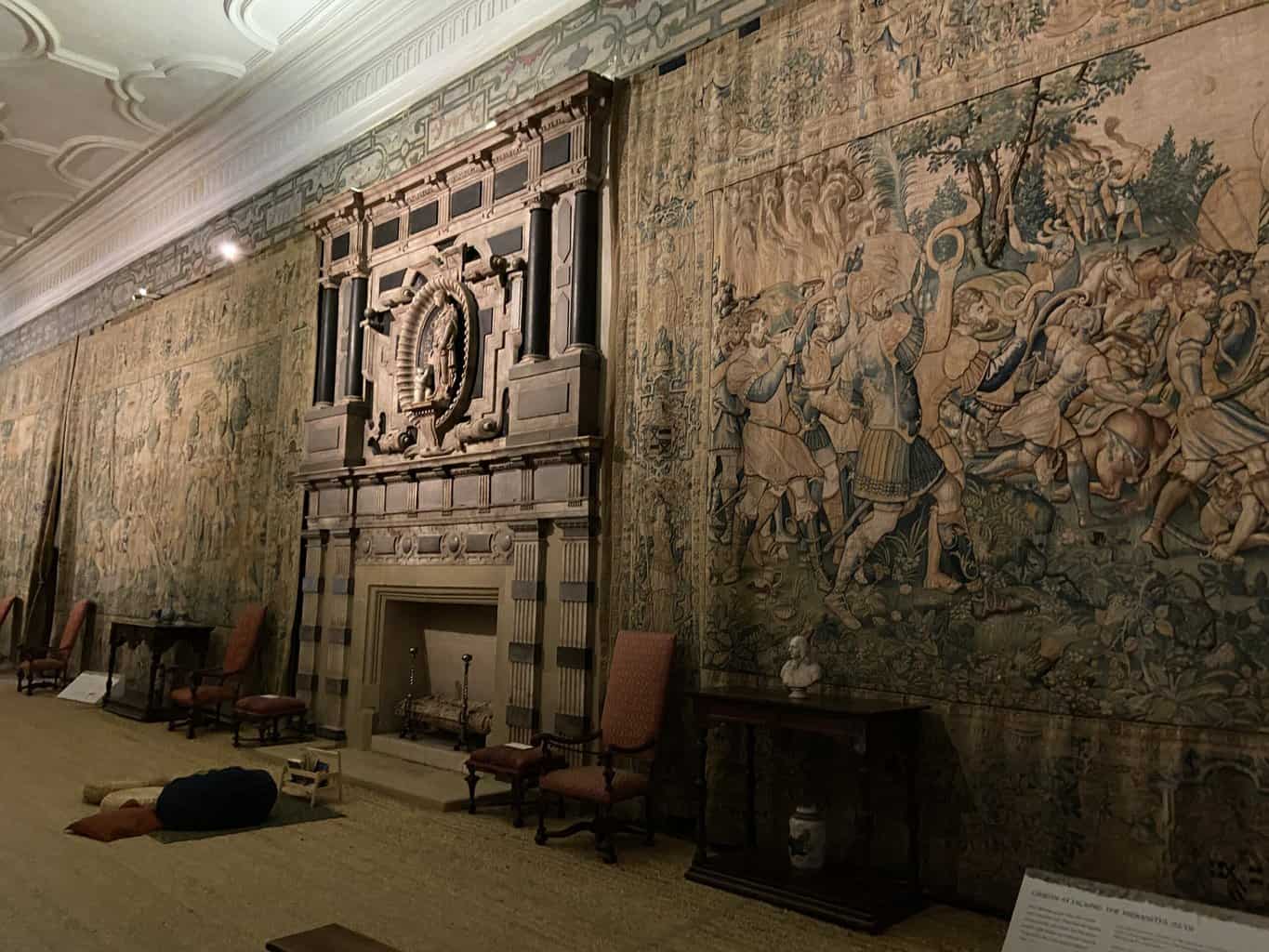
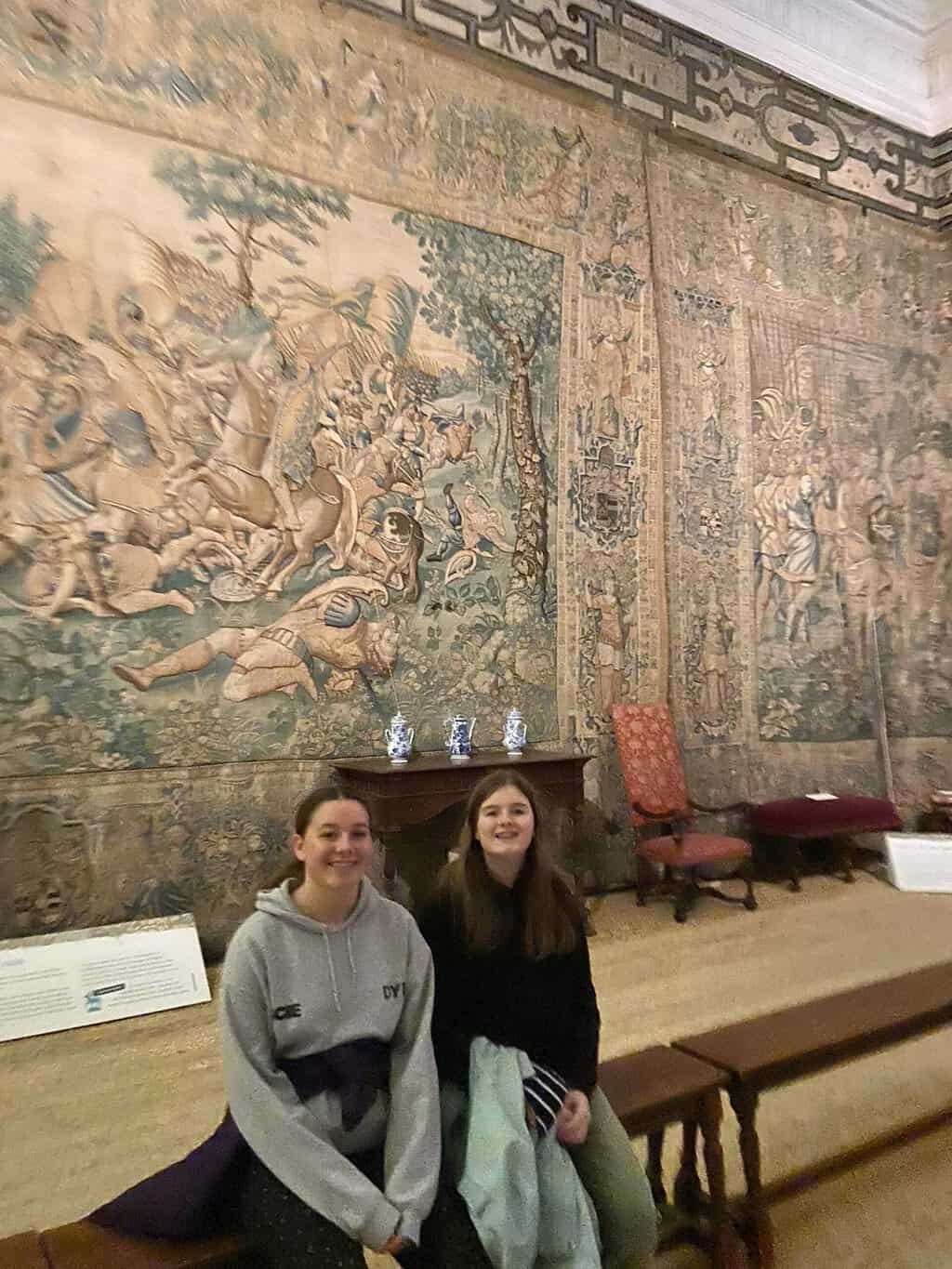
Making our way through the entrance and up the stairs we headed into the Long Gallery. At 162 feet long, 26 feet high and 40 feet across at its widest, it’s the largest surviving example of an Elizabethan long gallery in existence. The lights in the room are dimmed so as not to damage the enormous Gideon Tapestries that line every inch of the walls. The textiles show a range of scenes from the Old Testament story of Gideon, and some of the details are really quite amazing.
Next door stands a huge portrait of Queen Elizabeth I. We later found out (from a volunteer) that the dress she wears in this painting is thought to be made from a length of very fine cloth that was sent to Her Majesty as a present from Bess; they were very close friends and frequently corresponded and sent gifts to each other. The painting is almost the equivalent of an Elizabethan selfie of the Queen to show her bestie what she did with her gift!
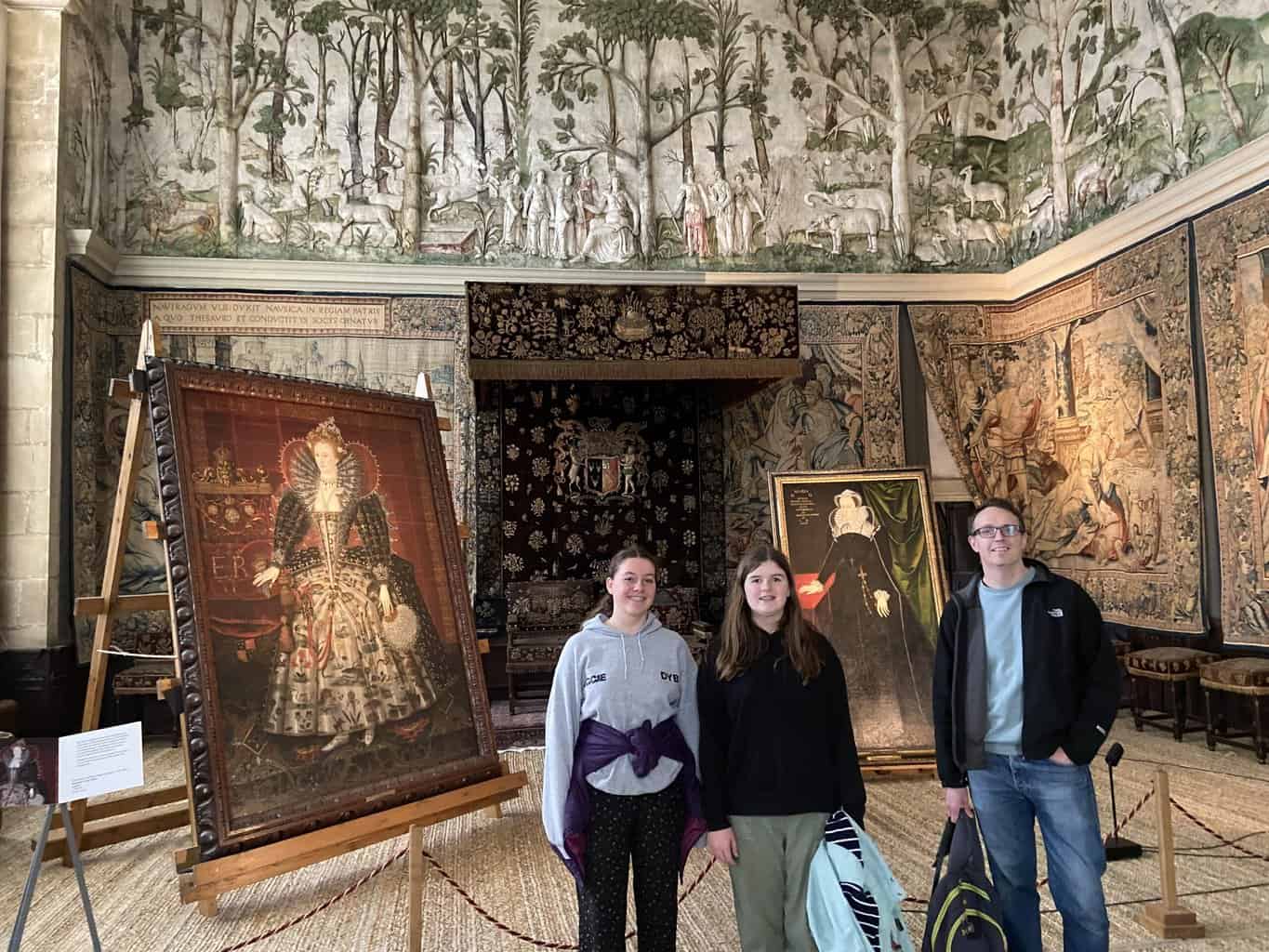
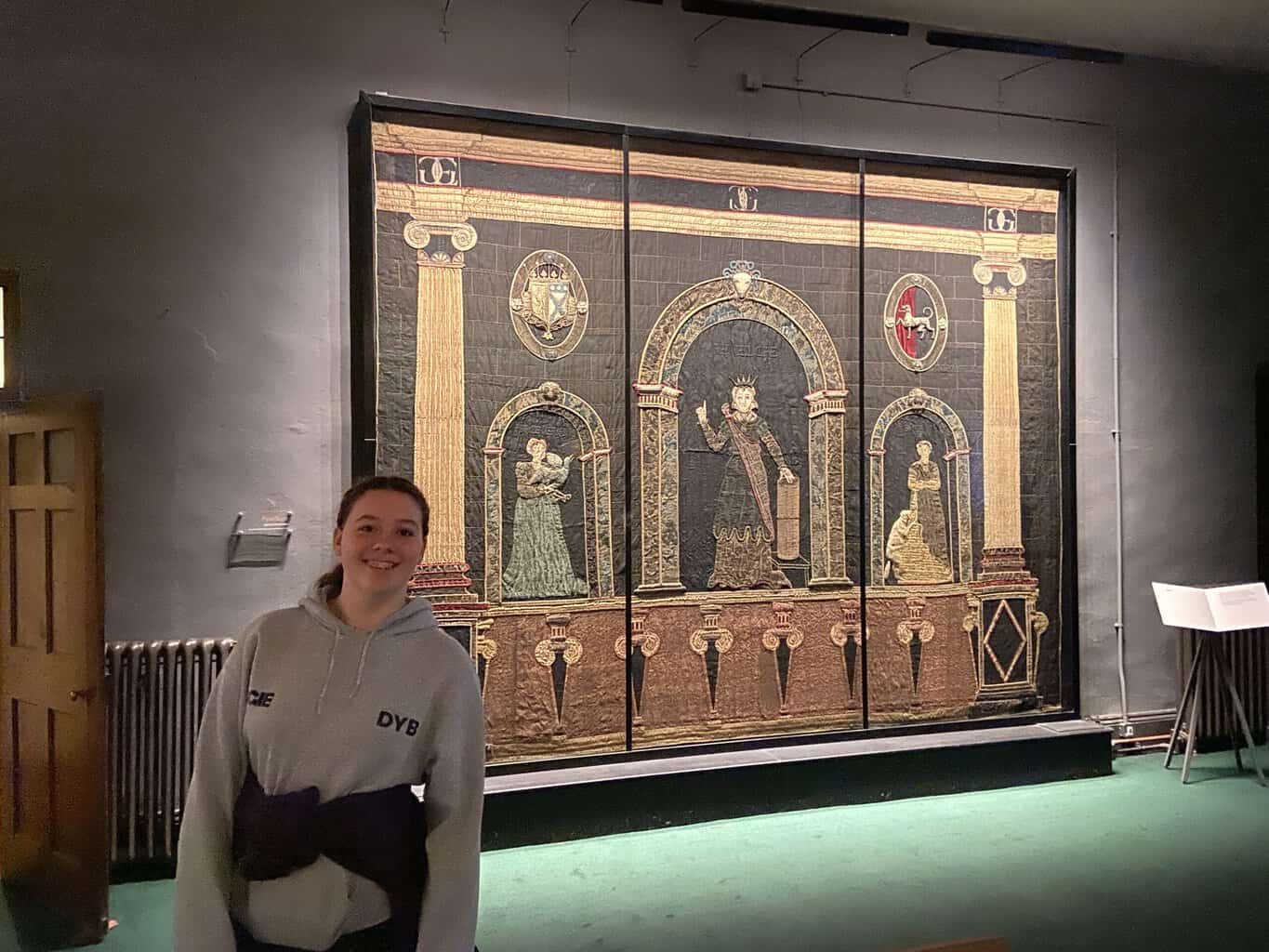
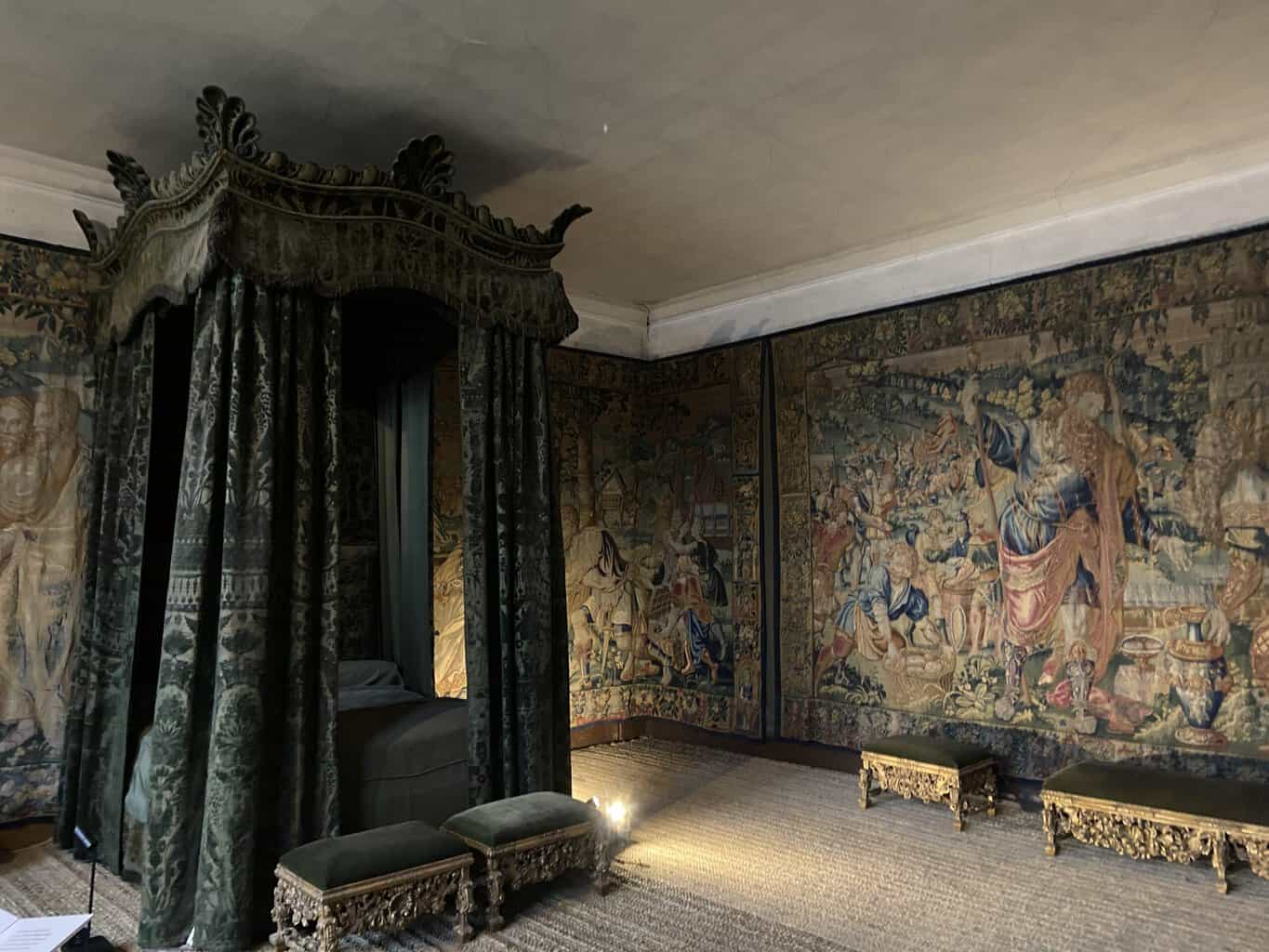
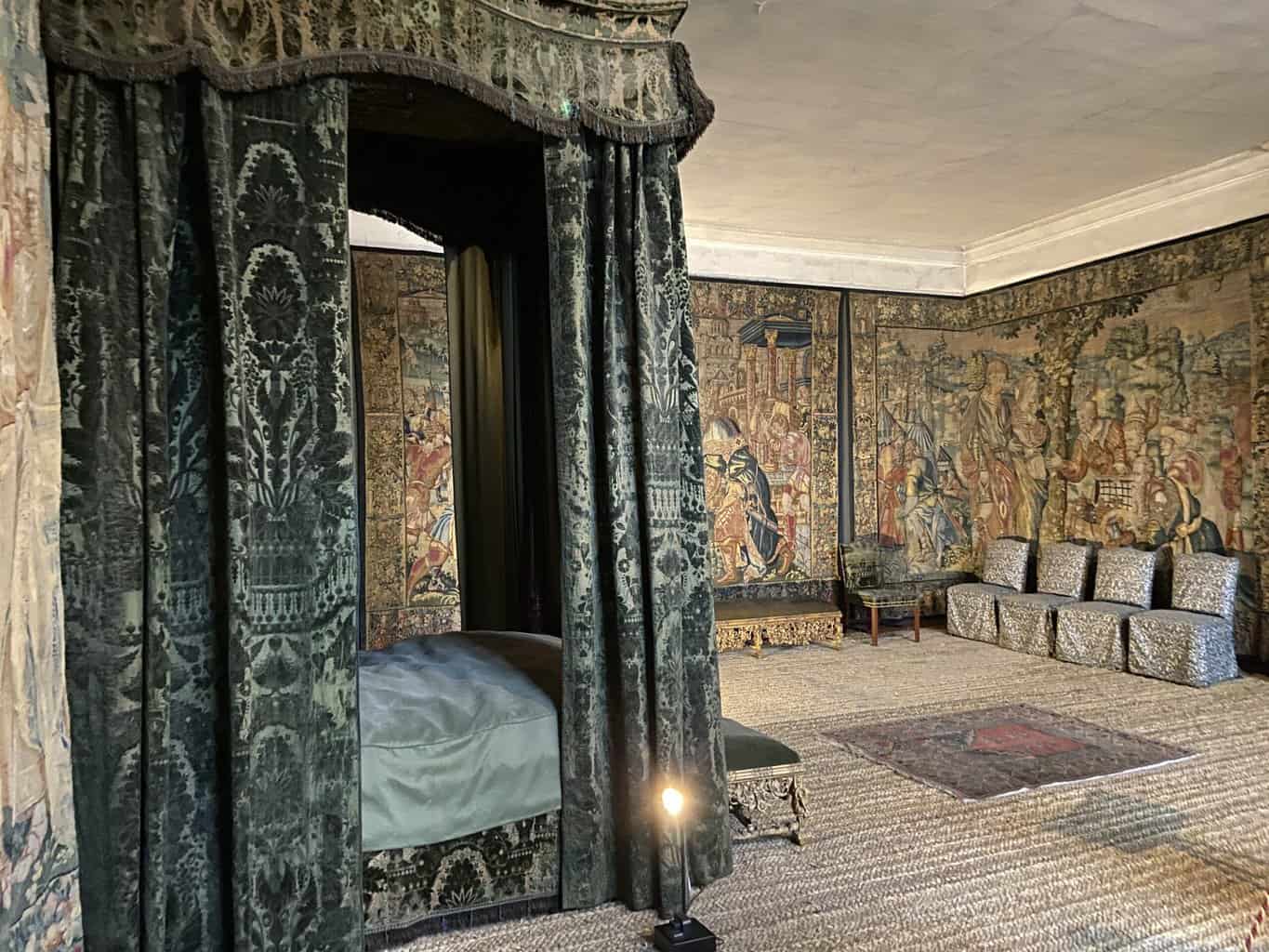
Carrying on through the rest of the rooms we were wowed by how well preserved everything is. There are some amazing pieces of furniture on display – a very large ornate wooden clothes chest caught our eye – along with more portraits, tapestries and some wonderful-looking beds. Towards the end of the tour we found a room which was furnished to look as it would have in the 1950s, when the last residents of the house had lived there.
Click an image to enlarge. Use arrows to scroll through images.
Tap an image to enlarge. Swipe left to scroll through images.
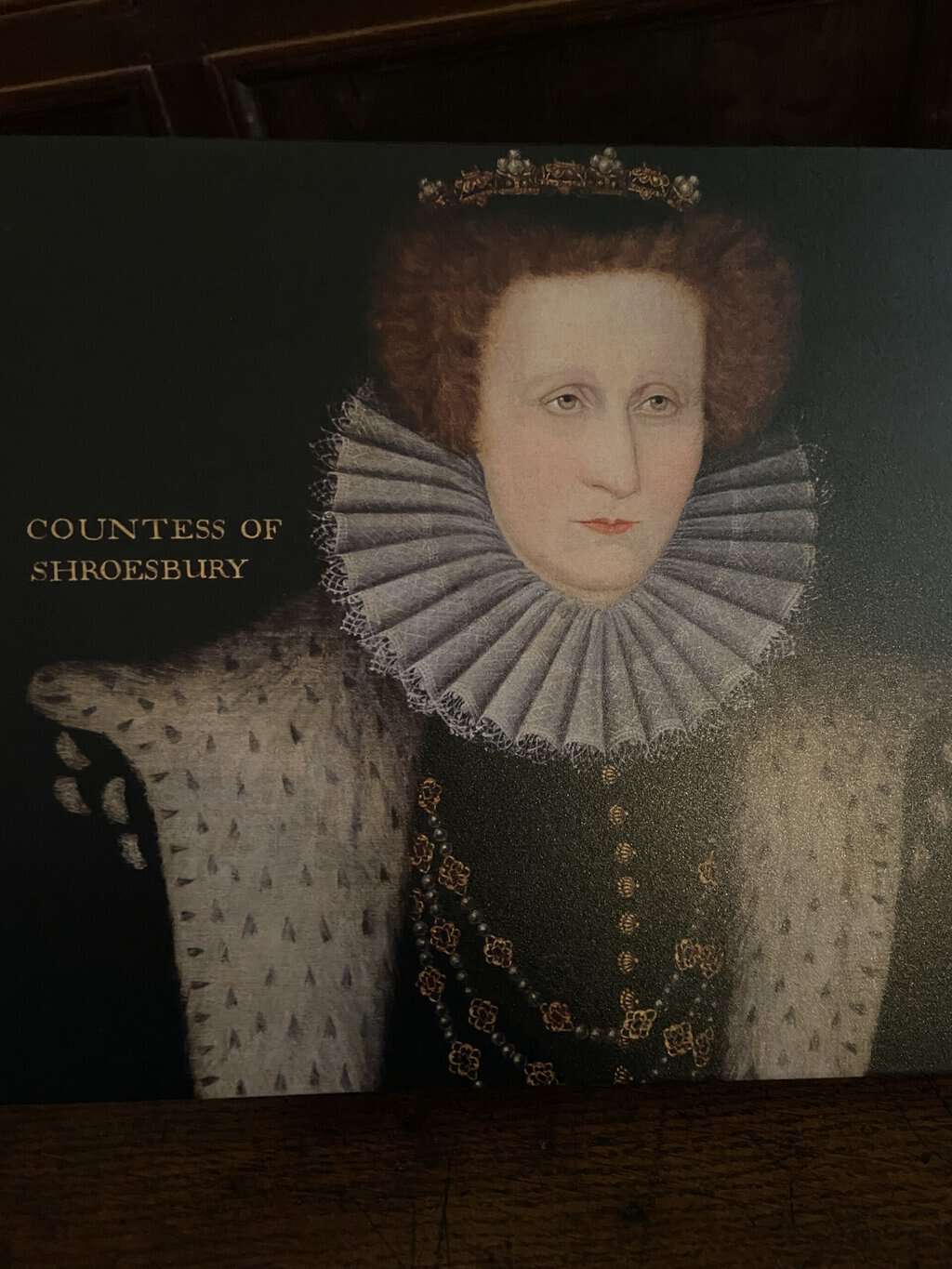
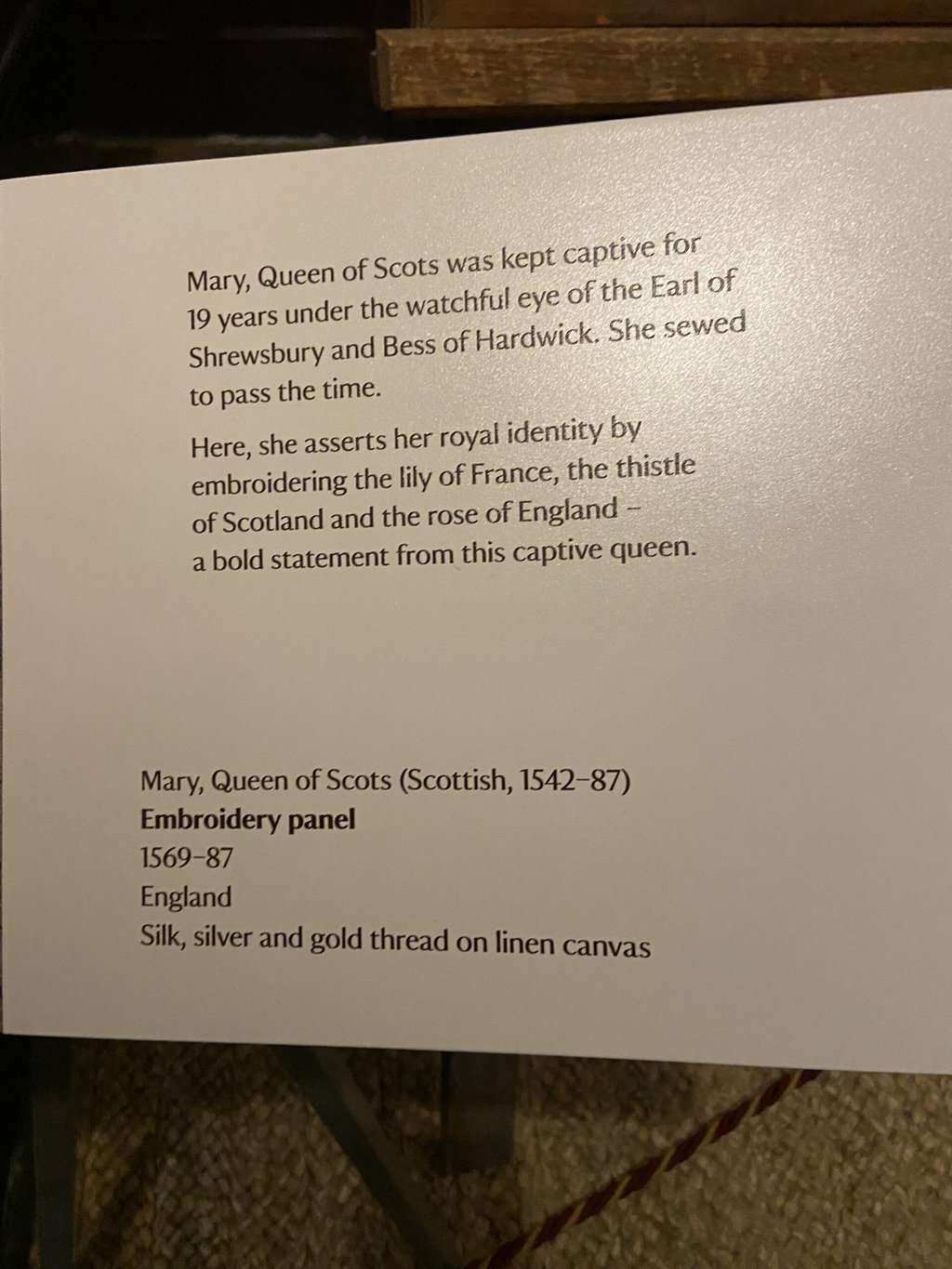
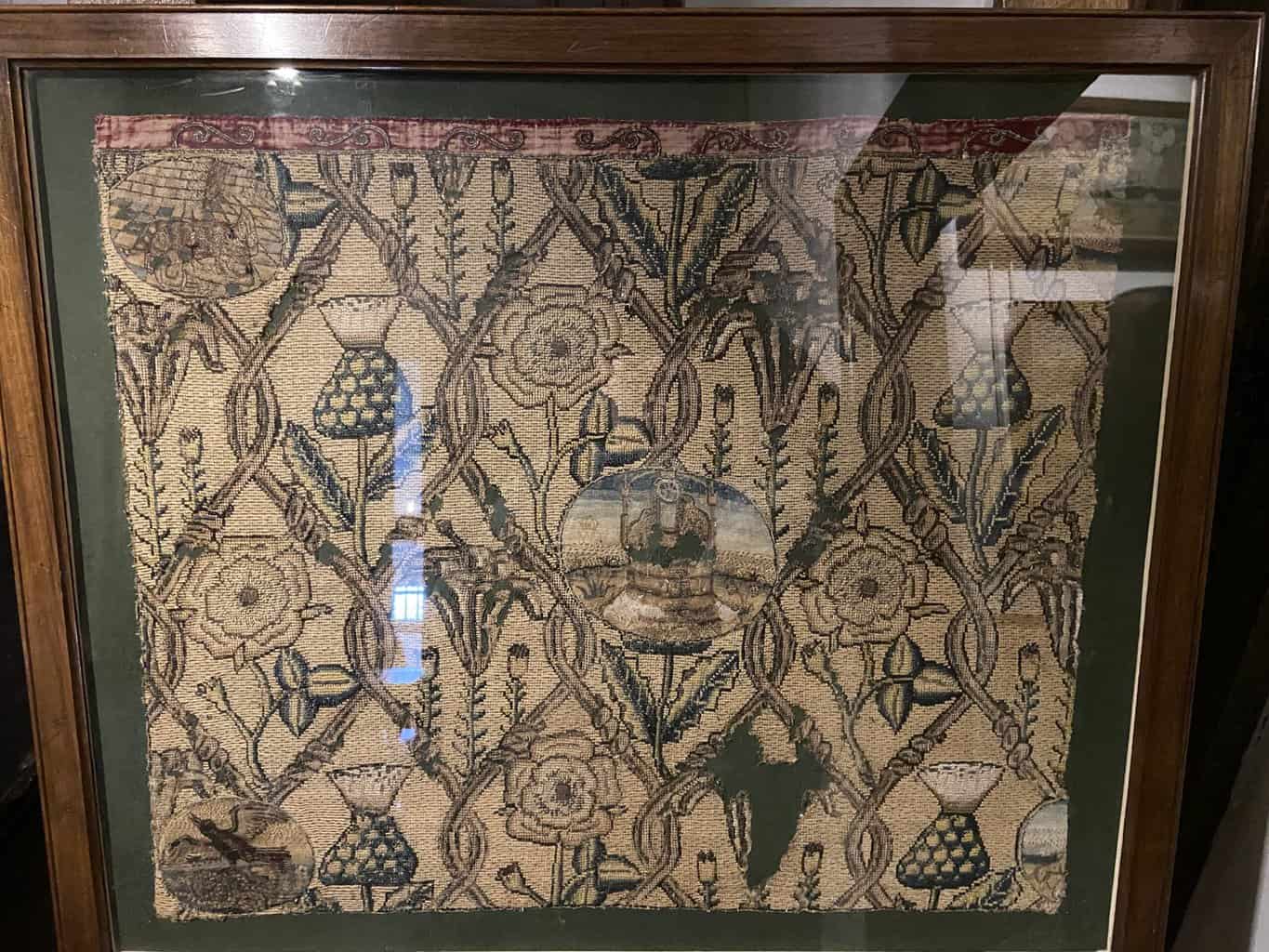
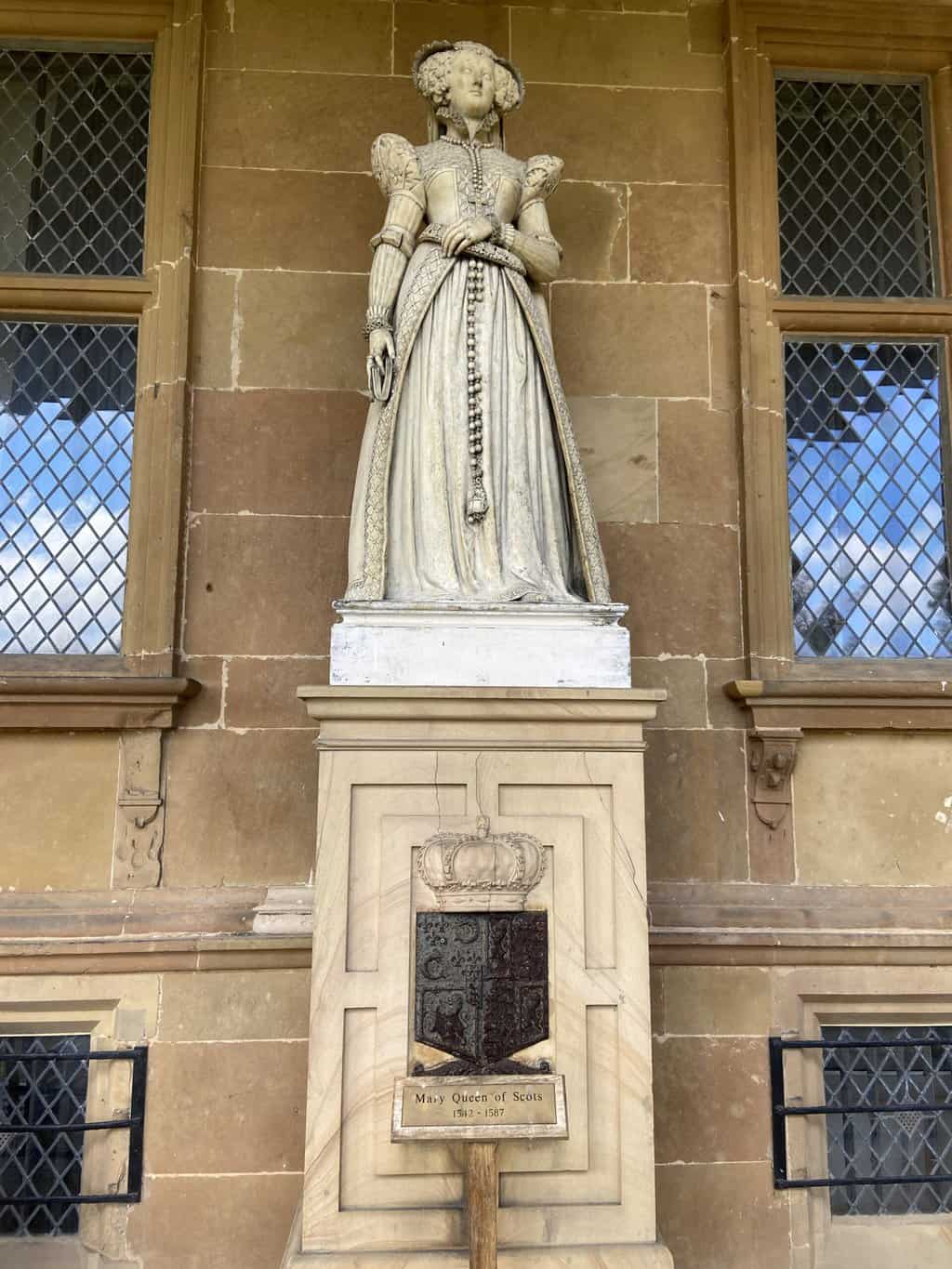
Of course, we can’t talk about Elizabeth I without mentioning Mary Queen of Scots. Mary was imprisoned for 19 years under the watchful eye of the Earl of Shrewsbury, Bess’s fourth and last husband, and Bess herself. Though Mary was never kept at Hardwick Hall – she was held at Chatsworth, one of Bess’s other estates just down the road – there is a nod to her involvement in the whole story with a rebellious tapestry hung above the door of one of the smaller rooms.
There is a room, and a bed, where Mary is said to have slept – but it turns out that this was added in the Victorian era as a tourist attraction! The house wasn’t finished until after Mary had been executed, and the bed has been outed as a 19th-century fake.
Hardwick Old Hall
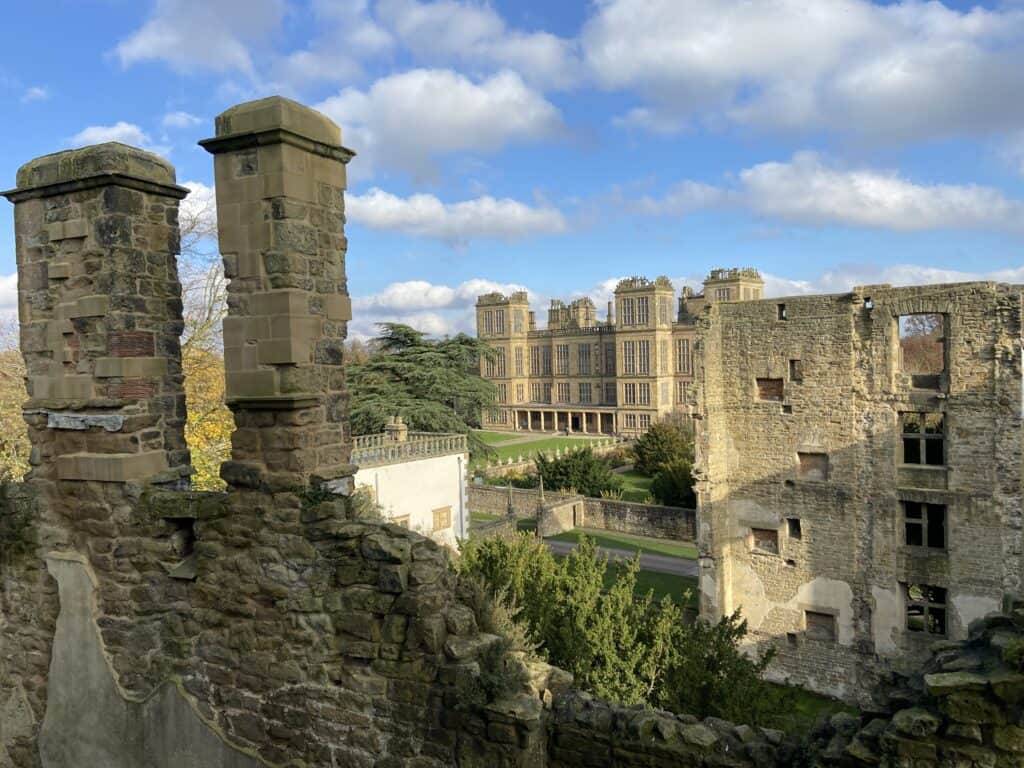
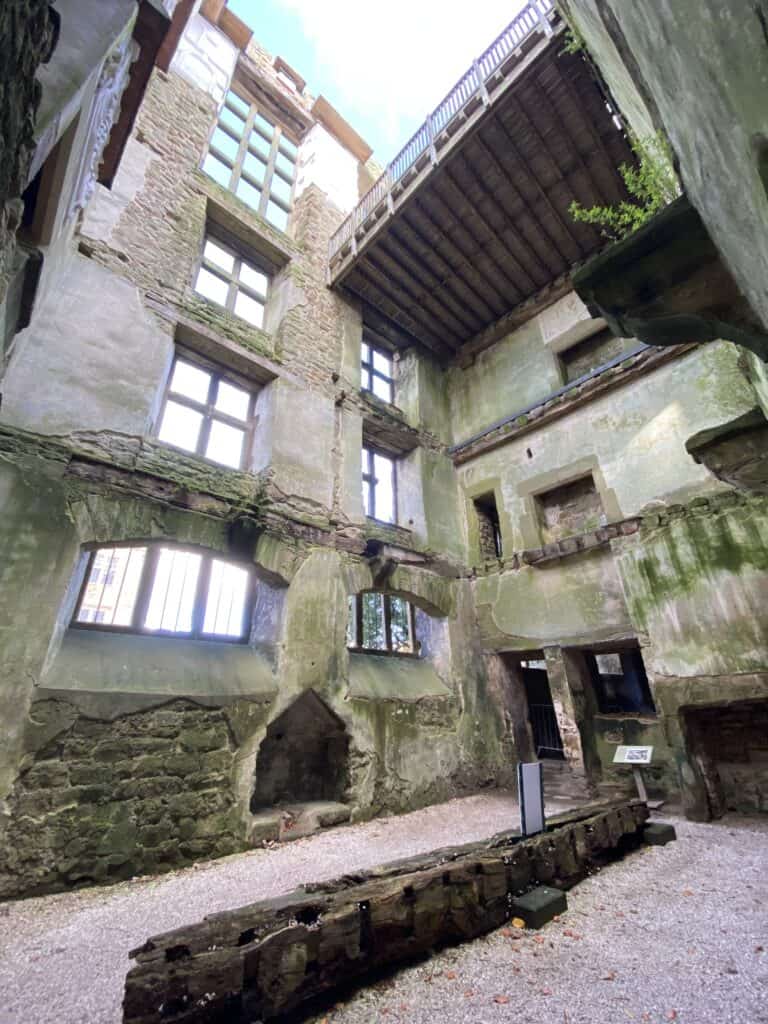
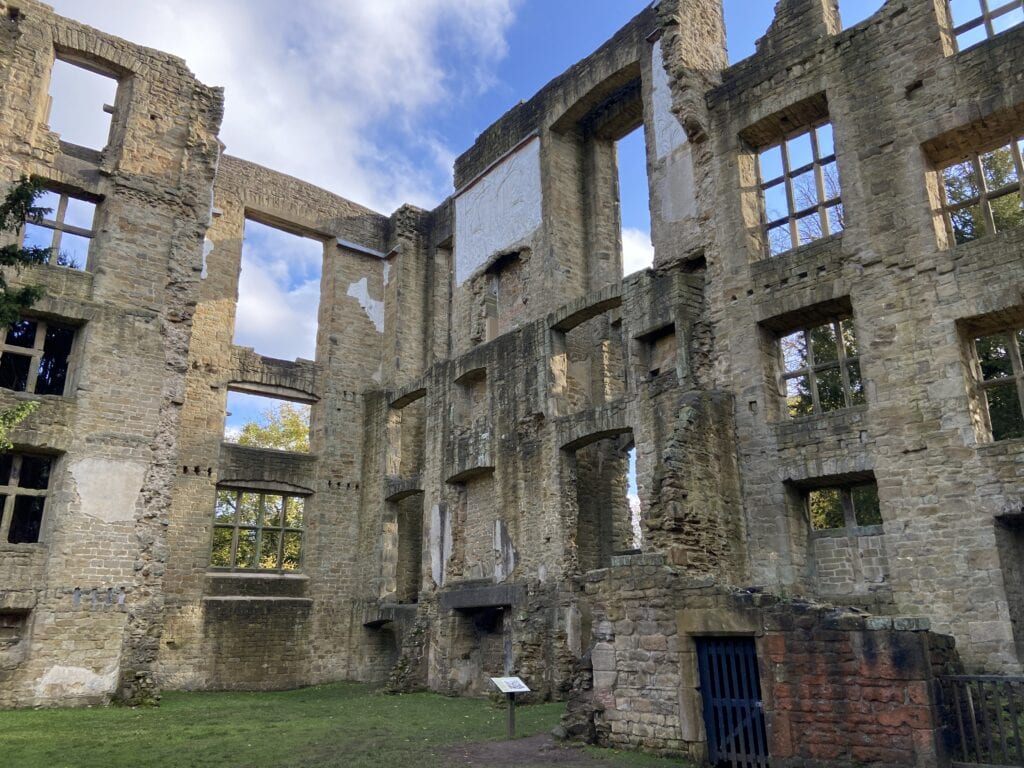
Next door to Hardwick Hall lies the Old Hall. This now-ruined building is looked after through a joint venture by the National Trust and English Heritage, so you can use either’s membership cards to get in.
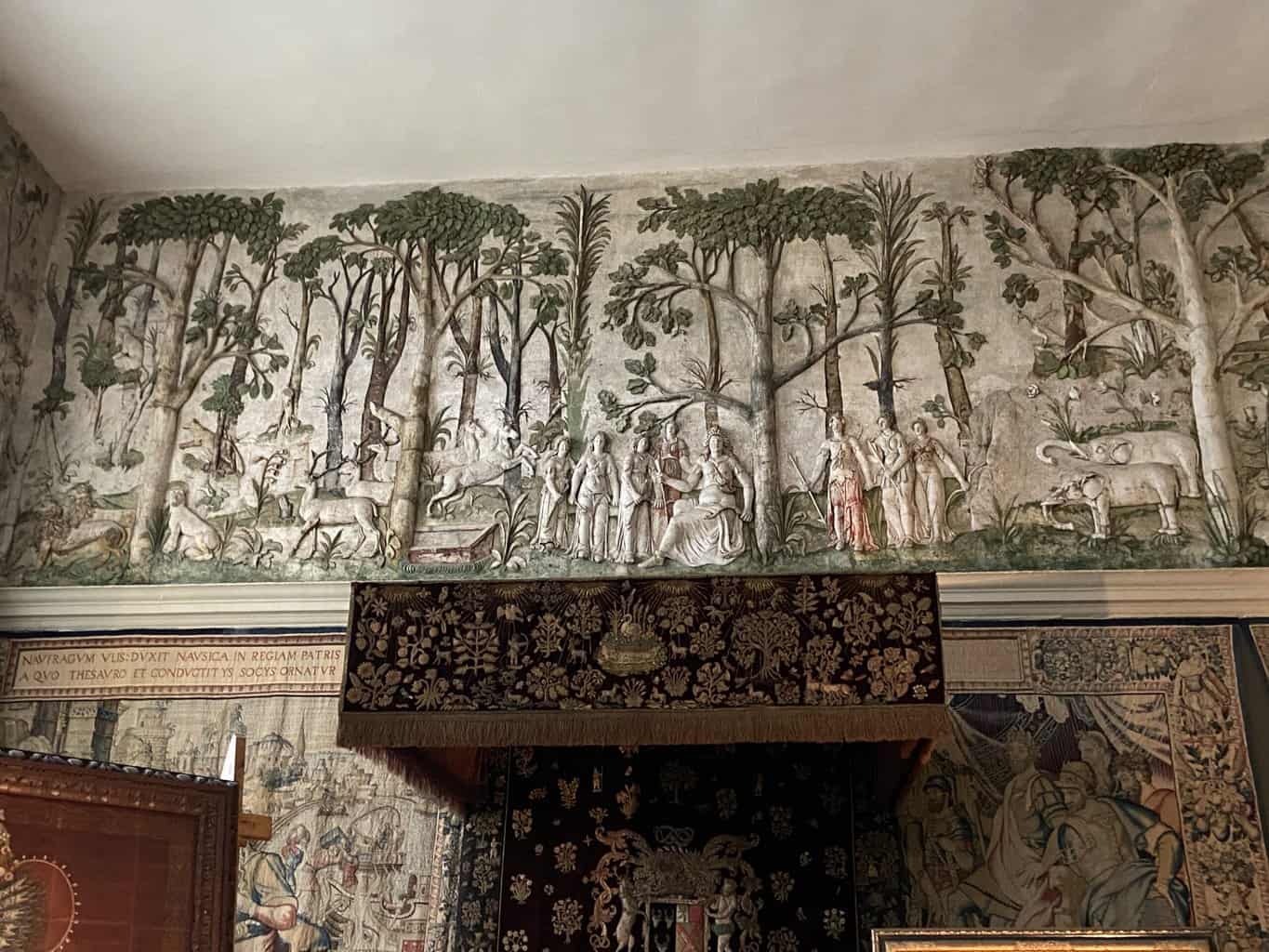
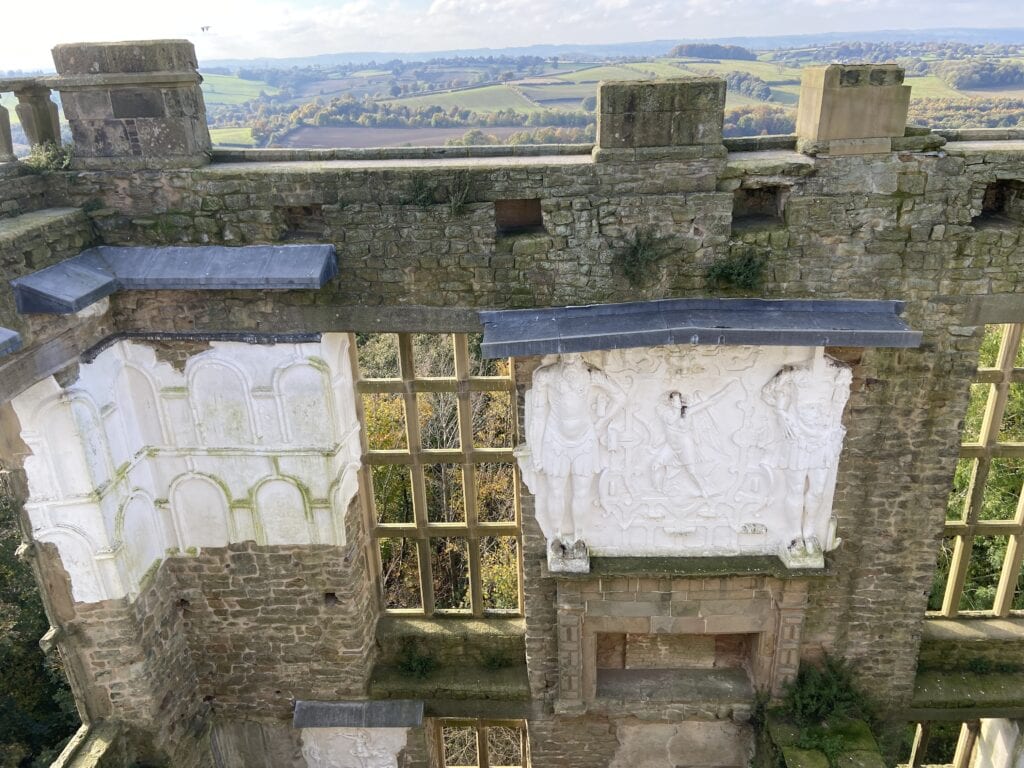
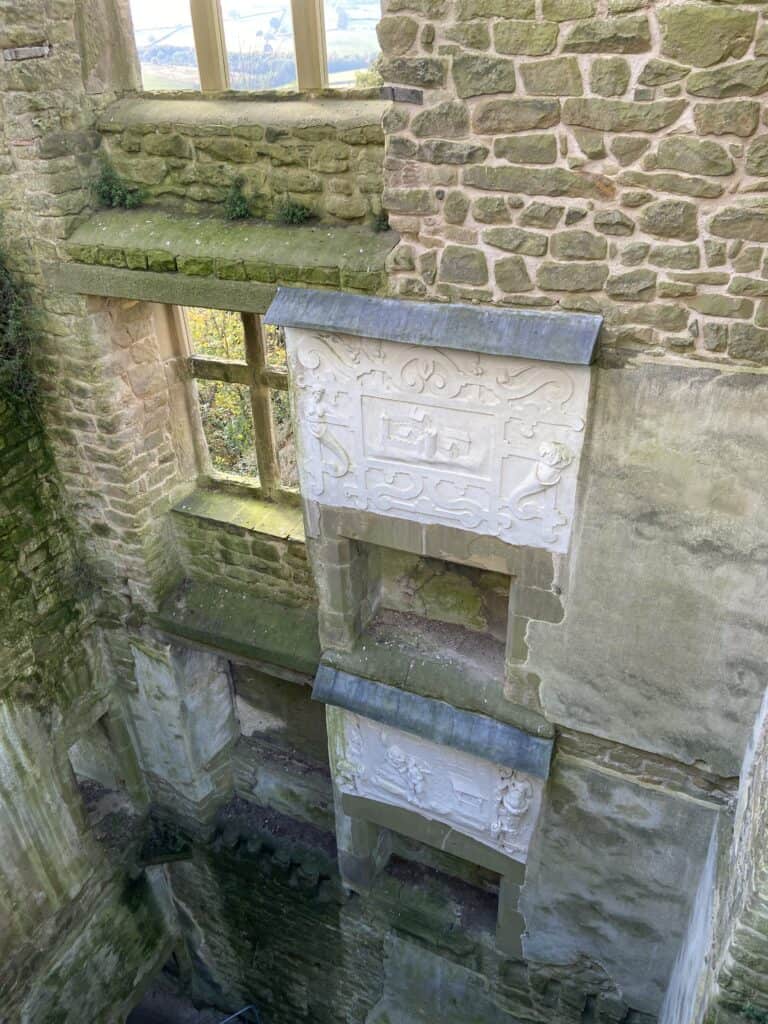
Recent work has seen many of the 400-year-old plaster friezes restored here, and it’s a fascinating old building, but it obviously pales in comparison to its newer neighbour.
Bess actually built this older hall first, after she returned to her ancestral land following a collapsed marriage. Before work was completed on the Old Hall, she had commissioned the building of the new hall next door. The materials that had been used for the roof on the older building were stripped to be used on the newer one – hence it falling into such a state of disrepair.
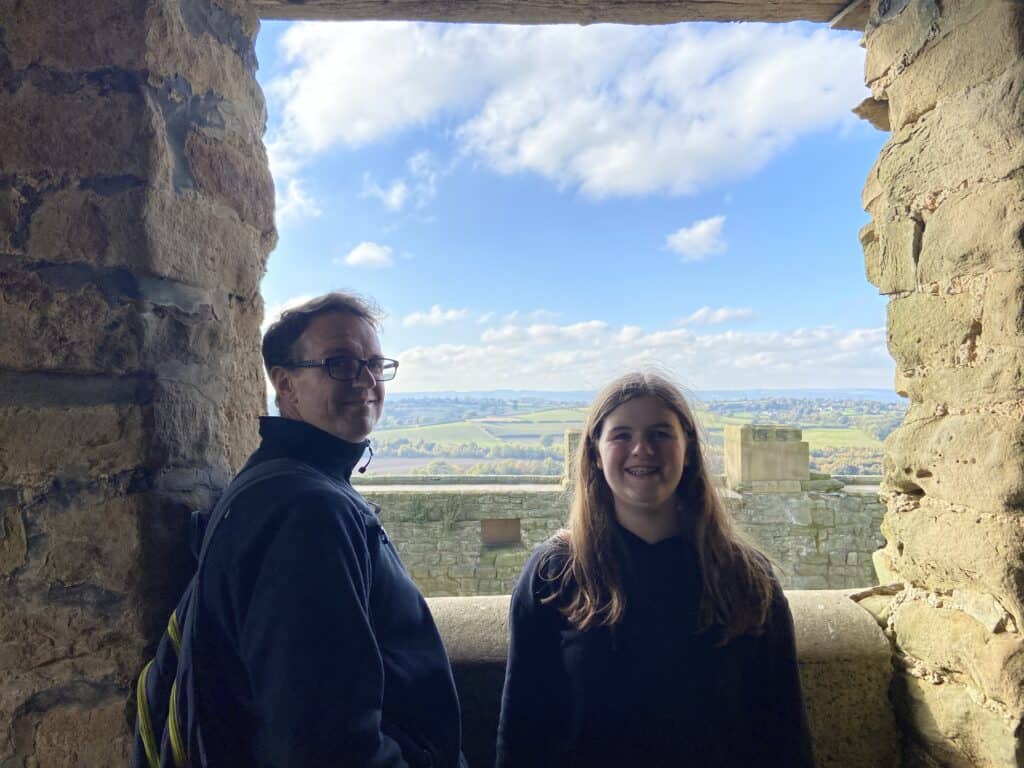
Prepare yourself for a stiff breeze, plenty of stairs and the occasional surprise pigeon (which, as always, delighted our animal lover Peggy).
Click an image to enlarge. Use arrows to scroll through images.
Tap an image to enlarge. Swipe left to scroll through images.
Other things to do at Hardwick Hall
Like with most National Trust properties, there are other things to enjoy at Hardwick Hall. There’s the usual gift shop and cafe, and a second-hand book shop, which we are seeing more and more of at NT venues (not that we’re complaining!).
There’s plenty of green space in which to wander, more formal gardens to explore and traditional games, crafts and den-building equipment available. We’re sure the gardens are spectacular, but we visited in late autumn so everything was looking a bit sorry for itself.
For history fans, Elizabeth devotees or those studying the Tudors for History GCSE, there’s plenty to see and do at Hardwick. We would highly recommend a visit and we plan to make a return trip in better weather so we can see the outside spaces in all their glory.