On this page
- Background to and progress through Maths KS3
- Maths KS3 Textbooks
- Maths KS3 Workbooks
- Online resources for Maths KS3
- How did we structure Maths KS3?
- What am I glad we did for Maths KS3?
- What would I do differently for Maths KS3 if we had our time again?
- When did we progress onto iGCSE maths?
- Other resources we used for Maths KS3
Background to and progress through Maths KS3
You can read in full how we approached Maths KS2 here but in summary we were structured and followed a CGP scheme of work with textbooks. The girls did the textbook for their current academic year and this was completed within that academic year (albeit our year which runs from August to June).
Peggy missed out year 6 maths entirely and moved straight from year 5 onto year 7 maths; both girls started year 7 maths in August 2022.
We moved things up a gear in August 2022 now that Aggie was high school age as a change felt needed. The girls never enjoyed cross-curricula topics throughout KS2 and always preferred to keep subjects totally separate. From August 2022, we expanded the number of subjects we did (Aggie did her first GCSE in September 2022) and so the time we had for maths reduced. Add in the fact that we loved the other subjects a lot more and we did a lot more travelling in term time too, maths was pretty much neglected.
We were good with getting through year 7 maths within a year but there was no consistency at all with years 8 and 9; there was always something better to do than maths! Both girls did two GCSEs each in summer 2023 so all our focus was on those between February and June 2023. In this period, we did next to no maths at all.
We therefore decided in August 2024 that we’d stop using the KS3 textbooks and move onto GCSE work using online resources; we needed to get back to a more structured approach otherwise we’d run out of time to get the exams done in 2025/26. You can read more about our approach to Maths GCSE here where we basically moved away from textbooks to online videos.
Maths KS3 Textbooks
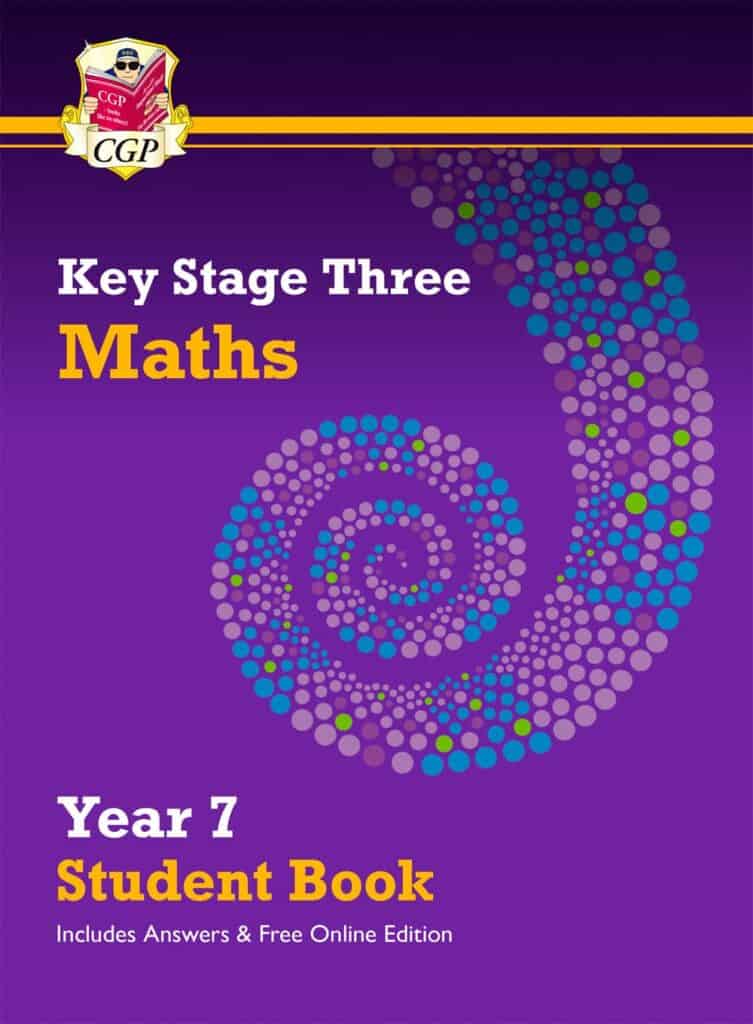
After successfully using the CGP textbooks for KS2, we continued on with their KS3 textbooks. There are three books, one for each of years 7, 8 and 9. Answers to all questions are in the back of each book.
- Key Stage Three Maths: Year 7 Student Book
- Key Stage Three Maths: Year 8 Student Book
- Key Stage Three Maths: Year 9 Student Book


Why did we choose these KS3 maths textbooks?
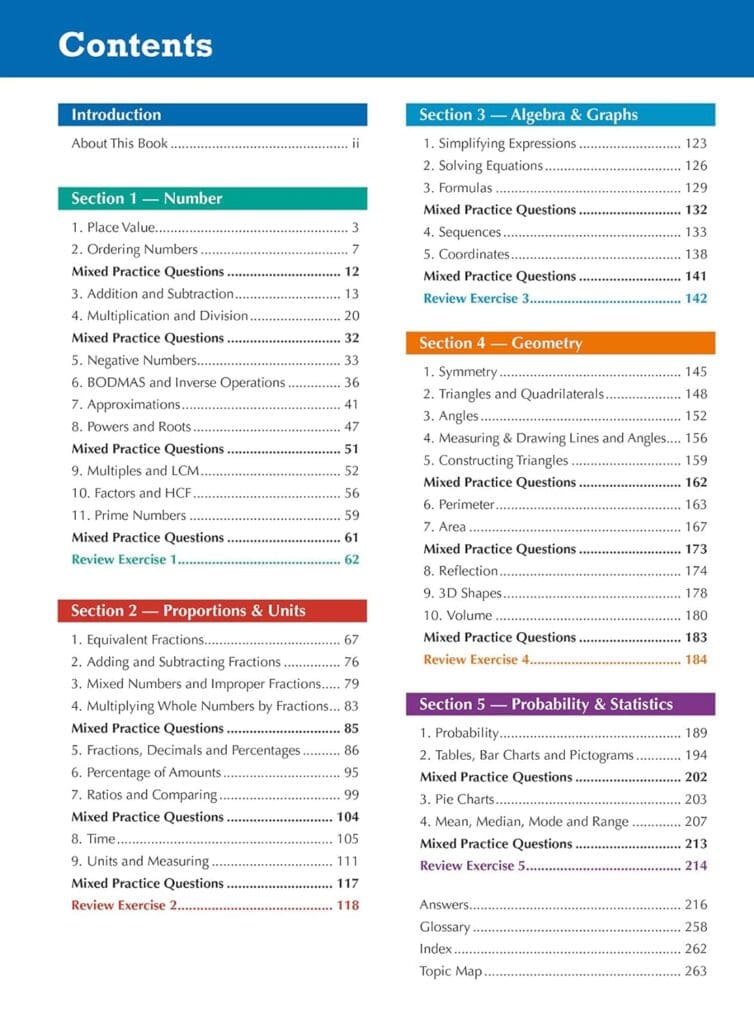
These books comprehensively cover the KS3 syllabus which we hoped would prepare the girls brilliantly for GCSE. The books are broken down into the five different sections on the curriculum:
- Number
- Proportions and Units
- Algebra and Graphs
- Geometry
- Probability and Statistics
At the start of each new topic there are detailed examples which work through the methods needed. Our girls found these straightforward to follow and rarely needed our help to understand them. The book then goes straight into questions which get progressively harder as the topic goes on.
At the end of most sections, eg 1.1, 1.2 etc, there are challenge questions which provide that extra complexity. These really got the girls thinking and we often worked through these together if the girls were struggling.
After every couple of topics, there are mixed practice questions which combine all the topics learned so far under that section. This keeps knowledge topped up and is handy revision.
Then at the end of each section, there are many pages of review exercises. There are plenty of questions to make sure all elements of that topic have been understood.
Layout and Looks
We found these textbooks a lot less cluttered than the usual CGP books we’ve come across. Pages are well laid out with worked examples in clear yellow boxes.
There are the usual random CGP cartoons throughout the pages but these don’t detract from the content. A lot of the time our girls didn’t even notice or comment on them.
Answers
All answers are in the back of the book (although I wish they had them as a pull out section) and there is a helpful degree of explanation for those answers for the first few questions in each section.
Online access
One of the major bonuses for us of CGP books is that, as well as the physical copy of the book, you also get an online version too. This is especially useful when you have more than one child using the book at once. It also means we don’t have to take the actual book with us when we go on our travels.
Maths KS3 Workbooks
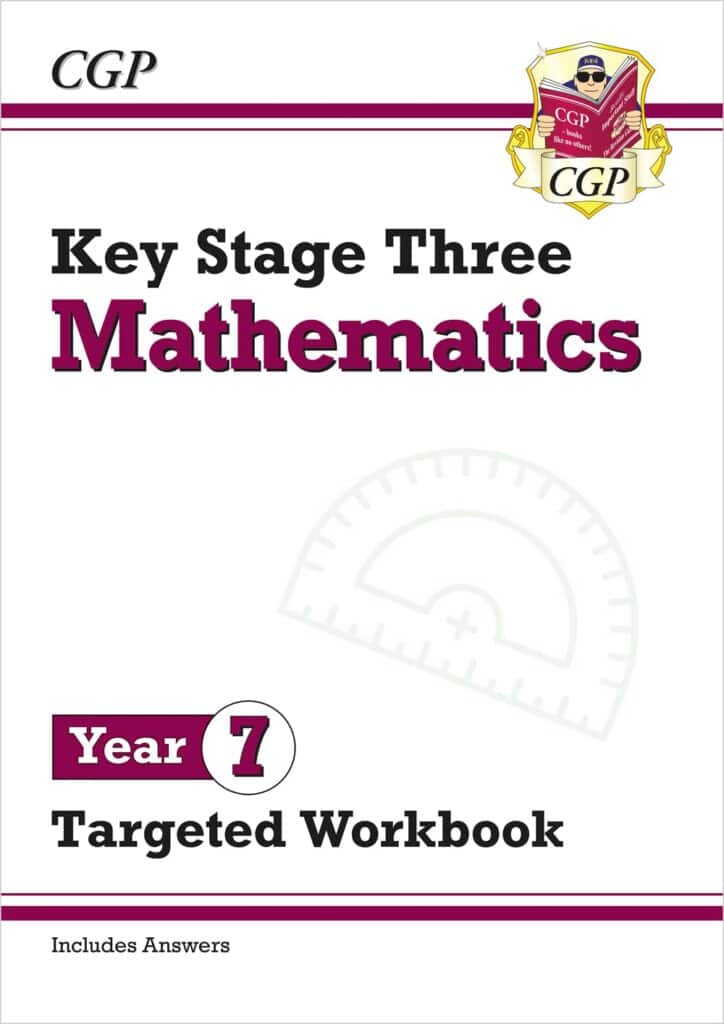
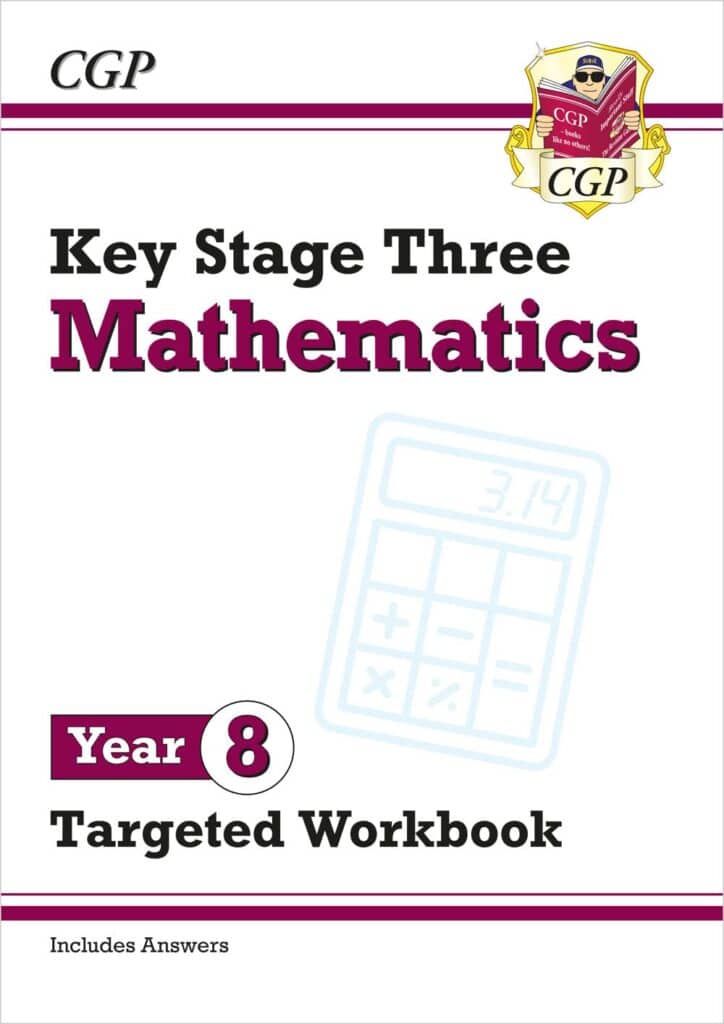
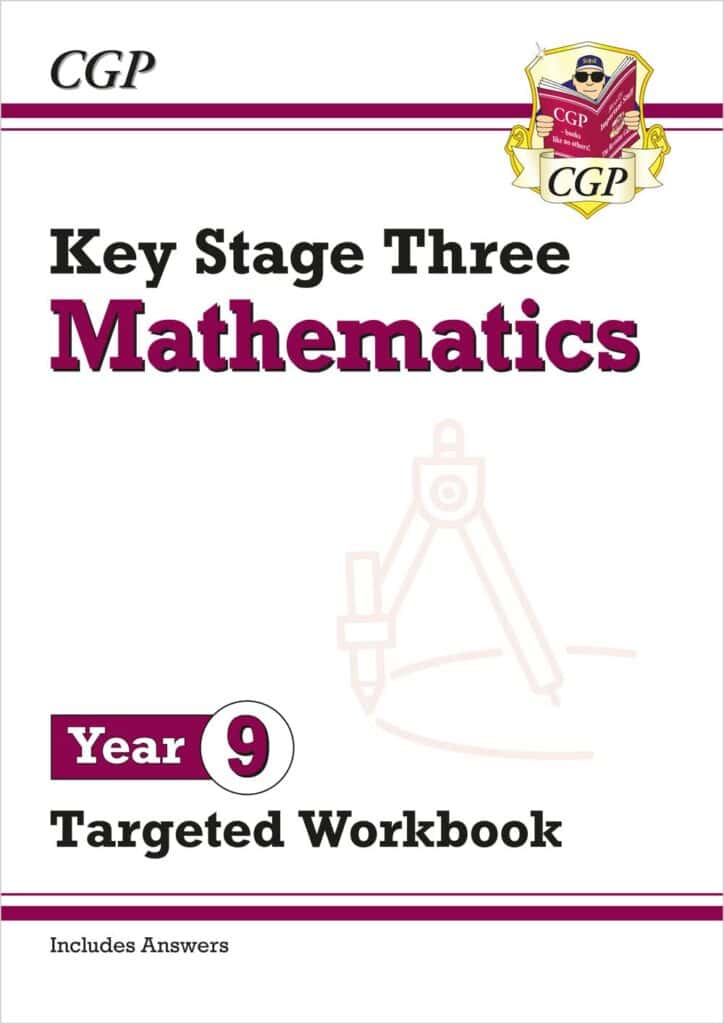
There are additional workbooks which accompany these textbooks. CGP has what feels like a confusing array of different options, but we opted for the targeted workbooks for each academic year. Rather than completing these as we worked through the textbook, we decided to leave these until the very end of each academic year and so use them as handy consolidation and revision before moving onto the next year’s book.
- KS3 Maths Year 7 Targeted Workbook
- KS3 Maths Year 8 Targeted Workbook
- KS3 Maths Year 9 Targeted Workbook
So, these CGP resources are completely perfect….
My one criticism of the textbooks is that there are the same number of questions on each and every topic, but some topics definitely deserve more than others. I therefore found, on some topics, that I supplemented the textbook with more questions from other sources like Corbett Maths.
Online resources for Maths KS3
Corbett Maths
My first go to for any additional resources is Corbett Maths. This website covers all primary level maths and secondary level maths up to GCSE and is absolutely FREE!
There are separate instructional videos on every topic going and these have accompanying worksheets (with answers). Sometimes I just watch a video as a quick crash course in something but quite often we watch them together if it’s a problem area.
The worksheets are great too but they leave very large spaces for answers so they tend to be very long documents to print off. I therefore either condense 2 or 4 pages onto one side of A4 when I print or I write out particular questions in the girls’ exercise books. I’m all for saving paper, ink and printer stresses!
Mathswatch
We went through waves of enthusiasm on this website. Sometimes the girls were really into it but other times they weren’t bothered at all. I think we used it for possibly four or five months before it got completely abandoned. I do know families who use this as their sole maths resource though so it’s definitely worth checking out to see if it suits your learner; unfortunately it didn’t work for us.
How did we structure Maths KS3?
Did we follow academic years for Maths KS3?
We always aimed to complete one book each academic year and did this from KS2 right up until the end of the year 7 book. We then changed things up a bit in response to the girls having even less enthusiasm than normal for maths. We moved to working through year 8 and 9 together. So after completing section 1 in year 8, we moved onto section 1 in year 9 and then returned to year 8 for section 2 etc. I write about why we went with this approach in this blog post here.
As noted above, we were not consistent at all with working through years 8 and 9 and soon got “behind”. We did brilliantly up to Christmas 2023, but then 5 weeks in Mexico in January 2024 and two GCSEs each in June 2024 meant maths became a distant memory! By September 2024 we had completed about two fifths of year 8 and one fifth of year 9.
How did we spread the topics out over the year?
Using the index from the textbook, I did a rough plan of how many sections we wanted to complete each month so we could get the book completed in our academic year. After a year or so, I developed a good feel for how long the girls took to complete a certain number of pages. We didn’t necessarily do the sections in order; the girls often liked to jump around to keep things more interesting.
Using our aims approach to learning, the girls and I decided what topics they’d cover over the next few weeks. They worked out how many sessions they’d need to do a week to achieve this and then pencilled those sessions in their diaries. They then got cracking!
Sometimes sections would take longer than anticipated; some were finished super quickly. We just kept reassessing at the end of every month where we were at overall and made adjustments accordingly.
Once the year 7 textbook was completed, we then used the CGP targeted workbook mentioned above as consolidation for everything they’d learned in the year. If the girls had forgotten how to do something or struggled with a particular topic, we then revisited the textbook and repeated a few of the questions in there.
How much maths did we do a week?
As little as possible!! The girls knew they had to do it but it was very much seen as a chore. For the year 7 maths when we were more consistent, the girls tended to do maths 2 or 3 times a week, for maybe an hour at a time.
For the year 8 and 9 work, we did it sporadically, if at all!
How much advanced planning did I do for maths?
Absolutely none until it got hard! We just plodded through the books, taking it section by section. The girls mostly worked independently and marked their own work; they let me know if they needed help or if the answer didn’t make sense.
Occasionally I needed to find additional resources for areas the girls struggled with, but I nearly always found these on the same couple of websites (see above). So once we’d finished a maths session for the day and the girls went off for a break, I’d find extra things if needed and either print them off or copy questions into their exercise books ready for the next session.
Once we started some year 9 maths, though, this approach started to change. We’d reached the limits of my maths winging-it abilities! Normally if the girls were stuck on something, I could read through the textbook for a quick crash course and then I could help them on the spot. I increasingly found myself, though, saying “You go and play whilst I work this out” and they’d end up with a thirty minute break whilst I try and make sense of it!
So for some year 9 topics, I started to read through the sections and do a few questions myself before the girls did them so I got a head start and could more readily help them when they needed it. I usually did this the evening before I knew we’d be doing maths.
I could see my prep work for maths was only going to increase as the difficulty increased and that’s one of the main reasons why we then changed our approach when it came to the GCSE.
What am I glad we did for Maths KS3?
I’m glad we continued to use the CGP books for year 7. They’re a great resource which guided us perfectly through year 7. Failures after this point were totally down to us and not the resources we had!
What would I do differently for Maths KS3 if we had our time again?
Where do I start….?!
We planned to be and should have been consistent with maths in 2023/24 but doing a batch of GCSEs totally derailed us. I wish we’d done at least some maths every week, even if just one session. The longer it got left, the harder it became to get back to it again (we’ve already missed four weeks, what’s another week?! type mentality).
We’ve managed to since get back on track thanks to Maths Genie but if we’d left it any later, we’d be struggling to be GCSE ready before June 2026. Talk about making life hard for ourselves!!!
If we were to have our time again, I wish we’d done the CGP Year 7 book but then moved onto Maths Genie after that. That would have better suited the available time and energy we had alongside the GCSEs we were doing. If we hadn’t have been doing exams, we probably would have been fine carrying on with the year 8 and 9 books. Although, after four years of faithfully following the CGP textbooks, I do wonder if perhaps we needed to try something different and that’s why we rather stagnated math-wise…
When did we progress onto iGCSE maths?
After totally neglecting maths throughout 2023/24, we decided we needed to change things urgently from August 2024 as we had just two years to get both girls through GCSE maths before leaving for our family gap year in July 2026.
We needed better structure and something that didn’t require me to “teach” the girls as my maths knowledge had now run out! We took the leap in August 2024 to use Maths Genie and I’m pleased to report that by summer 2025 both girls had completed all the foundation level content and were well underway with higher level too. Maths Genie has saved the day! More on this on our iGCCE Maths page.
Other resources we used for Maths KS3
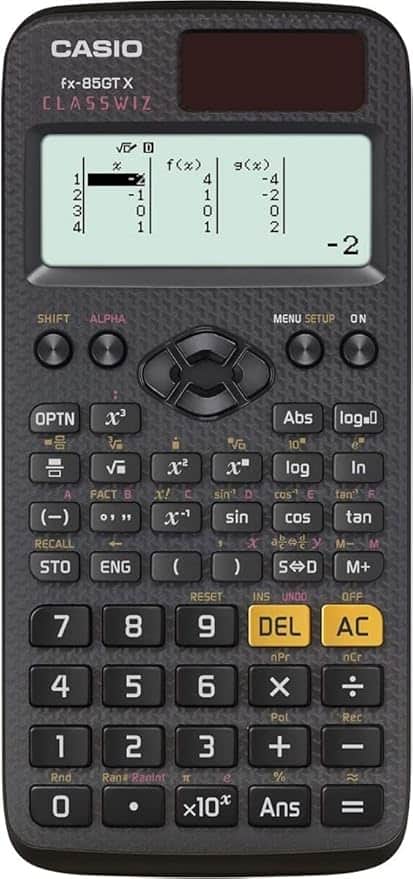
We invested in two GCSE exam board approved scientific calculators as the girls needed one each.
They can be surprisingly expensive on Amazon and so I’ve not included an affiliate link. We got ours for £12 each from the Back to School range in Tesco over the summer holidays. So I’d definitely keep an eye out in the supermarkets.
They seem to bring out new models every year. Our model pictured here was bought three years ago so I suspect it’s been superseded several times by now. They all do the same thing though!

We use one 100 page A4 red exercise book for each academic year and it comfortably fits all the answers in from one textbook. It has squared paper in so it’s good for tables and graph work.
These washable window pens are great for writing on windows or mirrors. When enthusiasm was low and it was too much of an effort to put pen to paper, we put pen to window instead. That’s a LOT more fun apparently!

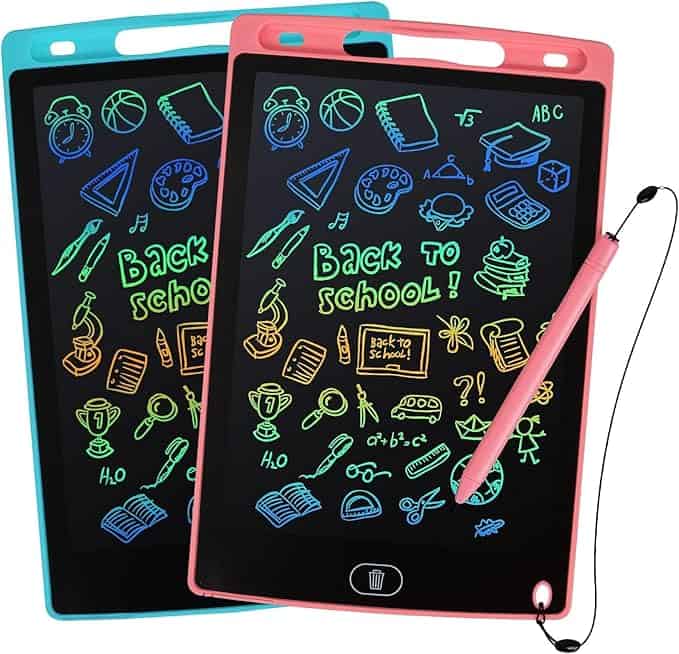
These writing tablets were a later purchase but I wish we’d got them much earlier. They come as a pack of two which is handy for our girls to have one each.
These soon replaced our white boards which can get messy, especially with left-handers. These are a much cleaner option and easier to store too.
Do you like the look of any resources on this page?
If so, please consider clicking on the above affiliate links if you wish to make a purchase. This means we’ll get some commission, at no extra cost to yourselves, which we can put towards more home ed resources and our huge 2025/26 GCSE exam bill which currently stands at an eye-watering £3,190. Your support is very, very much appreciated!