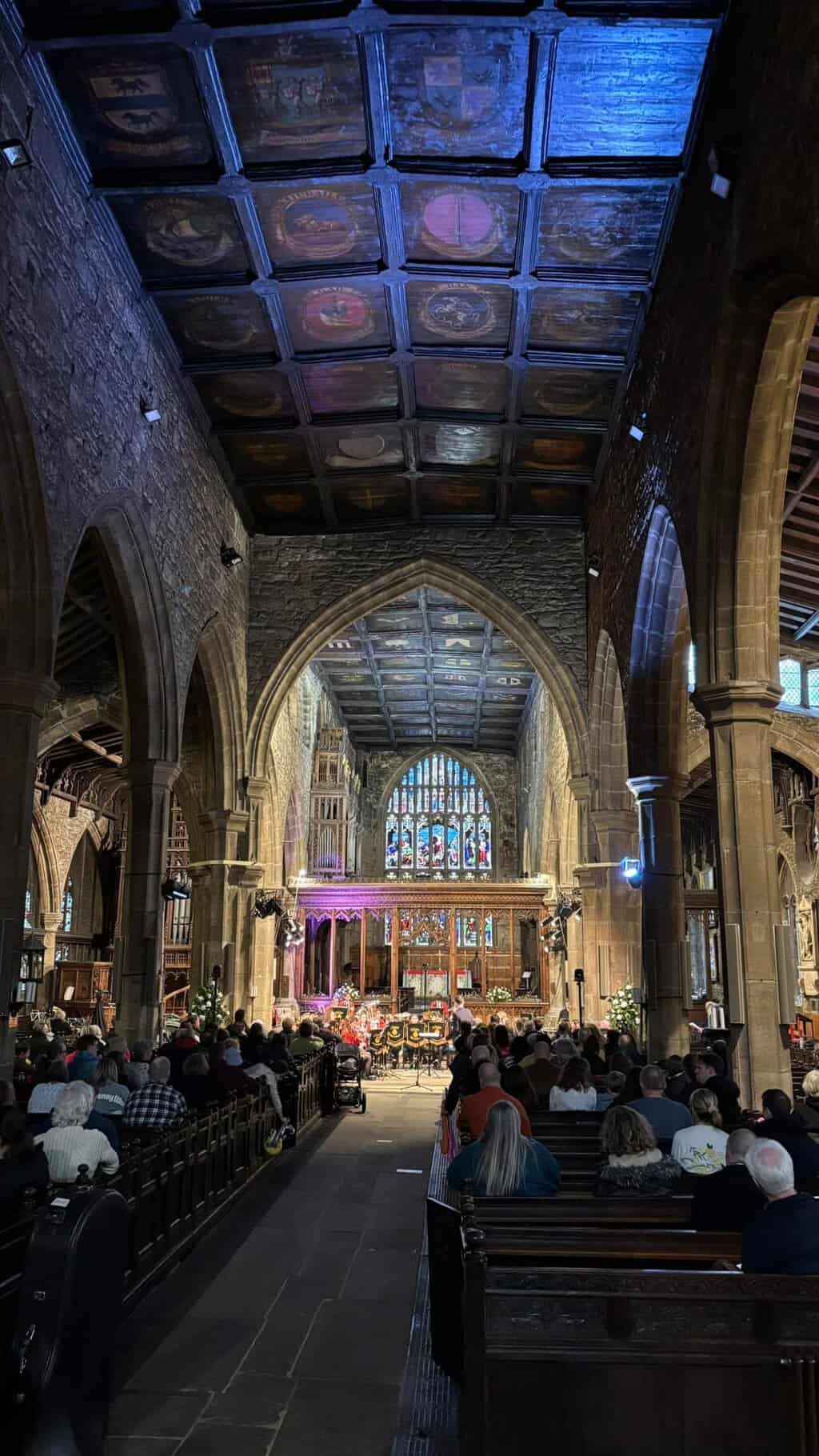
Over the last couple of years we’ve been pretty regular visitors to Liverpool. It’s easy to get to on the train from Manchester (and really good value if you get the tickets in a sale and/or have a Family & Friends Railcard). There’s plenty to see and do for free – and we love to wander around places and just soak up the vibes – but we are also a family that loves museums, and Peggy is a big fan of The Beatles, so it just makes sense as a day out or a weekend away.
We’ve also been learning a little bit about the Second World War, with a visit to the Stockport Air Raid Shelters, and Aggie especially is very interested in this period of history.
We found out about the Western Approaches Museum via the Blue Peter badge website, which lists all of the places that our kids can get into for free with their Blue Peter badges. That being said, children under 16 get into Western Approaches for free – so thank you to Blue Peter for highlighting the museum, but the badges were surplus to requirements.
What is Western Approaches?

Situated in Derby House, not too far from the Royal Liver Building, Western Approaches tells the story of the work of the Western Approaches Command, which sought to weaken the threat of Nazi U-boats around the Atlantic ocean.
Derby House itself is the original site for the command centre, and has been restored to accommodate the exhibitions and bring to life what the building would have looked like during those times.
The Western Approaches museum aims to recreate the atmosphere of the building during its use as a key strategic location in the Allied war effort, with explanations and recreations of the wartime environment both inside and outside of the building.
What is there to do?
On entering the museum there’s a neat little set-up which essentially shows you the idea behind the command centre – to find and target enemy U-boats. It’s a clever little display which gives you an insight into the brain power required to work here.
Further on, there’s a recreation of a 1940s street, with shops and buildings, some boarded up, and an area with a video telling the story of a man who bought a Nazi U-boat (U-534 which you can find out more about here) and is aiming to restore it.
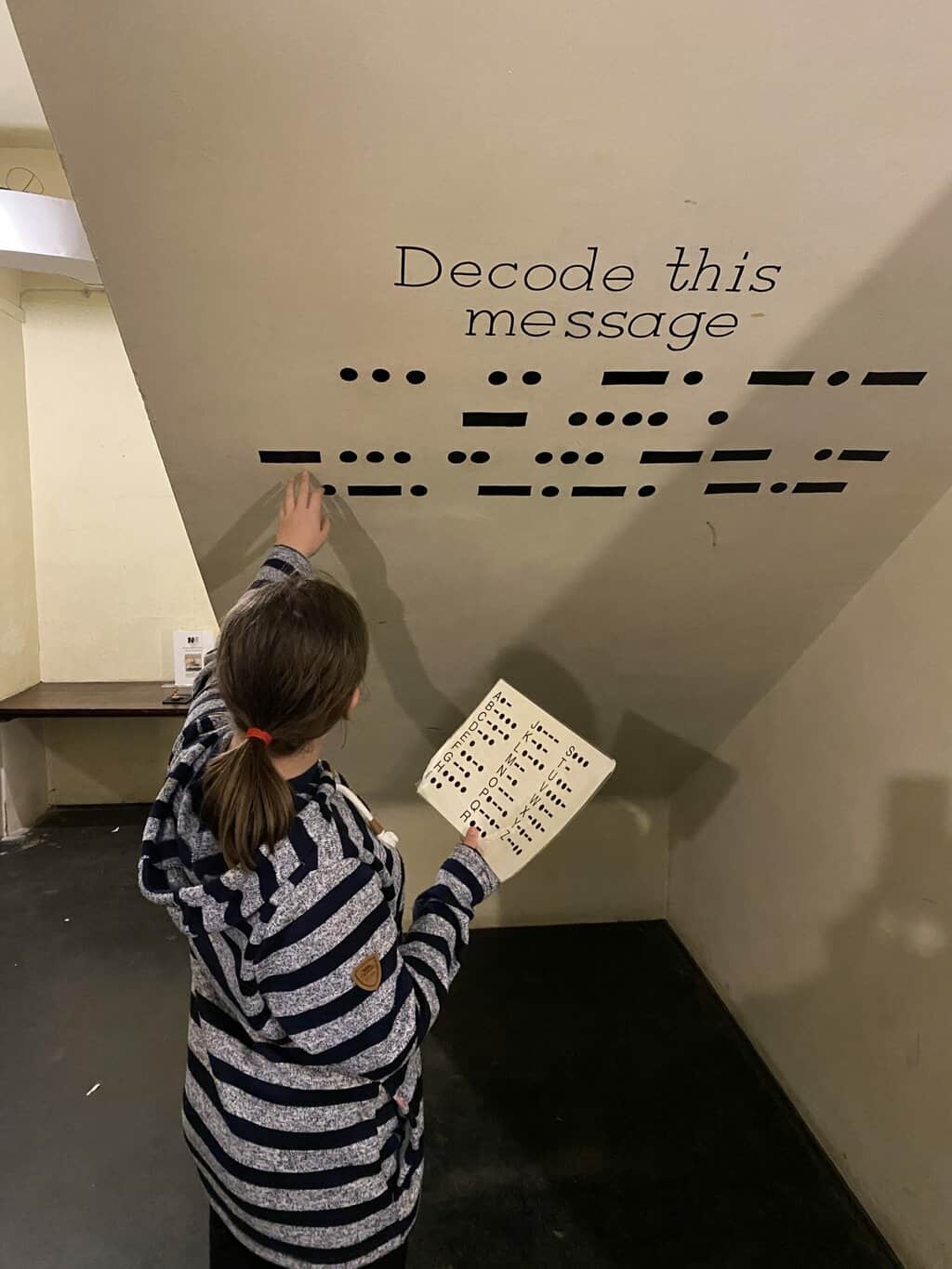
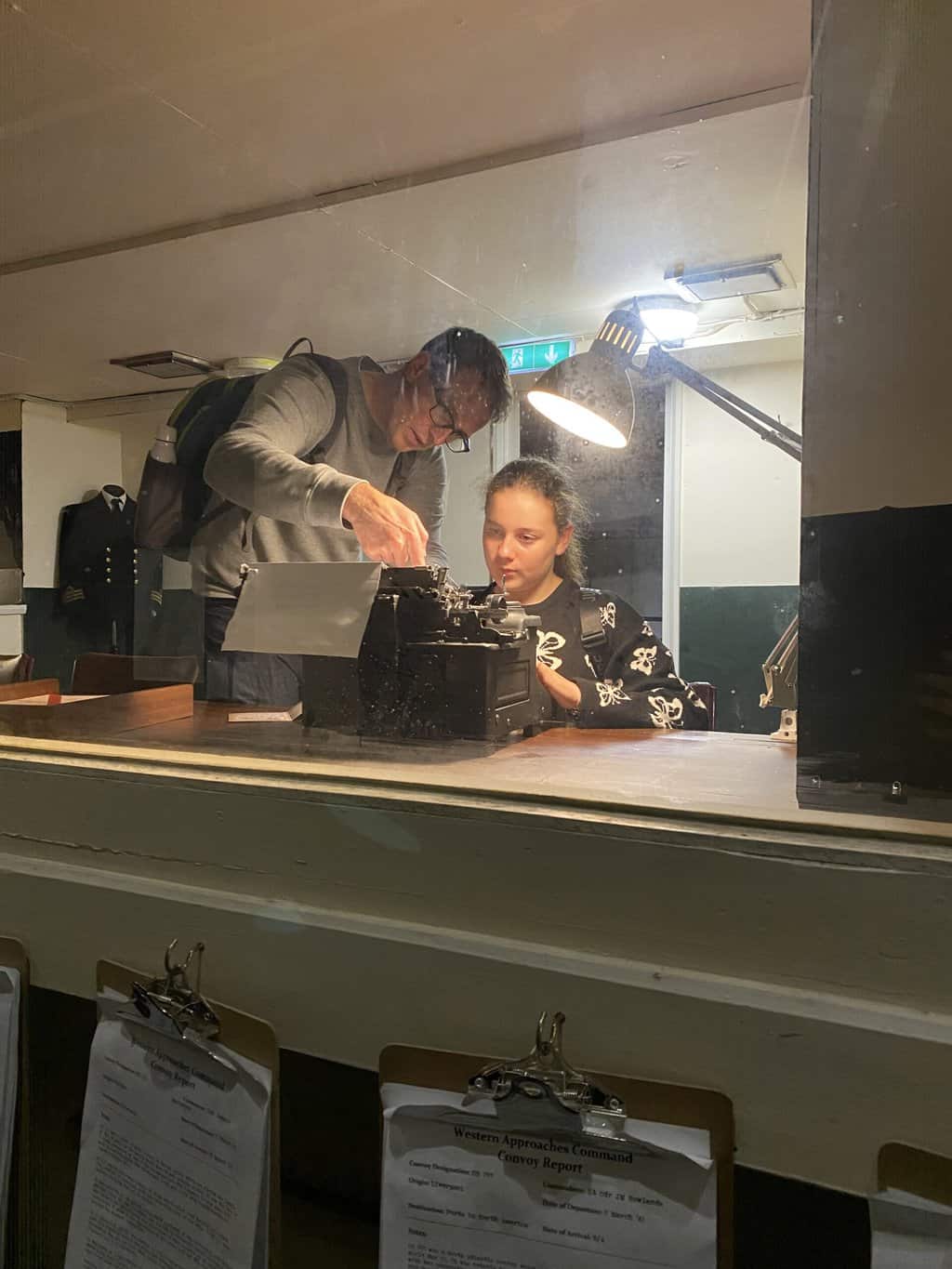
The next part is where you can get a little bit hands-on, and where going to the museum in the middle of the week really pays dividends. In this part of Western Approaches, there’s an explanation about how morse code works, and a chance to get your hands on some morse code machines and send messages to one another. The benefit of going when there are very few other people around is, of course, that you more or less get the place to yourself and aren’t hassled to get off the machines.
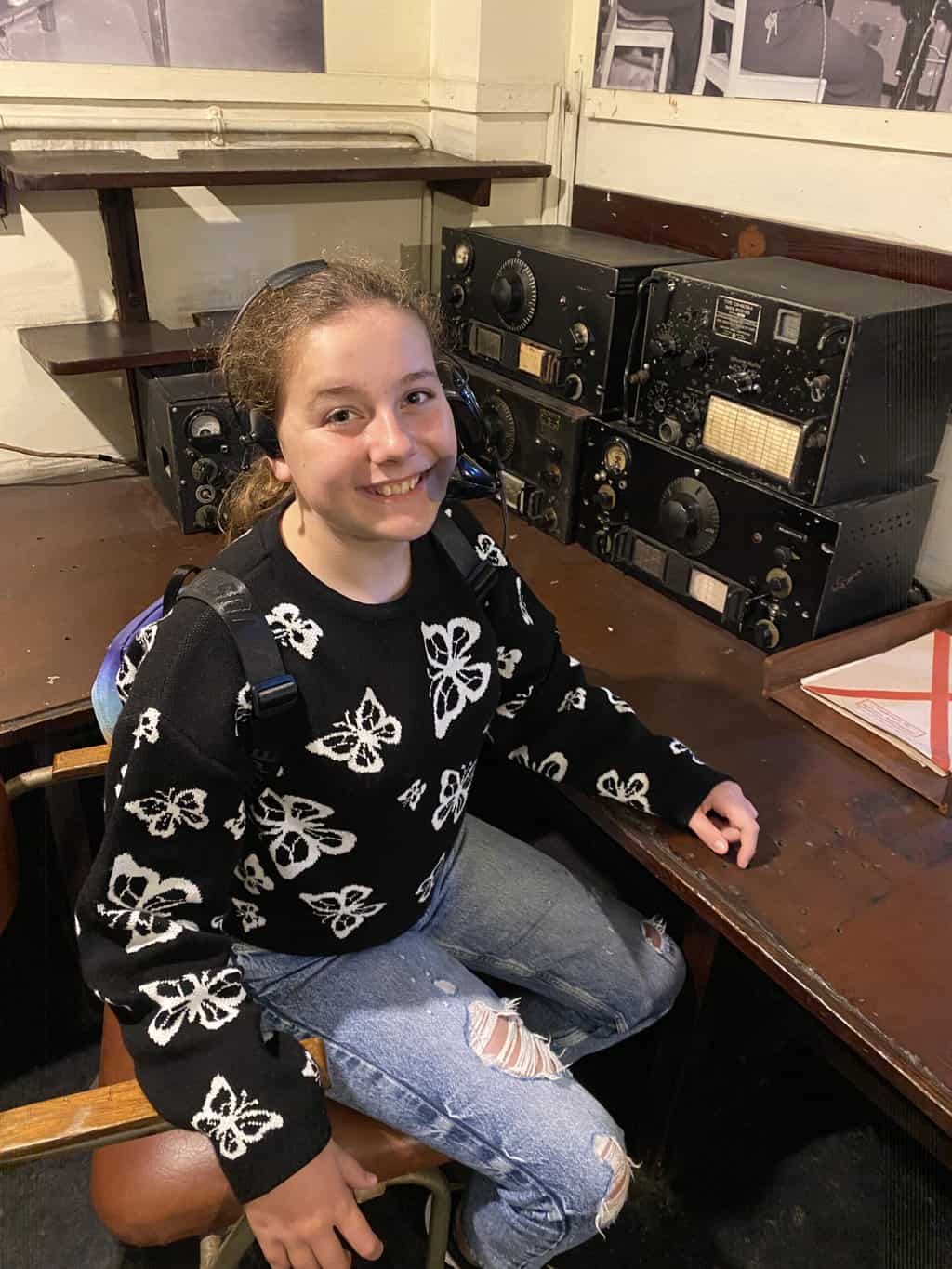
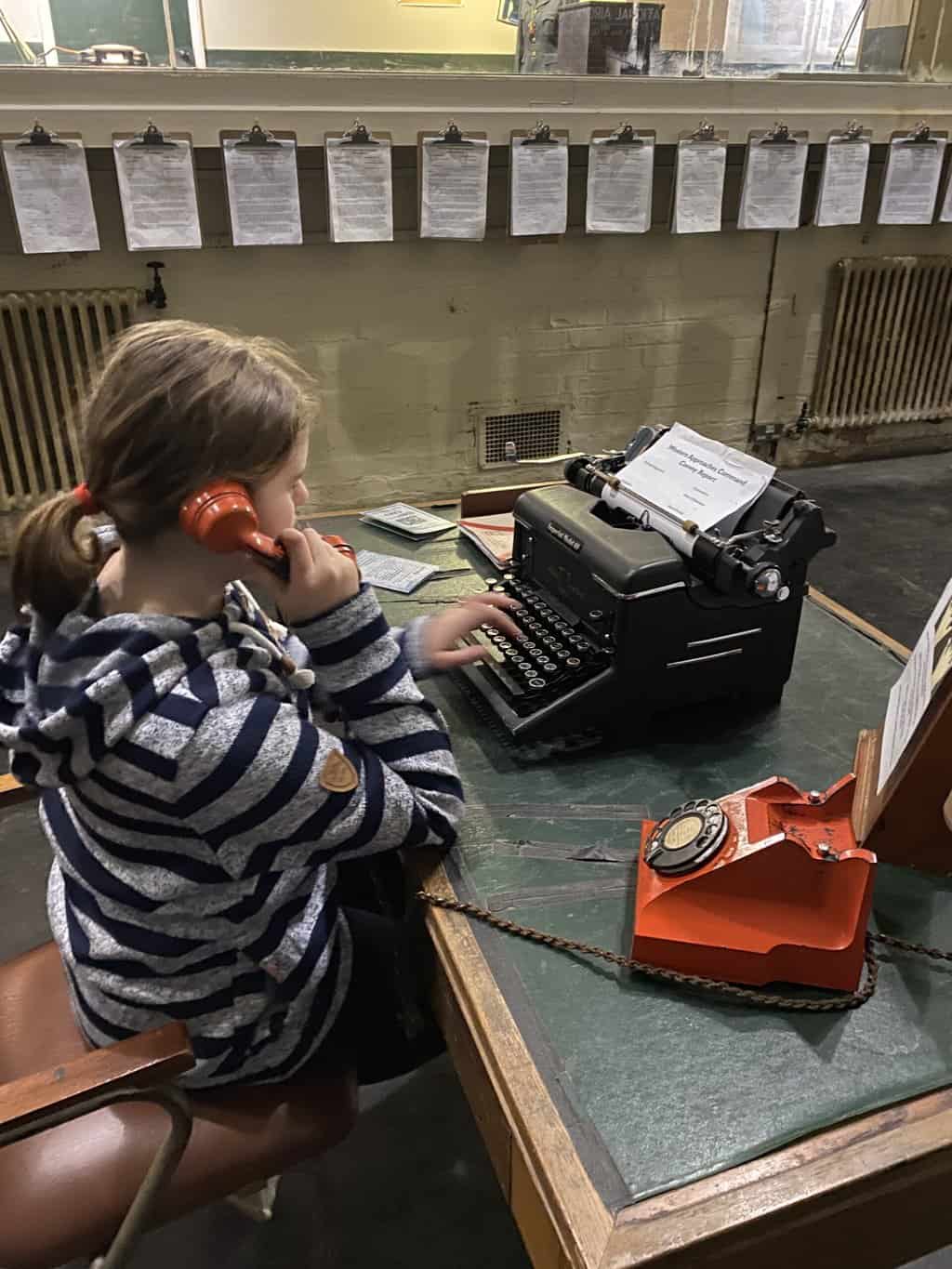
The same is true of the main operations room, which is the next big exhibition you will come to (via some recreations of the staff’s humble quarters). This is an impressive room, with a huge map of the Atlantic ocean and Europe on the wall, and various desks with old-fashioned rotary-dial telephones and typewriters. Our two absolutely loved it in here; happily spending an hour “typing” up secret messages, speaking to people on the phone and putting reports into “Confidential” folders to pass up to high command.
As there were very few other people there, all we could hear was the “clack-clack” of the typewriter keys as Peggy got to work to put a stop to the German offensive. They enjoyed the typewriters so much we ended up picking up a secondhand one on ebay for them to play with at home (although we drew the line at going back to a rotary telephone).
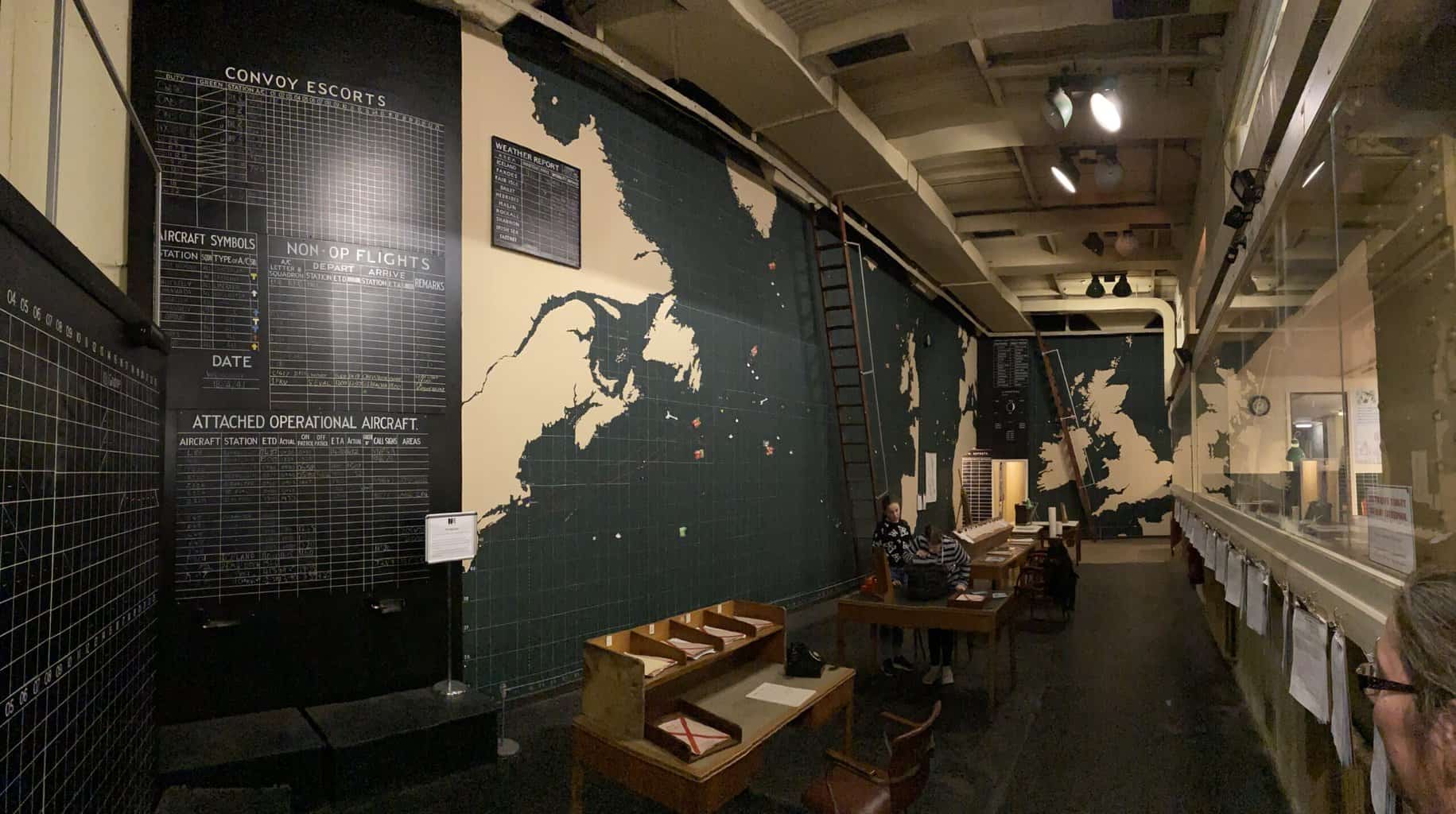
Next to this room is something for the adults; a truly fascinating account of the “Arctic Convoys”. These were fleets of ships that sailed from the UK, Iceland and North America to ports in the Soviet Union, bringing tanks, fighter planes, raw materials and food – re-supplying the Soviets in their efforts to push back the Nazi offensive on their western border. The information boards are jam-packed with stories of bravery and guile, and there’s a phone booth – again with a rotary phone – where you can listen to first-hand accounts of life on the convoys.
Carrying on through the museum, we get a glimpse of the top brass’s quarters above the command centre, and then on to a recently opened exhibition detailing the work of the Wrens (the Women’s Royal Naval Service). Indeed, it was mostly Wrens who ran the facility, and trained the newcomers.
Finally, there’s a seating area where you could eat a picnic. Tea and coffee is available here for you to make yourself – with an honesty box for a donation – and there’s another screen showing news footage from the 1940s.
What age range is it suitable for?
It’s really a museum for high-school-age kids. The subject matter is obviously quite dark although the exhibits linger more on the bravery and ingenuity of the people that worked in the command centre rather than the horrors of war.
There are some good exhibits which aim to demonstrate exactly what happened on a day-to-day basis, to help both children and parents to understand what went on (even the grown-ups can get confused sometimes, as we discovered on our visit to Bletchley Park!).
It’s not really for very small children, both because of the subject matter and also because there’s not too much “hands-on” stuff in terms of things to pick up and play with.
When is best to visit?
We’ve only been to Western Approaches once, on a Thursday afternoon during term time. At this time it was perfect as there was only us and a handful of other people meaning we got the full run of the place and could easily get to the few hands-on bits. You’d obviously need to be wary of any school trips that might make things a little more hectic, but we’d definitely recommend going mid-week.
What was our favourite bit?
The kids’ favourite bit was clearly the main operations room. They loved getting their hands on the old tech and role-playing. Peggy in particular was lost in the world of the Second World War and we virtually had to drag them out of this room. They also really enjoyed sending each other messages in morse code (Agatha bought a morse code plaque for her bedroom wall off the back of this activity).
For the adults, the Arctic Convoy exhibit was truly fascinating as it was something neither of us were aware of before our visit. The main operations room was a sight to behold; you can just imagine the hubbub in its heyday. The Wren exhibition was also enlightening, and looks like it is going to be improved as time moves on as it’s only recently opened.
How long were we there?
We easily spent an hour and a half, maybe more. The website suggests 90 minutes to three hours depending on your level of interest.
Are there toilets?
Yes, some that we could see by the main entrance, although we didn’t spot any anywhere else as we were walking about, so best to “have a try” before you set off down the first set of stairs.
How much does it cost?
Adults: £13.50
Concessions: £11.50
Children (under 16): Free
Those that served in the Second World War: Free
Tickets are valid for return visits within 12 months of purchase.
Is there a gift shop?
Yes, a small one in the entrance. It’s reasonably well stocked with a variety of period knick-knacks and games. We came away with a morse code sheet for the wall, and we had our eye on a couple of things for the kitchen (but we’re trying hard not to collect clutter at the minute so we resisted).
Is there a cafe?
No, but there is a seating area just before you get to the exit where you can make yourself a brew and eat any snacks you’ve brought with you.
Is it accessible?
Not really. There are quite a few steps and no lift. This is what the museum itself says on its information sheet:
“Visitors with mobility restrictions preventing them using stairs can access some rooms on the upper floor (though not following the intended route, and we do not charge these visitors an entry fee).”
How did we get there?
We got train tickets from Manchester Piccadilly to Liverpool Lime Street via TransPennine Express, in one of their sales. We spent £6 (£2 for adults, £1 for children) for the four of us for the return journey. We got to Manchester Piccadilly on the park-and-ride tram from Oldham Mumps.
We have driven to Liverpool before for a couple of events, and it’s fairly easy to navigate until you get to the heart of the city (much like most cities – Leeds, I’m looking at you in particular!) but with fuel prices as they are it’s just easier and cheaper to get a train (also, we love train journeys).
When did we go?
Thursday October 6th, 2022
Information about Western Approaches
Western Approaches Museum, 1-3 Rumford Street, Exchange Flags, Liverpool, Merseyside L2 8SZ
0151 277 2008
wa@bigheritage.co.uk
liverpoolwarmuseum.co.uk
Opening Times
Open daily from 10am-6pm, with last entry at 5.30pm