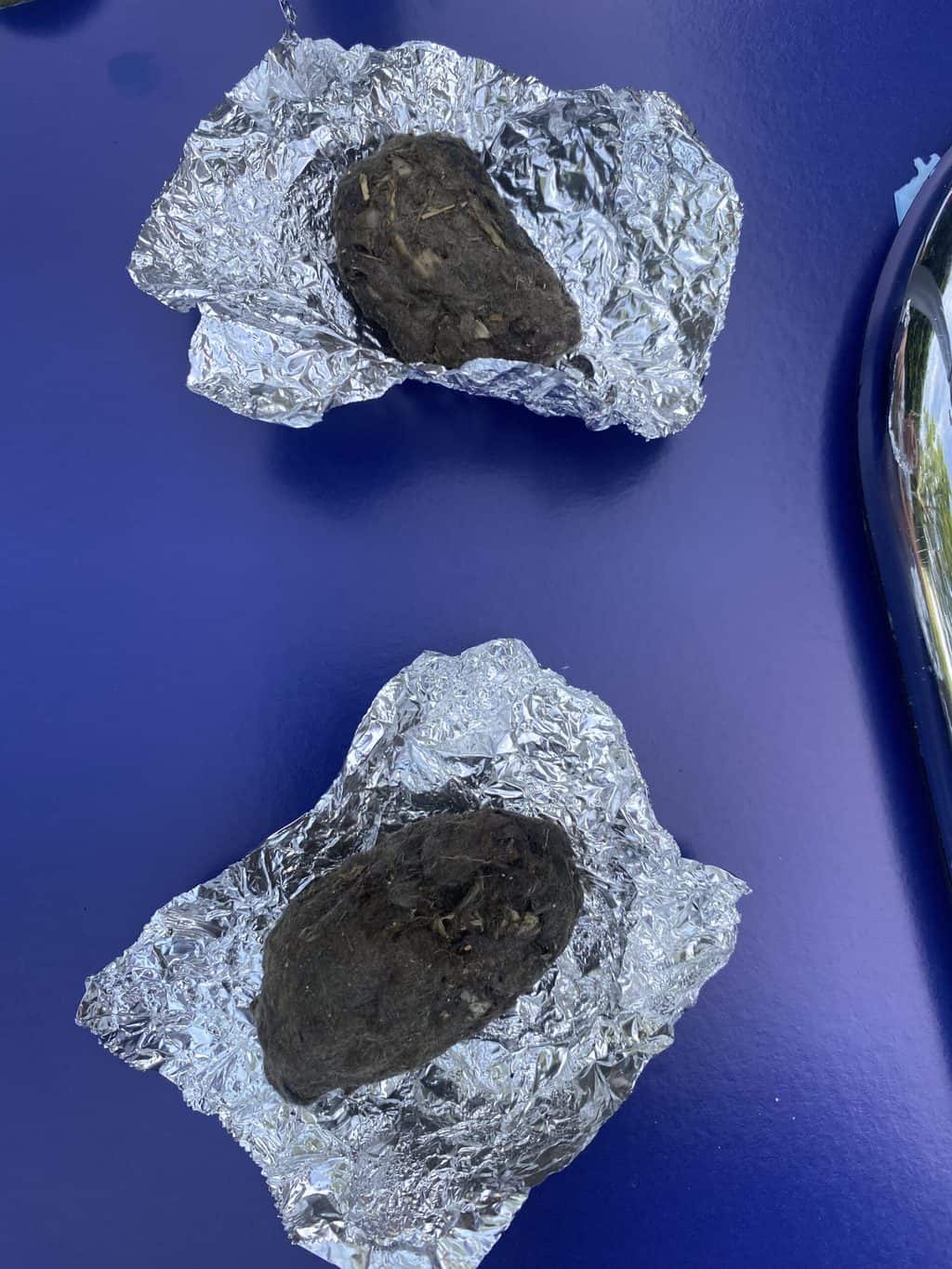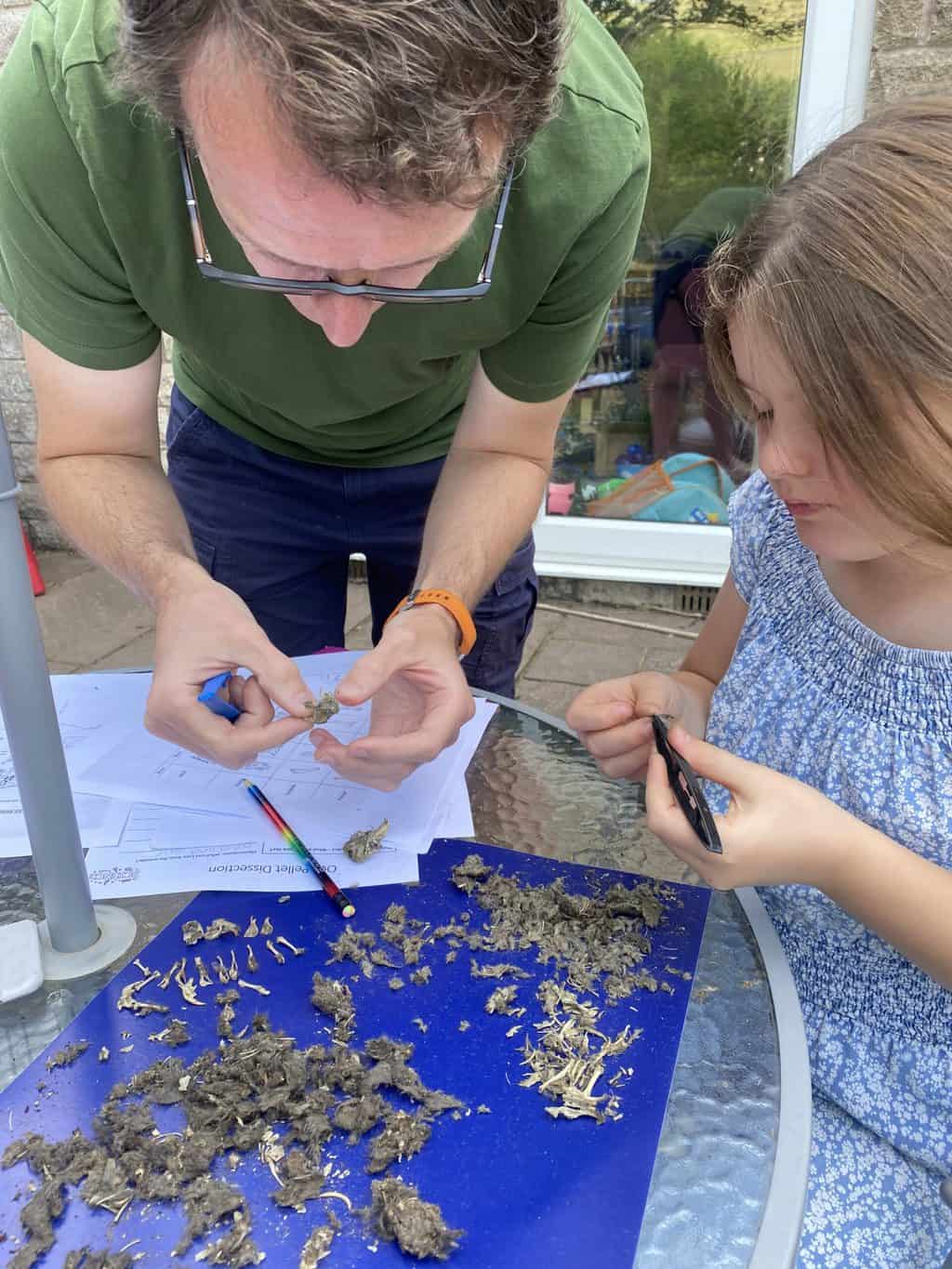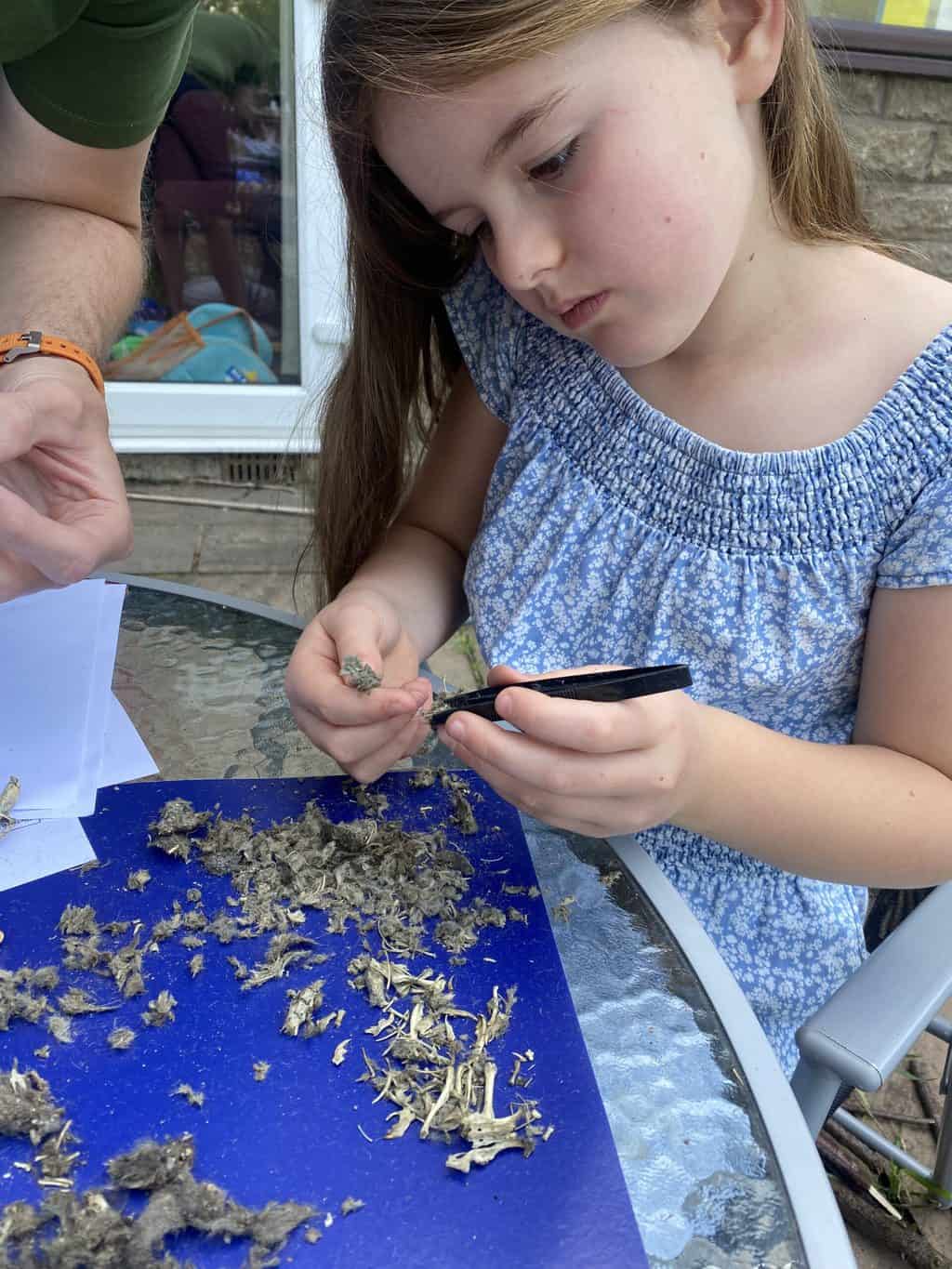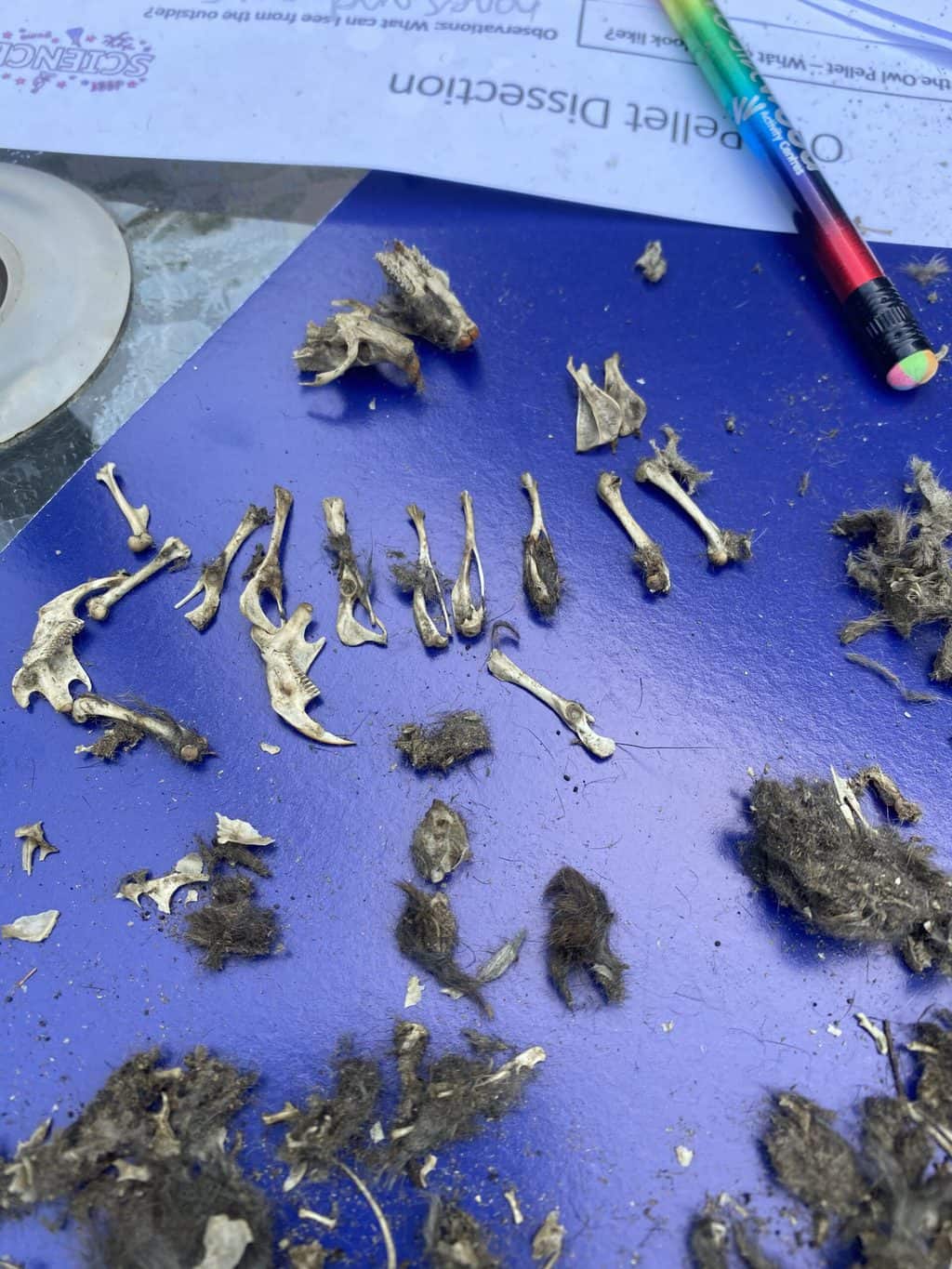
We bought some owl pellets from The Suffolk Owl Sanctuary (sadly they don’t appear to sell them any more, but pellets are available elsewhere). They were only £3 each and came with tweezers, full instructions and bone identification charts. It kept us entertained for a good couple of hours so it’s a bargain activity!
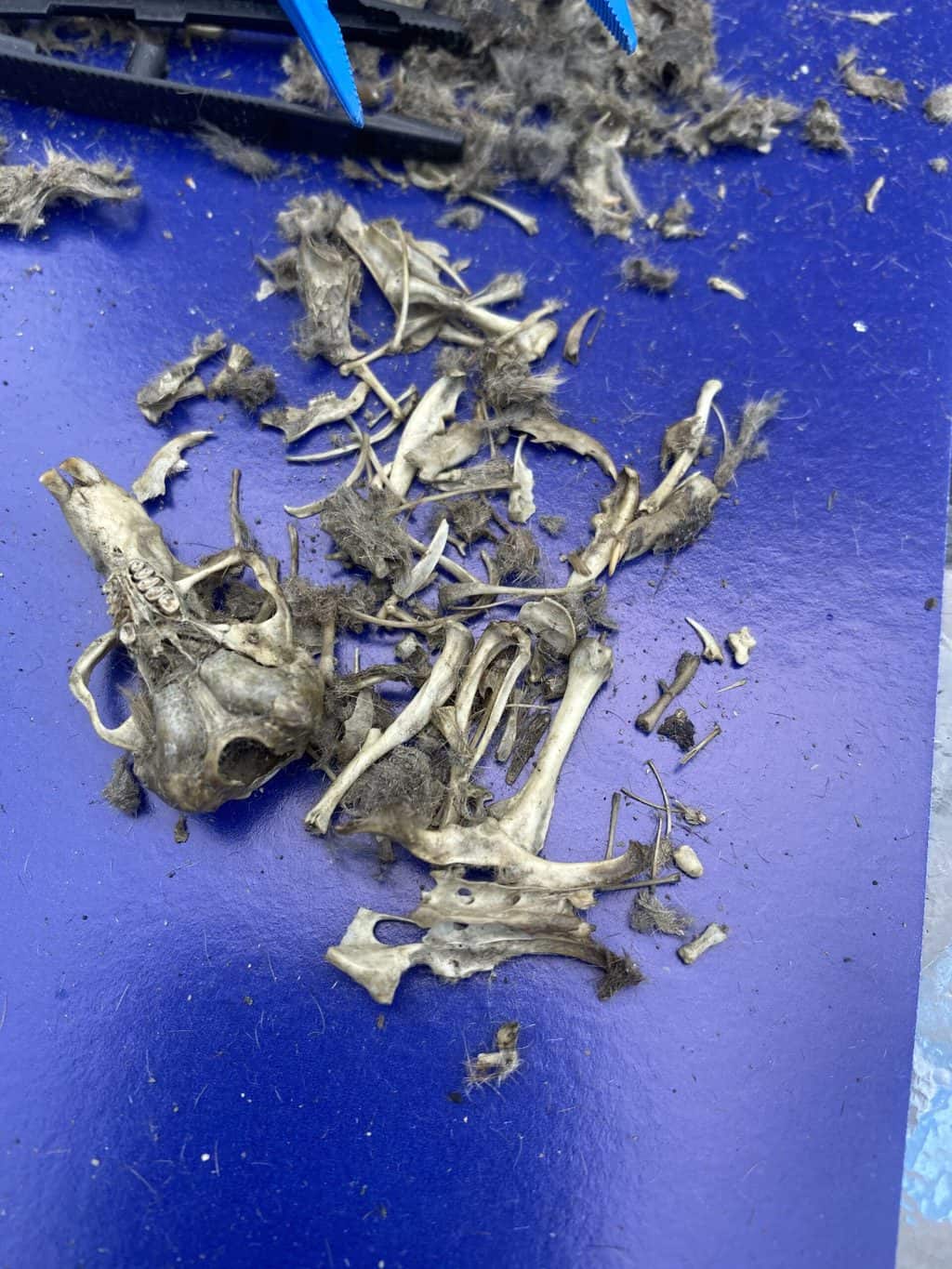
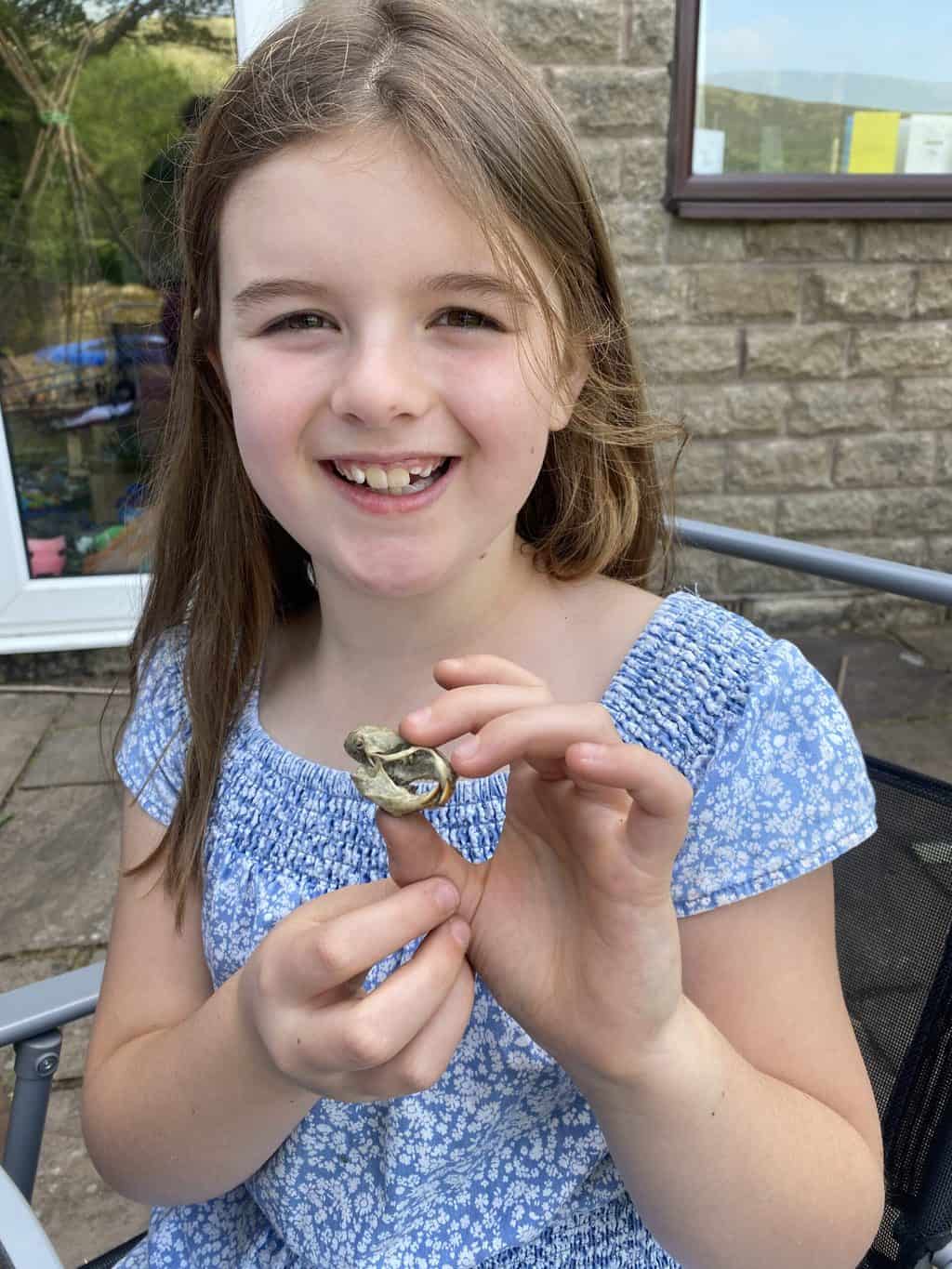
We found pulling these pellets apart absolutely fascinating. Peggy’s owl had clearly eaten an entire vole and the skull was pretty intact. Aggie’s owl had eaten lots of smaller creatures and so she had a lot more of the smaller bones. It was great fun trying to work out which bones belonged to which animals.
What are owl pellets?
Just to be clear, they are not poo!
From the Suffolk Owl Sanctuary website: “Owls are carnivorous and eat a wide range of animals, including birds, voles, mice, rabbits, frogs and insects. Not having teeth, they will either eat their prey whole or tear it into large chunks with their sharp beaks. Once swallowed, the food travels down the owl’s oesophagus to the gizzard. Soft parts of the prey are then broken up by enzymes, but the hard bony components and other elements such as hair and feathers remain undigested. These are then ‘regurgitated’ or coughed up, as a pellet, before the owl can eat its next meal. Pellets are NOT droppings, as they do not pass through the intestine. They are usually quite soft to the touch and are odourless.”