On this page
- Background to home educating
- Maths KS2 Textbooks
- Maths KS2 Mental Arithmetic workbooks
- Online resources for Maths KS2
- How did we structure Maths KS2?
- Why did Peggy skip year 6 maths entirely?
- How did we try and make Maths KS2 fun?
- What am I glad we did for Maths KS2?
- What would I do differently for Maths KS2 if we had our time again?
- When did we progress onto Maths KS3?
- Other resources we used for Maths KS2
Background to home educating
The girls officially started being home educated in June 2020 which was Aggie’s year 4 and Peggy’s year 3. At the time of de-registering, our expectation was that the girls would return to a private school for their high school years. With the entrance exams on our minds (sat the January before the September entry), we initially made sure we covered the national curriculum for the girls’ respective years and tried not to get too far behind or indeed ahead.
Aggie decided in October 2021 that she didn’t want to sit the 11+ exams in January 2022 and she wanted to continue home educating for the whole of high school. This was a massive dilemma for Aggie but for Peggy it was firmly decided before her sister even reached her decision: she didn’t want to return to school either.
And so from October 2021 onwards, we began to follow the national curriculum a lot more loosely and made good use of the freedom we now had, to learn what we wanted when we wanted, irrespective of age!
Maths KS2 Textbooks
Whilst embracing the freedom in every other subject, we chose to stick with the national curriculum for maths. It’s a subject the girls had to do for GCSE and one which to us is fundamental to their education. We therefore wanted to work our way systematically through what their schooled-peers would be doing. We’re lucky in that both girls are good at maths. They don’t particularly enjoy it, but they do pick up concepts pretty quickly and are good at problem solving when things get difficult.
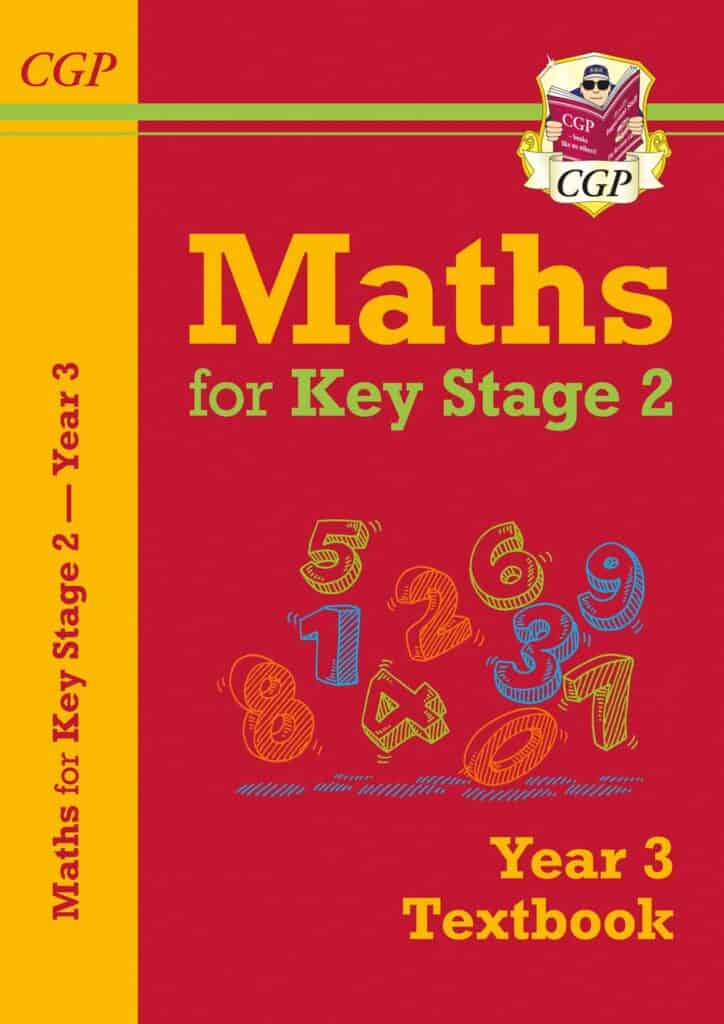
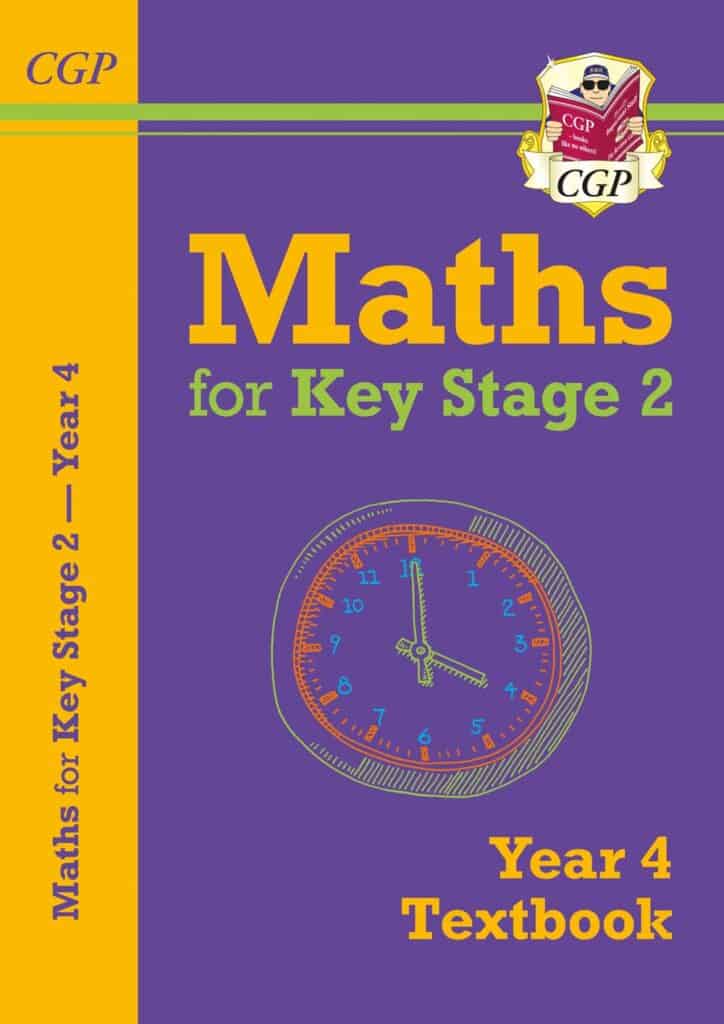
After researching through what felt like thousands of different textbook options, we settled on the CGP series to guide us through the KS2 maths curriculum. There are four books, one for each of years 3, 4, 5 and 6. There are no answers in the back of these books; these need to be bought separately (unless your maths is a lot quicker than mine!)
Included in the answer book for each year is a scheme of work. This is a recommended way of covering the entire syllabus over the course of an academic year. We followed this scheme of work as closely as we could and it was brilliant for keeping us on track for finishing the book in a year. It splits out the topics over three terms, each lasting 11 weeks.

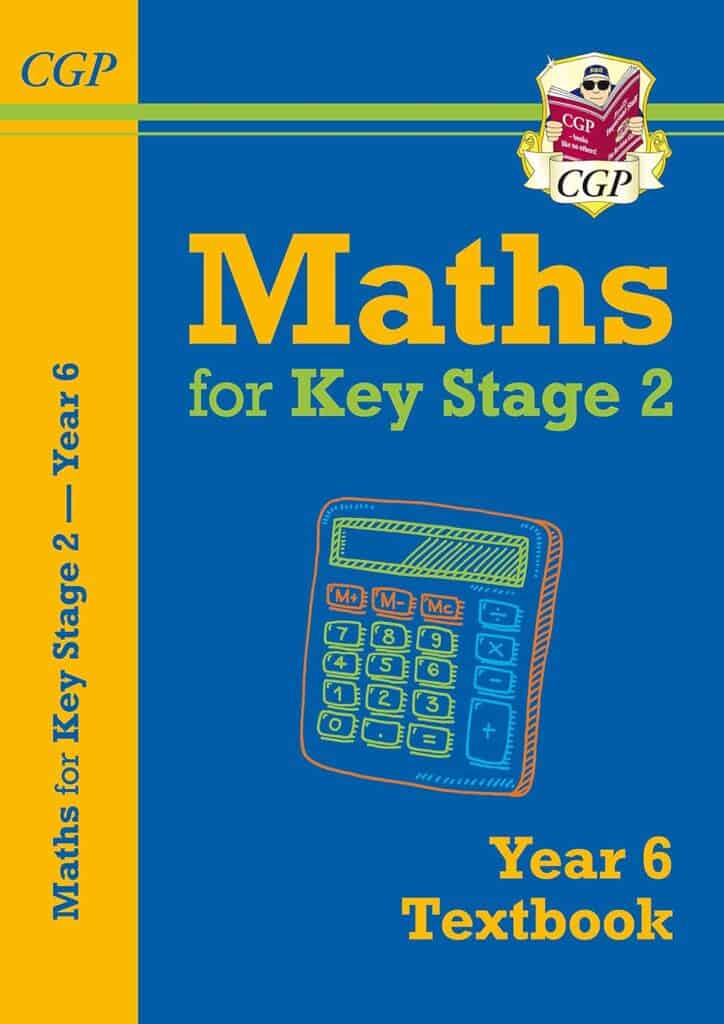

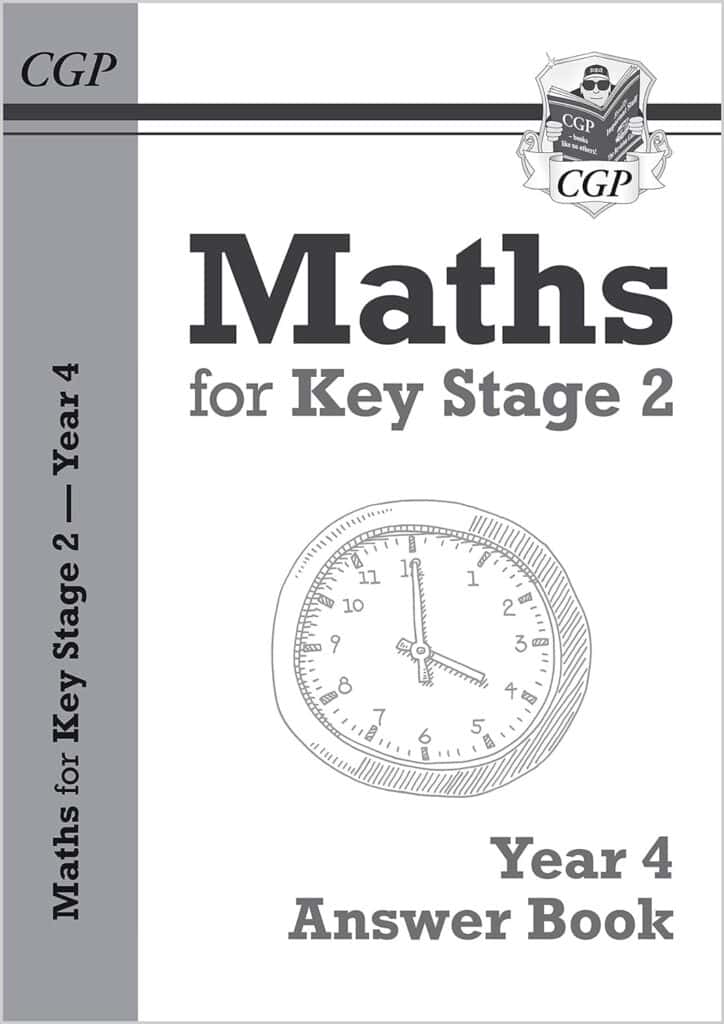
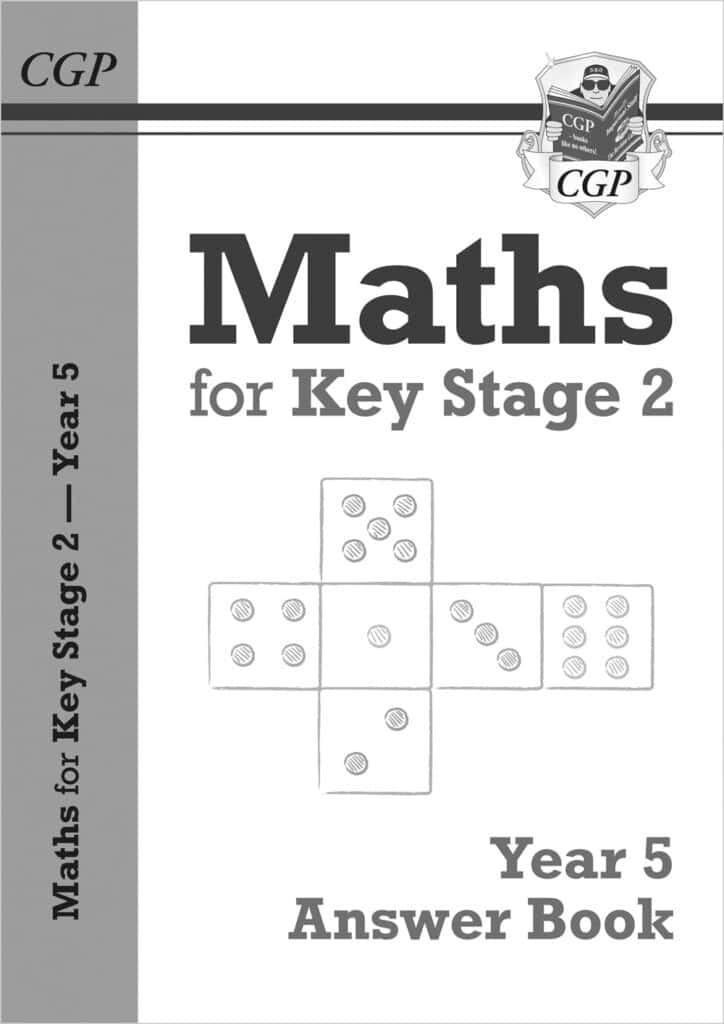

Why did we choose these Maths KS2 textbooks?
What I particularly liked about these textbooks was the difficulty levels included for every topic. After an explanation of how to do the topic (admittedly these can be pretty brief sometimes), there are then three different sets of questions:
Set A is for children working towards the expected level for that year; perfect for getting to grips with the topic
Set B is for children working at the expected level for that year; ideal practice if they’re up to speed with the topic
Set C is for children working above the expected level for that year; offers extra stretch if they’re comfortable with the topic
I found these helped me to gauge whether the girls were comfortable enough with each topic to move on to the next one.
Maths KS2 Mental Arithmetic workbooks
Alongside the above textbooks, we also did mental arithmetic practice using a series by Schofield and Sims. These could be classed as quite old-fashioned – apparently I used these when I was at primary school – but they added greatly to our maths learning. If we were to have our time again, we would definitely complete all six of them.
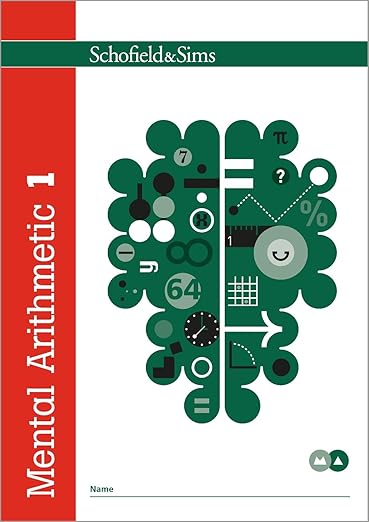
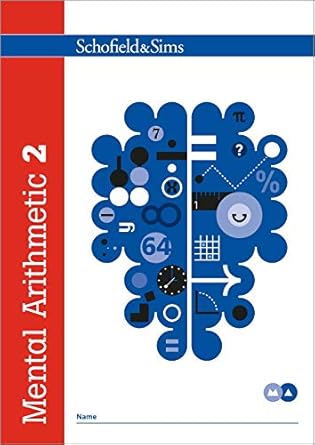
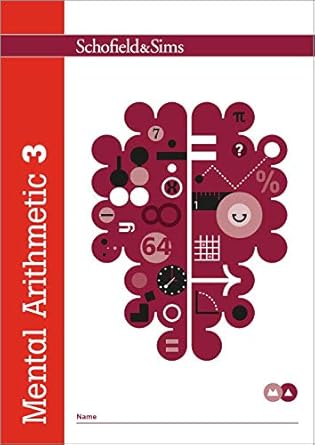
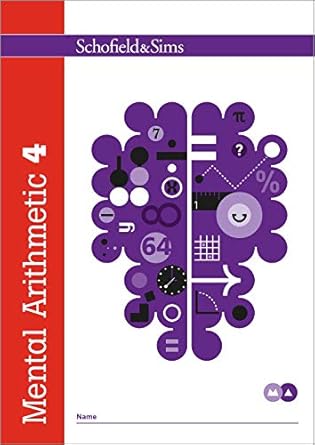
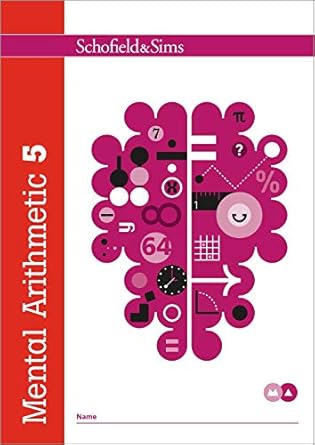
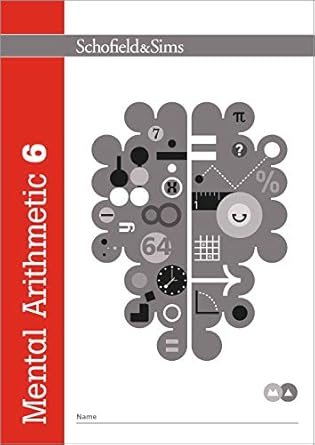
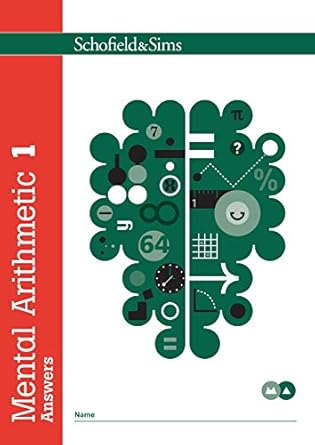
Annoyingly, the answers aren’t in the back of these books and have to be bought separately. I marked books 1 to 3 without the answers but, I must admit, opted to buy the answers for books 4, 5 and 6 so the girls could mark their own answers (and make it easier for me!).
The answer books can also be bought on Amazon.
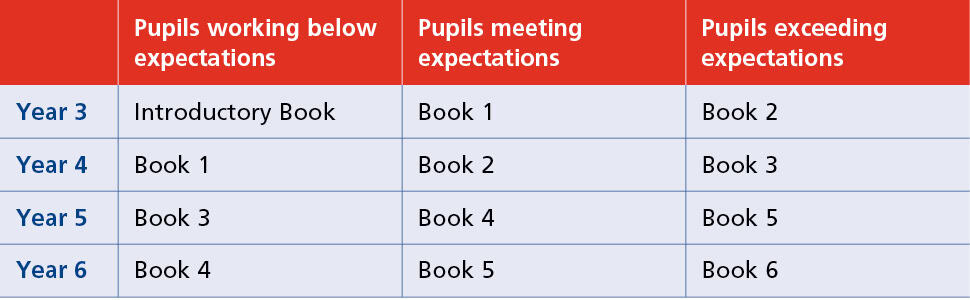
Here is a chart from the Schofield and Sims website with suggestions of which book to use. The book numbers do NOT correspond to the year groups as you’d expect. Books 5 and 6 definitely include some KS3 level maths. We started off with Book 1 when the girls were in years 4 and 3 and kept plodding through each book in turn. The maths did start off easy for them but I think that was good for confidence to get us going.
Online resources for Maths KS2
We definitely depended more on books for maths than online resources. The girls used Mathletics at school and we did carry on with that for a year once they became home educated. We didn’t renew the licence though when this came to an end as it had fallen out of favour. I think the girls just associated it with school!
Hit the Button
The girls spent hours on Hit the Button and we used it for several years to keep times tables fresh. It’s a free game which gives you timed questions with options of answers to choose from. It covers times tables and number bonds. You don’t have to set up an account and log in – you can just play it via the link. The girls tried to get the same points in a minute for each of the times tables. You can select which times table to work on or you can get mixed questions across them all. As a free resource, you can’t really beat it!
Corbett Maths
This website is also free and provides a ridiculous number of resources. We’ve used Corbett Maths for KS2, KS3 and GCSE. When the girls have needed extra practice on some topics, I’ve turned to this website for additional worksheets; there are also instructional videos for every topic if you need some further support.
We also used these worksheets for topics which included graphs and grids e.g. coordinates, translations etc. This saved us having to draw out graphs and grids in our exercise books as the worksheets came with these already drawn to put our answers on.
Twinkl
We never used Twinkl for maths lessons but we did use plenty of fun maths resources to supplement topics we worked on. We particularly enjoyed the Maths Mystery Games – we did many, many of these.
We worked at KS2 level over four years ago now and Twinkl has so many more resources than we had available back then. It looks like they have all sorts of interactive games now which may inject a bit more fun into maths if you subscribe.
How did we structure Maths KS2?
How did we spread the topics out over a year?
We used the scheme of work included in the CGP answer book for the respective year. We followed the weekly plan as much as we could doing 3 or 4 sessions a week. Obviously, some topics were harder than others and required more time, but we never felt rushed working to the plan. We also took holidays mid-term and had many days off here and there but we adapted the plan according to the time we had. We always completed a book each academic year.
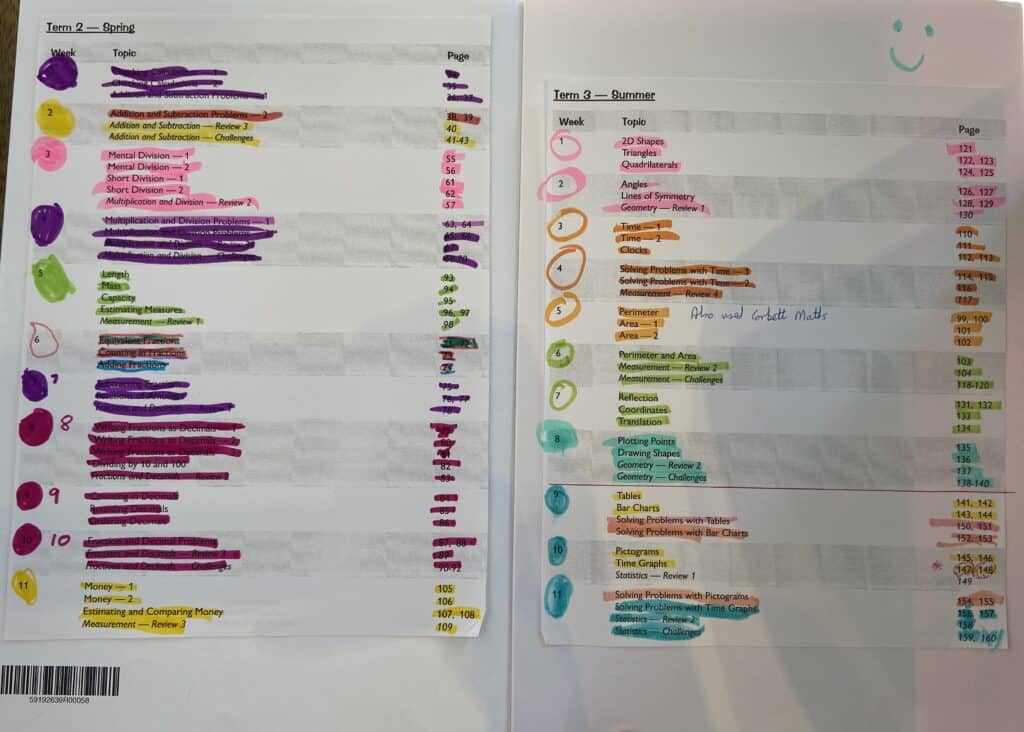
To keep on track, I photocopied the scheme of works and put that in the front and back of the girls’ exercise books. We then crossed each topic off as we did them, of course using lots of bright colours.
In addition to the CGP textbook, we also did pages from the mental arithmetic books mentioned above. I honestly can’t remember how often we did these – probably once or twice a week. I remember Aggie once doing a whole section, including 12 tests, within a week. That wasn’t standard though!
How did we approach the questions in the CGP textbooks for each topic?
After going over how to do the topic, we’d usually do the Set A questions together either verbally, on white boards or using window pens. I always wanted to make the initial learning of a topic as relaxed and fun as possible.
If they were comfortable with Set A, they’d then do Set B in their exercise books as independently as possible. The girls would then mark their own work using the answer book and we’d go over together any questions they got wrong.
The girls would then tackle Set C with me nearby to help as the difficulty level does ramp up for some topics. The completion of Set C is a bonus at this age but since both our girls are good at maths, we liked to complete these questions to stretch them.
We nearly always did Sets A, B and C in one session, albeit perhaps with a snack or play break before doing Set C.
If the girls found a topic difficult and needed more practice, I’d turn to Corbett Maths and print off the relevant worksheet on there. These worksheets are usually multiple pages long so there’s plenty to work at.
Included throughout the textbook are review pages which act as revision for topics already studied. We rarely did all of these questions but would usually do say every second or third question throughout the page.
Each section ends with some challenges. These require you to use the skills you’ve just learned but in a more fun way by investigating something or playing a game. These are questions and activities which get your brain going; our girls really enjoyed them.
Did the girls learn separately?
The girls have always done maths separately and have continued to do so throughout the GCSE stage as well, even though they’re pretty much at the same level. Considering they are both covering the same content, it doesn’t at all feel like I’m just doing the same thing twice. They both approach maths slightly differently, find different topics easy or difficult and have different patience levels when it comes to tackling more challenging maths. It often feels like I’m doing two entirely different subjects! Of all the subjects we do, I feel maths is the one that cries out for as personal an approach as possible.
Why did Peggy skip year 6 maths entirely?
In preparation for Aggie starting year 7 maths, I got the CGP textbook and was rather surprised to see that it was not particularly more advanced than year 6 maths. Confused by this, I spoke with a few teacher friends who said year 7 is all about getting children from lots of different schools to the same level; one friend likened year 7 to a “holding pen”. This means that not a lot of new content is taught in year 7 (unless it’s an academically selective school).
Peggy is strong at maths. She doesn’t like it (she’s a lot more reluctant than Aggie) but luckily she’s good at it. After completing year 5 maths pretty easily, we decided she’d move straight onto year 7 maths; we’d only go back to year 6 maths if we needed to fill in any gaps. I think we had to look back at one topic (annoyingly I can’t remember what that was) but other than that, she coped fine with jumping in straight at year 7 (and was exceedingly happy to have knocked one year off maths!). Now she’s working at GCSE level, I’m pleased to report there have been no ill-effects from doing this. In fact, I don’t think Peggy even really noticed!
I would say that missing a year was fine when using the same curriculum for years 5 and 7. We used CGP for both and I had already worked through year 6 of CGP with Aggie. I was therefore very familiar with the topics and what was included in each year. I can’t vouch that it’s advisable missing a year out with other curriculums.
How did we try and make Maths KS2 fun?
Did the girls always want to do maths? In short… NO!!!!
Sometimes the girls were reluctant to do maths. Sometimes there were strops, impressive flouncing and outright refusal but thankfully that was not very often. I’d usually stand back and not do maths at that particular moment, but the girls always knew it had to be done eventually.
If they didn’t want to put pen to paper and do “formal” learning, we’d do all the question practice verbally or on a white board. The important thing to me was they covered the material. If they did that standing on their head in the garden and shouting out answers (our neighbours must have wondered what we were doing!), then that was fine by me. Over the years my confidence grew that we didn’t have to have physical evidence in a book of what they’d learned that day.
We also found window pens to be a hit. These are like felt-tip pens which can be used on glass and the ink wiped off afterwards. The girls really enjoyed using these and so sometimes reluctance could be turned into enthusiasm by suggesting we get the pens out on the patio door.
We also played a few maths-related games which went down well. We regularly enjoyed Place Value Yahtzee and the Area Game with Dice.
We really enjoyed the Maths Mystery Games on the Twinkl website. These involved completing lots of different maths problems to work out who the guilty party was. The girls enjoyed working through these and possibly didn’t even realise they were busy revising lots of maths in the process!
What am I glad we did for Maths KS2?
If I had our time again, I’d definitely use the same CGP textbooks and scheme of work. This structure worked really well for us. The girls knew what was expected of them each week and they enjoyed progressing through the list and crossing topics off.
I placed a heavy emphasis on being very quick with times tables and mental maths and that’s been invaluable for later years. Times tables especially help you see relationships between numbers which is incredibly useful when you come to do topics like algebra and geometry at GCSE level.
From very early on, both girls marked their own work using the CGP answer books and then showed me how they’d got on afterwards, of course going over anything they were unsure about. We started doing this pretty early on for right or wrong subjects and that’s resulted in both girls being set up brilliantly for GCSE study; I’m so glad we started so early on.
Why is self-marking so beneficial? I’ve found they are keener to look through their workings to see where they’ve gone wrong when they are on their own. 99% of the time they can work out where they’ve gone wrong and can correct it themselves; that makes them feel good and deepens their understanding of the topic too.
Both girls have continued to mark their own work wherever possible, including using actual GCSE exam marking guides. This skill has become especially invaluable when the girls have reached GCSE level and have long left us behind! So, I definitely recommend getting them marking their own work as early as you can.
What would I do differently for Maths KS2 if we had our time again?
I’m my own worst critic so I could come up with lots of things but here are the three main things I look back on and wish I’d done differently:
- I wish we’d completed the full set of Schofield and Sims Mental Arithmetic books. Both girls did to the end of book 4 and stopped. It was not a conscious decision to stop as I had bought books 5 and 6, but somehow they just never got done! If we’d continued with them, then I think the girls would possibly be more mentally agile with maths. It’s so easy to become dependent on a calculator, especially for iGCSE as you can use a calculator in both exams, but you can’t beat being able to do maths quickly and accurately in your head (even if you then go on to subsequently check your answer with a calculator).
- I wish I’d been more positive about maths from the start. I’m not a lover of maths and I suspect that’s been passed onto the girls. Perhaps I said “we have to do maths now (with an eye-roll)” too many times rather than framing it with more enthusiasm like I did humanity subjects (I just LOVE history). I do have Mum guilt over this. Perhaps they would enjoy maths more if I hadn’t unintentionally taught them to think it’s not enjoyable? I guess I’ll never know…
- I would have progressed more quickly through the books rather than working at the expected level for the girls’ ages. We should have gone beyond their true academic year BUT until October 2021 we were expecting the girls to return to school for year 7 and so we didn’t want to skip ahead in the curriculum for them to repeat it all again at school. Even after October 2021, though, we didn’t push forward as much as we should have done. I write about this in my blog post “Maths: how getting everything right isn’t actually a good thing!” when we finally made a change for year 8 and 9 maths.
When did we progress onto Maths KS3?
With the decision taken for Peggy to miss our year 6 maths, both girls finished KS2 Maths in June 2022. All the KS2 books were consigned to the back of the cupboard before both girls then started year 7 maths in August 2022. You can read about how we then approached KS3 Maths on our KS3 Maths page.
Other resources we used for Maths KS2

We used one 100 page A4 red exercise book for each academic year and it comfortably fitted all the answers in from one textbook. It has squared paper in so it’s good for tables and graph work.
We’ve continued to use these exercise books throughout KS3 and for GCSE too.
These washable window pens are great for writing on windows or mirrors. When enthusiasm was low and it was too much of an effort to put pen to paper, we put pen to window instead. That’s a LOT more fun apparently!

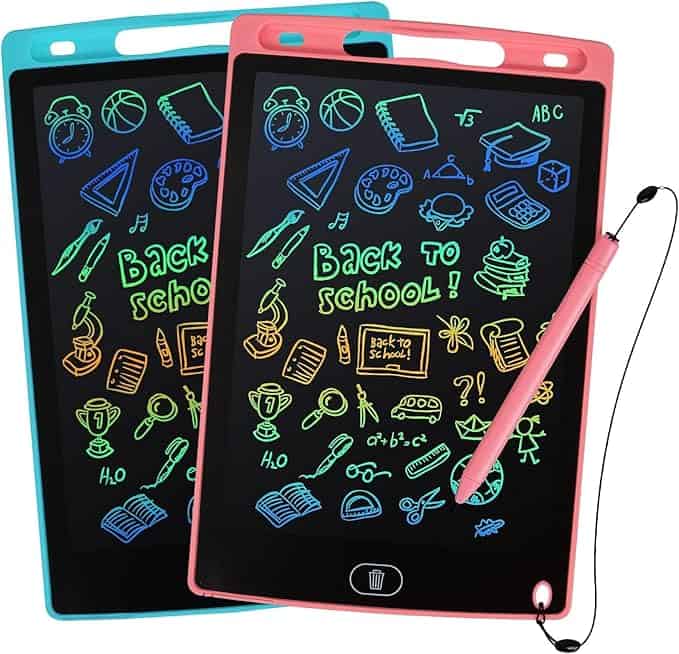
These writing tablets were a later purchase but I wish we’d got them much earlier. They come as a pack of two which is handy for our girls to have one each.
These soon replaced our white boards which can get messy, especially with left-handers. These are a much cleaner option and easier to store too.
Do you like the look of any resources on this page?
If so, please consider clicking on the above affiliate links if you wish to make a purchase. This means we’ll get some commission, at no extra cost to yourselves, which we can put towards more home ed resources and our huge 2025/26 GCSE exam bill which currently stands at an eye-watering £3,190. Your support is very, very much appreciated!