
On this page
- Why The Sign of Four?
- Book edition
- Main learning resources
- Other learning resources
- How we’ll structure our learning
Why The Sign of Four?
Who doesn’t love Sherlock Holmes?!
This is a short detective story set in the late 1880s which features private detective Sherlock Holmes and his side-kick Dr Watson who investigate a mystery involving murder and stolen treasure. There are lies, secrets and betrayal and a very clever sniffer dog called Toby.
We think our girls will really enjoy this story and we know Peggy especially will love the character of Holmes. The book is also a short one – just twelve short chapters long – so we’ll be able to read it multiple times over the two years.
Book edition
Hard copy
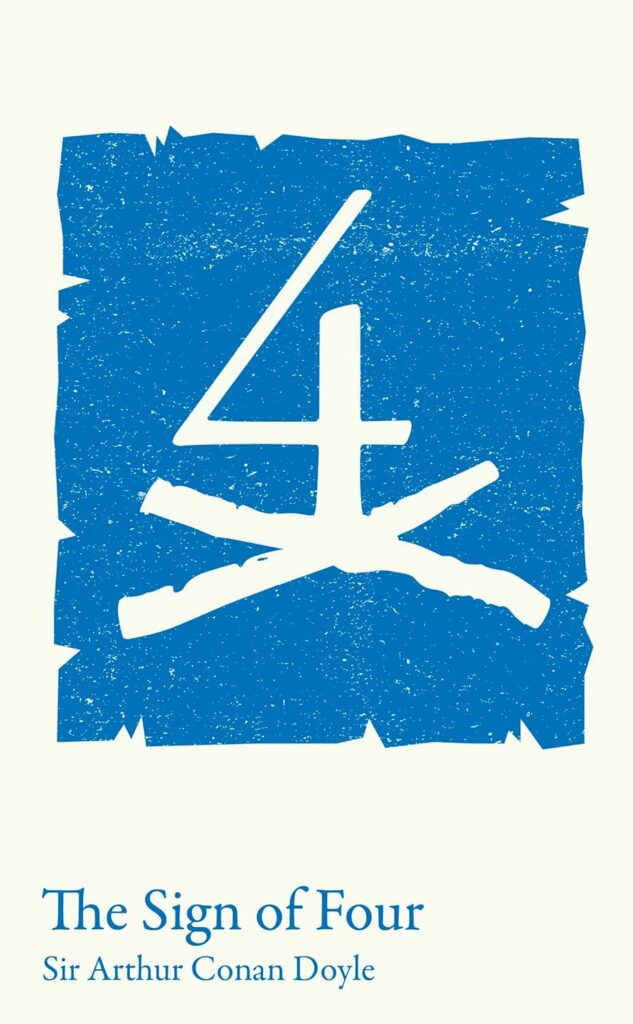
We enjoy studying books as a family and so we get four copies of the book so we can have one copy each; this makes it much easier for reading aloud and working on activities afterwards. We’d usually get copies out of the library but we’ll obviously need these books for more than three weeks!
We have bought four copies of the Collins Classroom Classics edition as simply these were the cheapest on Amazon at the time of buying.
Audio book
We usually take it in turns to read aloud our book studies but I think we’ll try something a bit different this time.
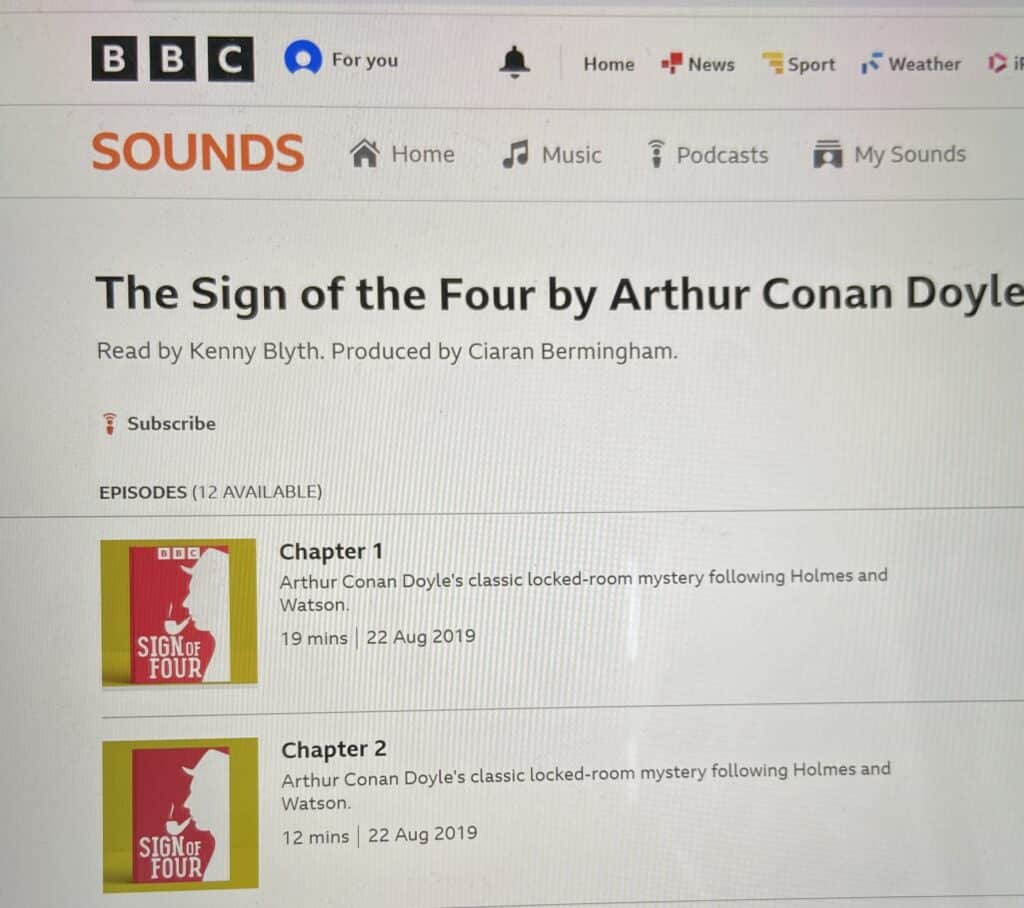
BBC Sounds has an audio version of the book and so we’ll listen to this together, reading along in our books. As this is a 19th century novel, a lot of the language used feels old-fashioned and unfamiliar; sentence structures are also long. I think, therefore, we’ll benefit from listening to someone who makes it flow and brings the text to life more.
Main learning resources
Twinkl Beyond
We successfully used a Twinkl Beyond unit of study for the novel Skellig and we really liked the format, the discussions it enabled and all the related activities. I therefore looked through the unit study for The Sign of Four and found it to be equally as good, if not better. We’re therefore using this as our spine resource and will add in other study guides to enhance it.
There are twelve lessons to mirror the twelve chapters in the book. These also include sections on the themes and characters which are the vital bits for the exam.
As part of my planning, I’ve been through all twelve lessons of the Twinkl unit, and have chosen the activities we’re going to do and printed everything off ready. I like to have the whole unit planned in advance as we have been known to jump onto the next chapter straight away if it gets exciting!
Before starting the unit study, we’re going to do another Twinkl one-off lesson called A Great Plot: A Detective Fiction Timeline Lesson Pack. This unit gives you an overview of the history of detective fiction and some of the important features of this genre. This will be the perfect introduction to The Sign of Four.
York Notes
- The Sign of Four York Notes – Study Guide
- The Sign of Four York Notes – Workbook
- The Sign of Four York Notes – AQA Practice Tests with Answers
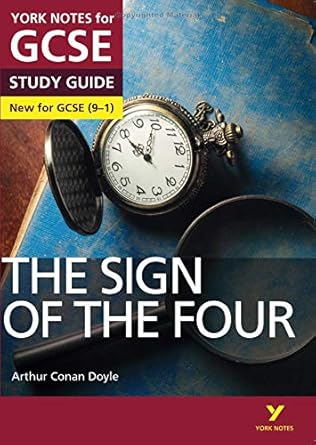
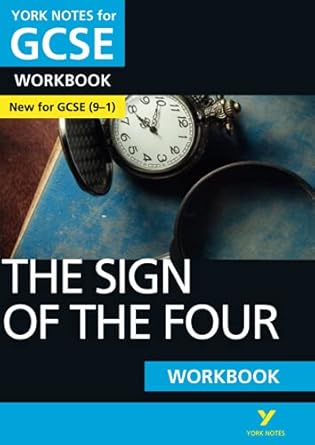
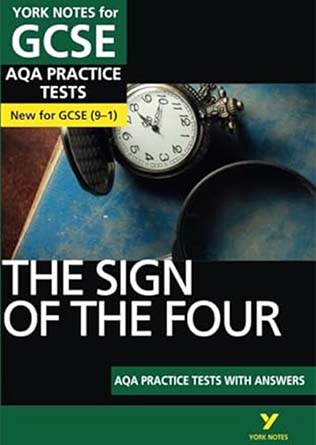
I remember using York Notes when I did exams back in the day, and they’re still as useful today. I’m particularly impressed with the blue workbook which accompanies the red study guide. This has an exam preparation activity on most double pages and there are decent answers in the back too.
I think the green Practice Test book is going to be invaluable. This is aimed solely at exam technique. There are four questions which you get to try yourself. There are then three annotated sample answers for each question at mid level, good level and very high level. You can then compare your answer to these and there are plenty of pointers as to what makes a better answer.
I’m not sure yet how we’re going to include these books in our learning. I’ve not yet decided whether we’ll use them alongside the Twinkl lessons or if we’ll do all the Twinkl unit first and then use these for a second run through. I’m going to go with the flow on this one and see what works once we get going. I’ll report back over the coming months!
CGP Books
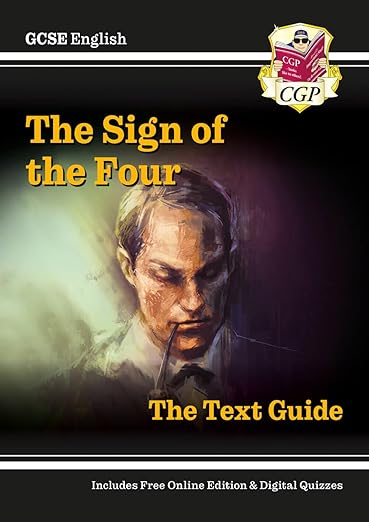
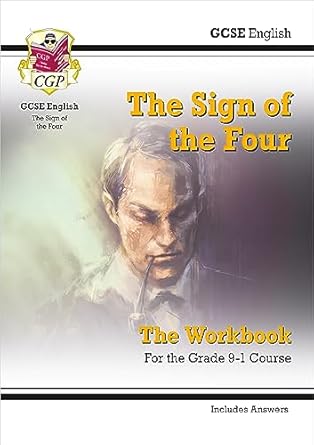
I must admit I’m a bit of a workbook collector when it comes to English. Can you ever have too many study guides?! I thought I may as well get these as well as the York notes and I’m pleased I did. Whilst the CGP guide and workbooks have less content on the individual chapters, there is a lot more on the background and themes. I really do think that using both York and CGP will give us the best support.
CGP also has an online quiz – “The Sign of Four Sudden Fail Quiz” – to test your knowledge on the plot, characters and context/themes/techniques. You get access to this using a one-use code in the front of the Study Guide. I’m sure we’ll give this a go once we’ve finished studying the book.
Other learning resources
Education pack from Blackeyed Theatre
I found this resource from a google search. It’s an online resource for schools which includes a recording of a full theatre performance of the book (with a fixed camera), a virtual Q&A with the cast and writer/director focusing on the characters and themes and access to an education pack.
Needless to say this doesn’t come cheap but I got in touch to see if they would offer a much reduced price for a single user and they said they’d be delighted to! I get access to it from mid-August 2024 for a full academic year for just £24; we wouldn’t get one theatre ticket for that price!
You can see details of the package on the website of Blackeyed Theatre. They also do other GCSE texts like Dracula and Frankenstein.
We’ll let you know how we find it over the coming months.
How we’ll structure our learning
We’re going to work on The Sign of Four from August 2024 until the end of October 2024. That’s my rough estimate of how long it will take us but I won’t know for sure until we get started. We’ll aim for a couple of sessions a week (1-2 hours a time) which will probably equate to one or two chapters a week with time at the end to look at themes and characters. The chapters are short but they’re full of things to talk about. There are lots of historical topics we can cover so we’ll no doubt be going off on some tangents. We’re in no rush but I suspect, once we get going, we’ll want to read on to find out what happens!