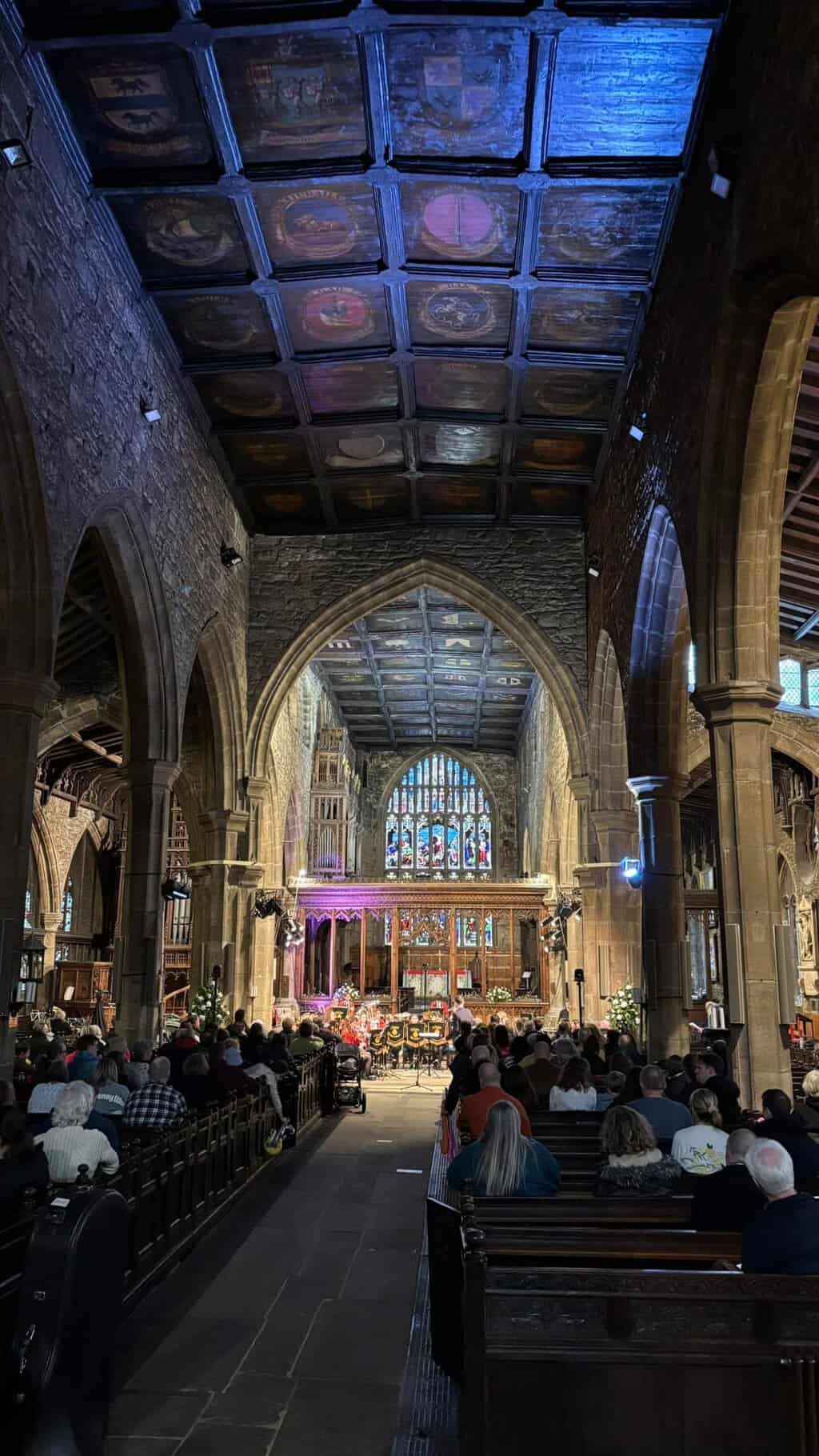
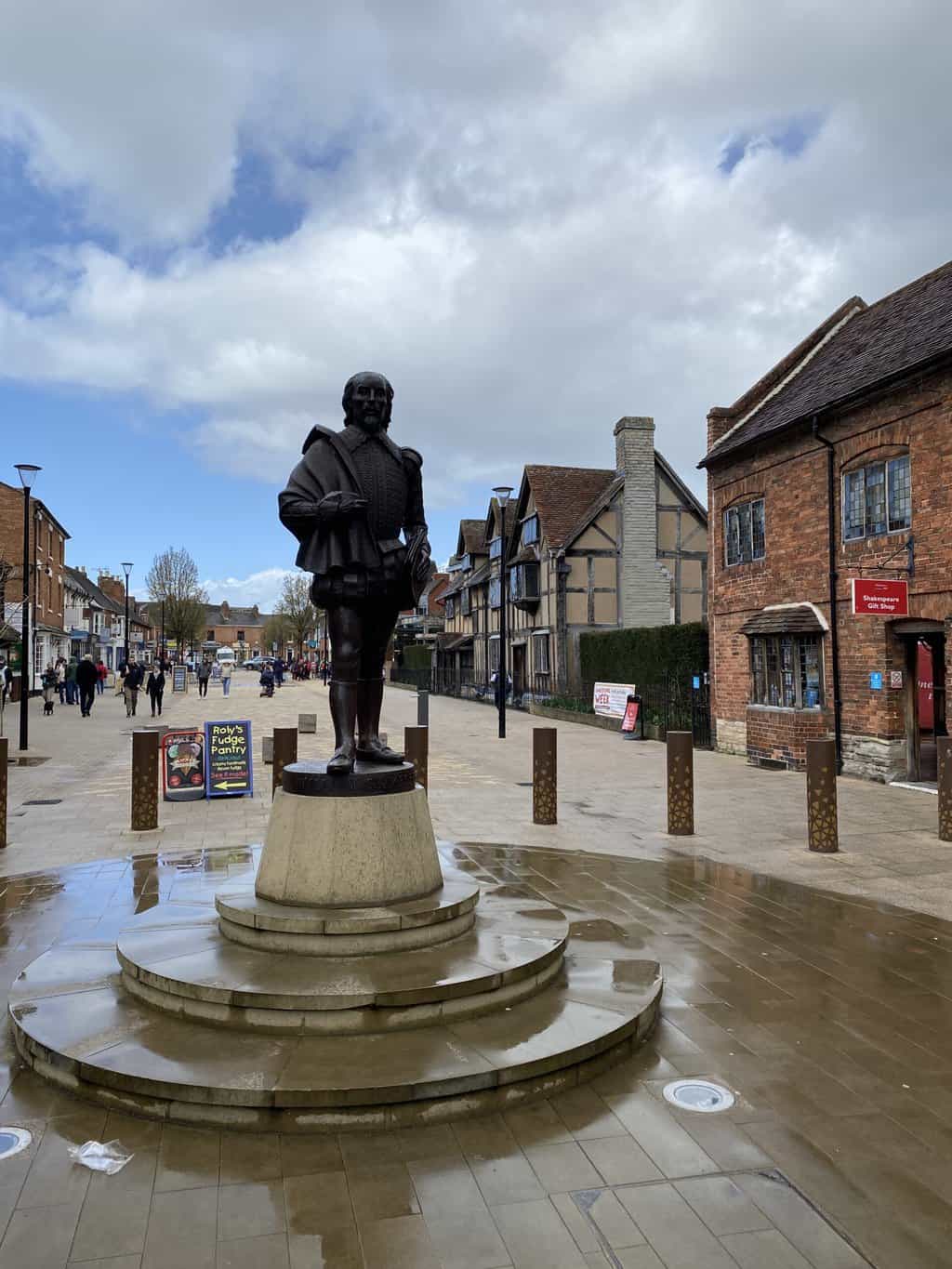
For someone who’s had such a lasting impact on the world, you might imagine that William Shakespeare was born and raised in a country mansion surrounded by all the trappings of wealth. Instead, on a typical-looking high street in the middle of Stratford-upon-Avon sits the place where it all began. While at first glance it may seem far less grand than you might expect, we were soon to learn that the young Bard had a fairly comfortable upbringing for the time, with what could be considered “mod cons” in the sixteenth century.
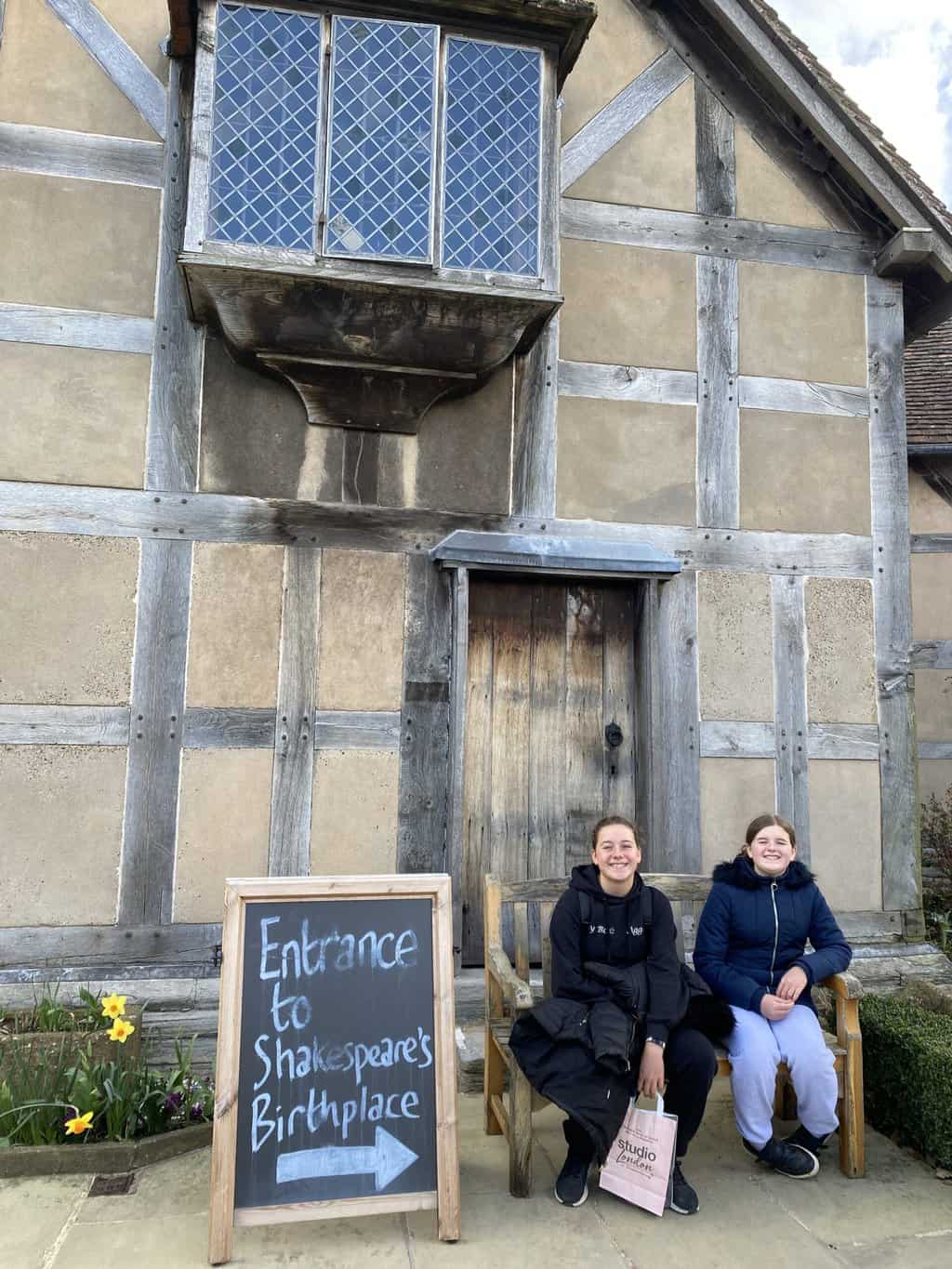
Entering Shakespeare’s world
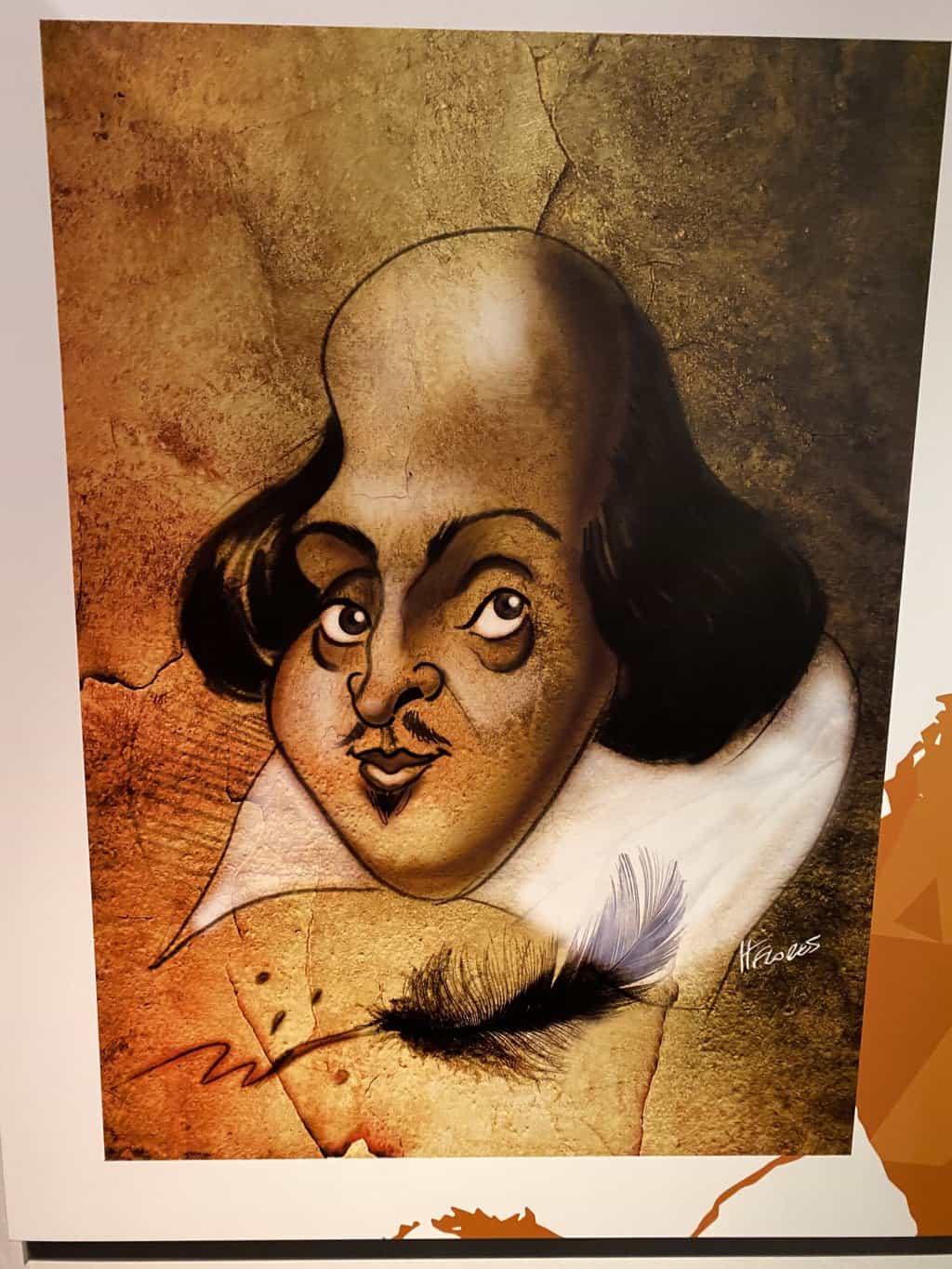
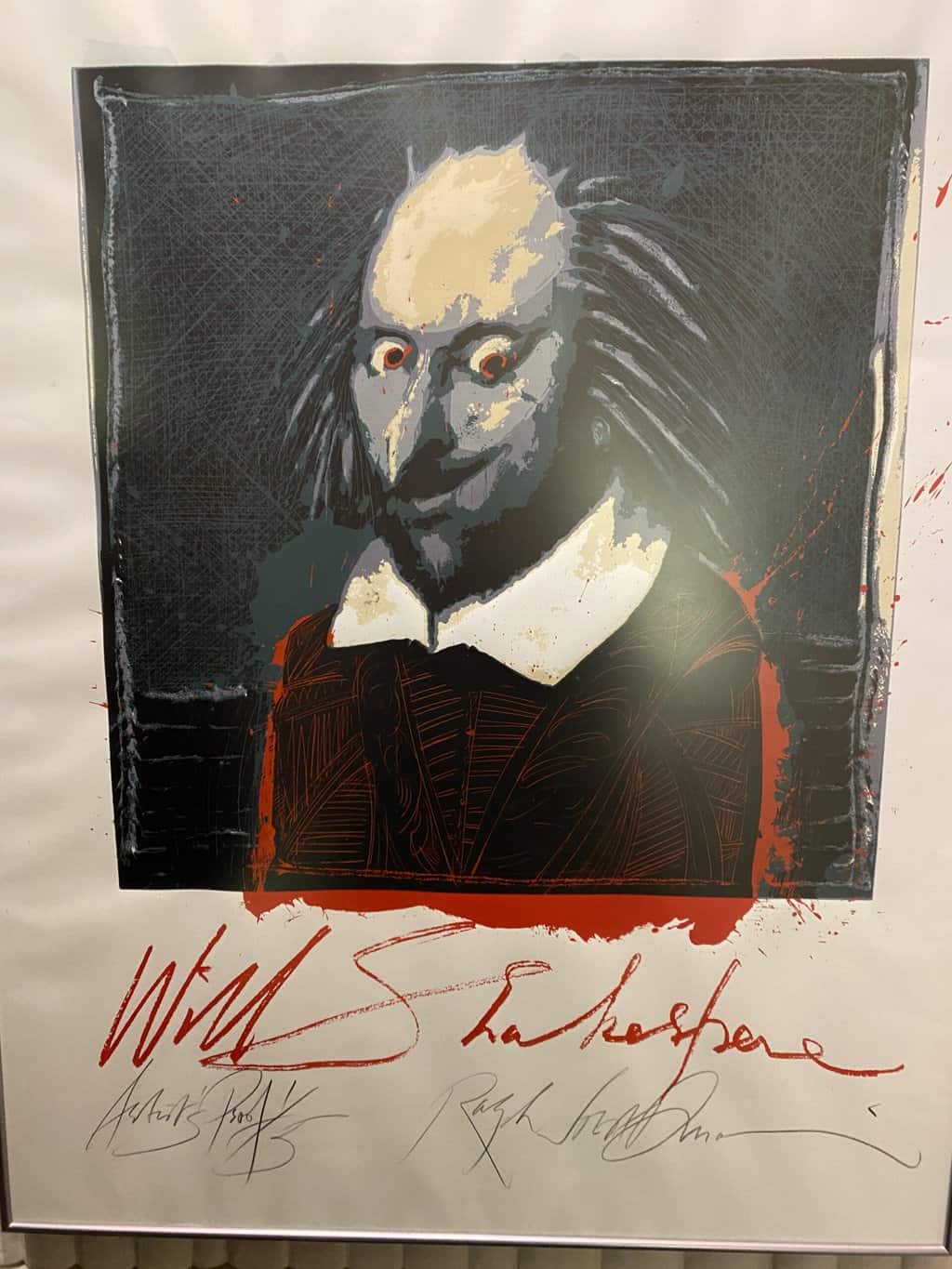
The museum is split across two buildings. The first houses a collection of Shakespeare-related items – artwork, relics and curios inspired by, or typical of, the time. One of our favourite parts were the various paintings and illustrations inspired by Shakespeare’s works. There was such variation in what was on display, and the stories behind each work – the aspects of his life which inspired the art – made for really interesting reading.
There aren’t a lot of interactive exhibits – a few artefacts which you can handle, and dress-up costumes so you can play at being various characters – but there is a lot of information presented in a very accessible way. One of our favourite things was the timeline of Shakespeare’s early life, which really helped us to get to grips with his formative years. There is also a first edition of Shakespeare’s complete works, printed in 1623. It’s quite astonishing to think that this 400-year-old book contains every one of the Bard’s works, and probably influenced a huge chunk of most modern film and theatre. You certainly couldn’t come out claiming to have learnt nothing new.
Leaving this exhibition we entered a very pretty walled garden which leads to the original birthplace building. The first room we entered you could almost call an annexe. It was rented to Shakespeare’s younger sister, Joan Hart. It’s a very unassuming little room which doesn’t really give you much of a hint of what’s to come. We also encountered our first guide; one of a group of very knowledgeable and enthusiastic volunteers who are on hand to add tons of detail to your visit.
From here we entered the main room – used by Shakespeare’s father, John, for showing off. Taking pride of place in this room is a splendid four-poster bed, which the guide explained would be the equivalent of having a large TV on the wall of your lounge nowadays. It was meant to impress any guests.
Behind this room is the dining room, with a table laid out with typical fare of the time, and then on to John’s workshop, where he worked leather and made gloves. There are some very smelly boxes you can play with in here, which are meant to mimic some of the more pongy materials that are used in leatherwork – mostly derived from animals’ waste products (ie pee and poop!).
Upstairs we first entered a large bedroom with more dress-up clothes and a very interesting window which used to belong on the front of the house. Over the years some very dedicated Shakespeare fans who visited Stratford scratched their names into the glass, so it has been removed from its original position and placed on display. You can hunt for signatures by Charles Dickens, John Keats and Sir Walter Scott.
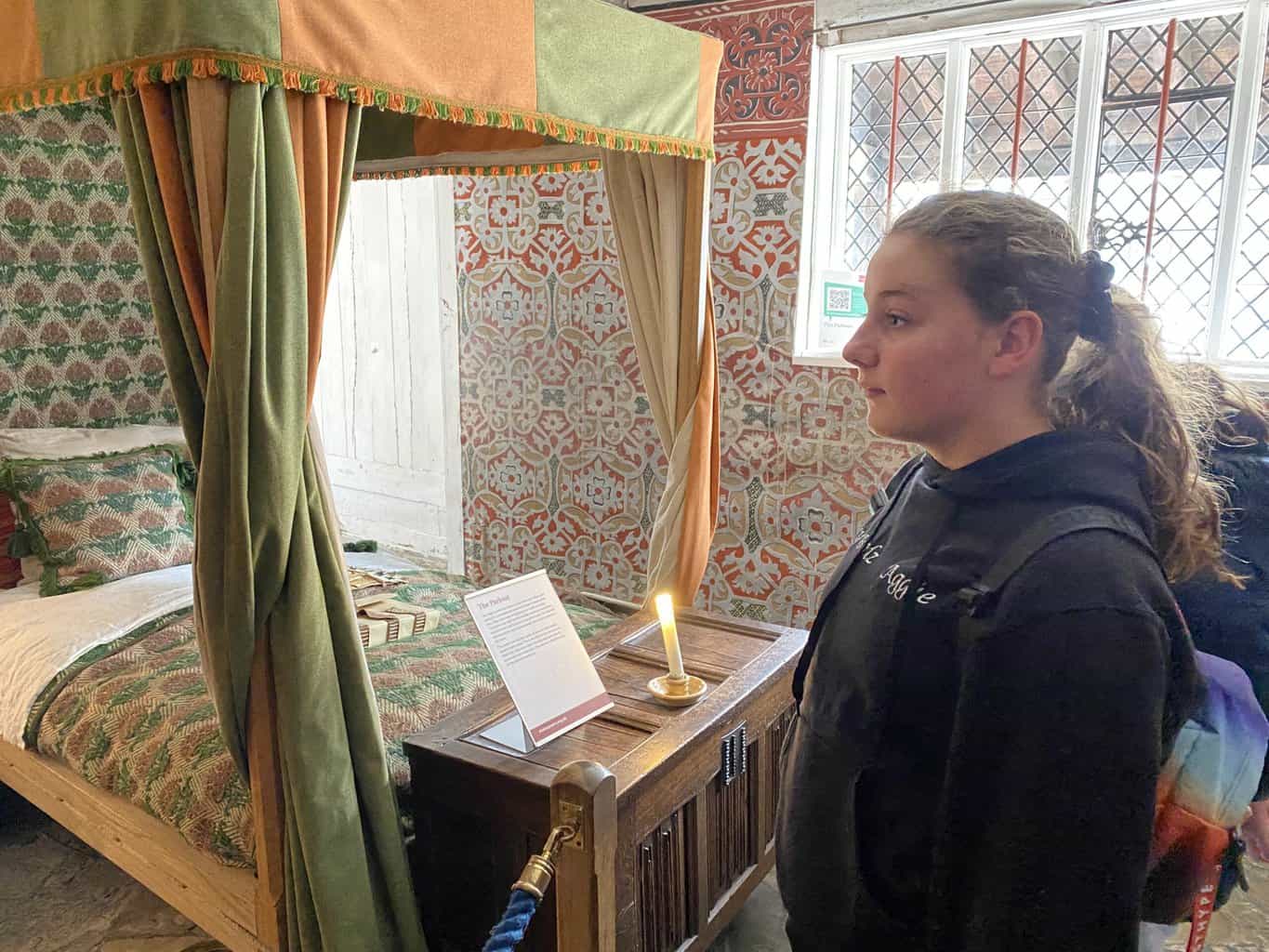

Then it was onto the main bedroom which features a very grand – for the time – four-poster bed. There are also a couple of smaller pull-out beds and cots where the children would have slept; all the family members would have slept together. This is the room where Shakespeare was born and would have slept for many years after.
Leaving the master bedroom, we entered a separate part of the building – the Star and Maidenhead – an area that was leased by Shakespeare and served as a pub. Back downstairs, and via pantries and other functional rooms, we were out in the open once more and on to the well-stocked gift shop.
Random fact we learned on the day
Apart from the fact that a four-poster bed served as a status symbol, we learned that people tended to sleep sitting up in their beds. This was for two reasons; practical and superstitious. The practical reason being that the air quality in many houses due to open fires meant that it was easier to breathe more deeply if you slept upright. The superstitious reason was that the only time you were ever laid out flat on your back was when you died.
Our top tip for visiting
Watch out when you book online. The default price for the family ticket includes a “voluntary” donation of £5 which you can opt out of but they don’t make that very clear. Not the end of the world, but something we felt was a little bit of a cheek. It’s not the cheapest place to visit in the first place.
If you have Tesco Clubcard vouchers, then these can be used to get tickets on the door. You can’t book online in advance though as the website is only geared to give tickets after online payment.
What age range is it suitable for?
High-school plus, or younger children particularly interested in the period. There’s not a lot of interactive exhibits, aside from the odd bit of dressing up, and the house itself is interesting rather than exciting.
How long were we there?
No more than an hour and a half, maybe less. There isn’t really a whole lot to do, and you would probably spend longer on a busier day if you were waiting to get from room to room. That doesn’t mean that it’s a bad place to visit, just that there is only so much that can be made of Shakespeare’s birthplace. Its historical significance can’t really be overstated.
How much does it cost?
There are two options with your tickets. There’s a “Shakespeare’s Story” ticket, which includes entry to his Birthplace, Anne Hathaway’s House and Shakespeare’s New Place. When we visited, in March 2023, only his Birthplace was open, so we opted for the “Shakespeare’s Birthplace Only Ticket” which we bought using Tesco Clubcard vouchers. Prices and options are on their website. Watch out for the “voluntary” donation.
Is there a gift shop?
Yes, a very good one. If your collection is short of any of Shakespeare’s works, or you would like to buy a complete collection or a Manga-style edition of Julius Caesar, then you will be well catered for. There’s also the usual memorabilia including clothing and kitchenware. All very tastefully done, with the odd bit of tourist-y pocket-money stuff.
Is there a cafe?
No, but it’s right in the middle of Stratford-upon-Avon so you won’t be struggling to find a brew.
Is it accessible?
Not fully, as getting up and down the stairs in the main house would prove tricky. There is a section on the visitor centre website which explains all of the accessibility provision.
How did we get there?
We travelled to Stratford by car and would highly recommend the Marina Car Park, which is a very reasonable £4 for the whole day. It’s a small-ish car park with tight spaces so you’d need to get there early and not drive anything too massive, but it’s a short walk from there to the town centre.
When did we go?
Thursday 23rd March, 2023.
Information about Shakespeare’s Birthplace
The Shakespeare Centre, Stratford-upon-Avon, Warwickshire CV37 6QW
01789 204016
info@shakespeare.org.uk
shakespeare.org.uk