

On this page
- Latin KS2 textbooks chosen
- Why did we choose these textbooks for Latin KS2?
- How did we use Minimus?
- Other learning resources
- If you need help….
I was super keen to share my love of Latin with the girls and so we started to look at Latin when the girls were around 10 and 9 years old. Whilst Aggie was super keen, and continued to finish both Minimus books, Peggy just wasn’t interested and stopped after a few chapters. Roll forward a few years though, Peggy’s now flying through Latin to do the GCSE after getting a 7 in GCSE Classical Civilisation!
Latin KS2 textbooks chosen
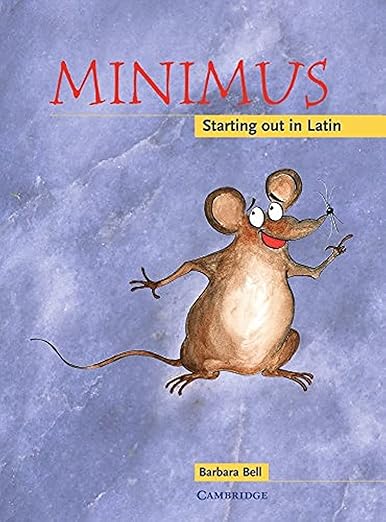
We started our Latin journey off with Minimus, a Latin scheme comprising two books aimed at 9 to 13 year olds. These are fantastic resources which offer a brilliant introduction to the Latin language. I know many people, like us, who have used them and have gone on to study Latin further as they’ve enjoyed them so much.
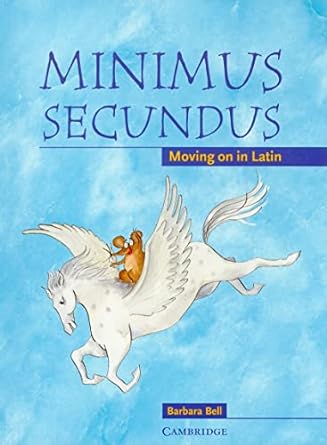
Minimus follows the lives of a real family based at the Roman fort of Vindolanda which was close to Hadrian’s Wall. In the second book, Minimus Secundus, the family move to York.
- Minimus – Starting out in Latin by Barbara Bell
- Minimus Secundus – Moving on in Latin by Barbara Bell
Why did we choose these textbooks for Latin KS2?
There aren’t exactly many textbooks to choose from when it comes to Latin at primary school age but perhaps that’s because the one book that has been written for this age group is so good, no-one else can compete with it!
The things we love about Minimus:
- It’s super accessible for anyone who has never studied Latin before. It’s user-friendly for both the student and the parent/teacher.
- There are plenty of free resources on the Minimus website to help you make the most out of the textbook; there are English translations and workbook answers too.
- The books are a brilliant blend of the Latin Language and the culture of Roman Britain. This fits beautifully alongside learning about the Romans in history, a traditional KS2 history topic.
- You’re led through the books by Minimus the mouse and he appears in cartoons throughout the books. The pages are colourful and fun but clearly laid out too.
How did we use Minimus?
With Minimus Book 1, we worked through a chapter a week in two sittings.
At the start of each chapter there is a cartoon which we’d work through together. The English translation is freely available on the Minimus website here.
After reading a few pages in the textbook together, we then did the related questions/activities in the free workbook which can be found here. This workbook is pitched brilliantly at the 9 to 13 year age range and my girls were able to work pretty much independently on it after a few chapters. They could also mark their work themselves using the answers off the website.
At the end of each chapter we’d do a recap of the new vocab learned before moving onto the next chapter. We’d do this using the vocab tests on the Minimus website which are a great way to check knowledge. If you get any questions wrong, you can just keep trying until you get them right.
The sections called “Roman Reports” include some of the cultural history related to the story of that chapter. We’d quite often go off on tangents on these by doing some additional research if the topic interested the girls.
At the end of chapters 4, 8 and 12, there are some progress check worksheets to complete which are brilliant revision for the previous four chapters. They are at two different levels so you can choose which is more appropriate for your child. Unfortunately there are no answers online to these but, if you’ve followed the textbook alongside your child, they are pretty straight forward to mark. These worksheets are not at all necessary though – they’re an extra for those who want more – so if you don’t feel confident marking them, simply don’t do them!
After completing Minimus, Aggie was keen to move onto the second book, Minimus Secundus. We took pretty much the same approach with the second book, as the same resources are available, but took a little longer on each chapter; usually over two weeks rather than one. This wasn’t really a reflection of much greater difficulty; more the number of subjects we did increased as the girls got older so we had less time per week.
We easily completed Minimus and Minimus Secundus in one academic year.
Admittedly, after quite a break, Aggie then continued with her Latin journey by using the De Romanis series.
Other learning resources
In addition to the Minimus website, I also found some additional Minimus resources like crosswords and wordsearches on the Light Bulb Languages website which I used a lot for Spanish.
If you need help….
The illustrator of the Minimus books, Helen Forte, runs online Latin courses which follow the books. You can read more about these on the Minimus website here. I have no direct experience of these courses though so can’t make a personal recommendation.
If you’d love to go it alone with Minimus, but are unsure or need a little help and support, please do get in touch with me. I’m certainly not a qualified Latin teacher but I did do it to A Level and will be supporting my girls up to and through GCSE Latin. I’m passionate that Latin should be accessible to anyone who wants to learn it, so I’m always happy to help where I can. Just send me a message!
