

On this page
- Latin KS3 Textbooks chosen
- Why did we choose these textbooks for Latin KS3?
- How do we use these textbooks?
After enjoying Minimus and Minimus Secundus, and admittedly after a long hiatus, we returned to further our Latin learning. Most textbooks aimed at secondary school-aged children assume no prior knowledge of Latin, and so any textbook was going to cover some things we’d already learned. But, we found this to be good revision and consolidation after a long break from learning it.
Latin KS3 Textbooks chosen
This was a massive dilemma for me. Should I
a) just go with the Cambridge Latin Course which had seen me through five years of learning Latin myself in the 90s. I’d got only fond memories of Caecilius and his family; or
b) do we go with something new and offering a different learning methodology?
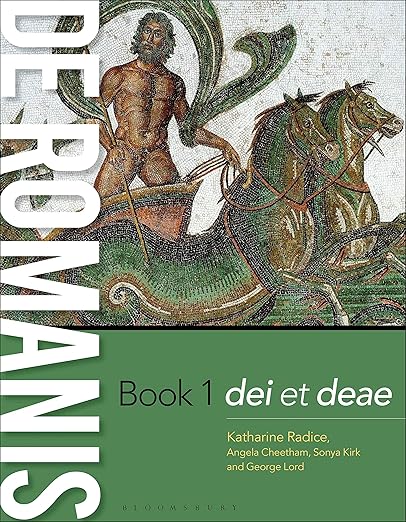
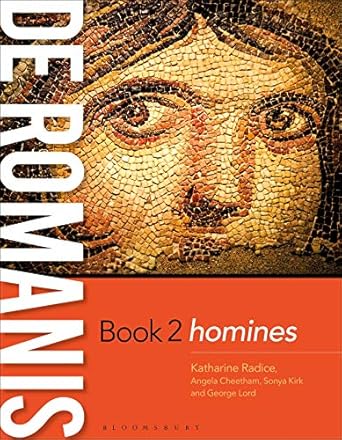
After a lot of research, and of course buying both books (oops), we went with De Romanis.
Why did we choose these textbooks for Latin KS3?
Content
First and foremost, I absolutely love the context of the language learning in these books. Book 1 bases all the new vocabulary, stories and translations around the theme of Roman Gods and religious customs and festivals. For any classics-loving learner, which definitely includes Peggy, this makes learning the language even more enjoyable as they already feel familiar with the context. The content of book 1 ties in perfectly with the options Peggy chose for Classical Civilisation GCSE: Myths and Religion and Roman City Life. I wish we’d studied both alongside each other!
Book 2 is based around the famous historical figures of the Roman World including Julius Caesar, Augustus, Cleopatra and Boudicca. There is a huge amount of crossover with Ancient History GCSE which is perfect as Peggy is also studying that!
The important thing though is of course the actual language element of the books. This is also excellent! Thirty new words are introduced in each of the 12 chapters (across books 1 and 2 combined) and there is constant revision during the book on previous chapters. New grammar points are introduced steadily with plenty of opportunity to practise them. There are lots of exercises to do in various forms including tables and crosswords to complete. There is an additional language section for each chapter which extends what has been learned and gives extra practice. We’ve certainly never felt bored or stuck progression-wise.
These books are also endorsed by OCR and so we know we’re on the right path for OCR Latin GCSE which both girls will be sitting in June 2026. We’ll be using the newly-published Book 3 to take us up to GCSE standard later this year.
Online support
This is where these books excel! There are answers to all exercises online (teacher access is required from Bloomsbury Publishing but I found this very easy to get). There are fantastic teacher guides for each chapter which suggest how to approach your learning and what to focus on. There are worksheets to print out and sound files for many of the stories in Latin so you can hear it being spoken. There are also vocab quizzes and Quizlets for revision and extra practice. These FREE resources online are outstanding and go far beyond anything else other publishers provide; normally you have to pay over £100 for a teachers’ guide or pack of printables.
Because of the above resources, I really do think that somebody with zero knowledge of Latin could support their child through their learning using these books. I’m lucky in that I’ve studied Latin to A Level before, albeit nearly 30 years ago, so that obviously gives me a head start but I feel really supported with these resources. Such is the support, that I think a teen upwards could work through the books on their own if they wanted to self-study alone.
Layout and Looks
The books are colourful with plenty of pictures and illustrations. New grammar is introduced in yellow boxes whereas practice exercises are in blue. This makes it really easy to flick back through the book if you need to look something up.
The new vocabulary for each chapter is clearly listed at the start of the language sections and is very handily divided into word types: verbs, nouns, adjectives, prepositions and adverbs. There’s also a fantastic reference grammar section at the back of each book which is great for dipping in and out of and for consolidating learning to date.
So, these books are completely perfect….
I’ve yet to find a perfect textbook in any subject but I reckon these books come pretty close when combined with all the online resources. De Romanis is a complete Latin curriculum and both our girls genuinely enjoy learning Latin using it. Whilst I could claim it’s down to my amazing “teaching”, I suspect it’s more to do with these fantastic books!
