

On this page
- KS3 Science textbooks chosen
- KS3 Science workbooks chosen
- Workbooks: foundation or higher level?
- Why did we choose these KS3 science textbooks?
- How did we use Activate?
- Additional Activate resources
Both girls enjoy science and so they’re keen to cover as much as they can before getting stuck into GCSE material. We’ve chosen to look at each type of science separately and so we rotate between the three subjects: biology, chemistry and physics.
After many hours of research, we have chosen the Activate KS3 science books published by Oxford University Press as our base.
KS3 Science textbooks chosen
The same content of this series can be purchased in one of two different ways:
- Three student books (textbooks), each of which cover all of the three sciences. These are the ones we use.
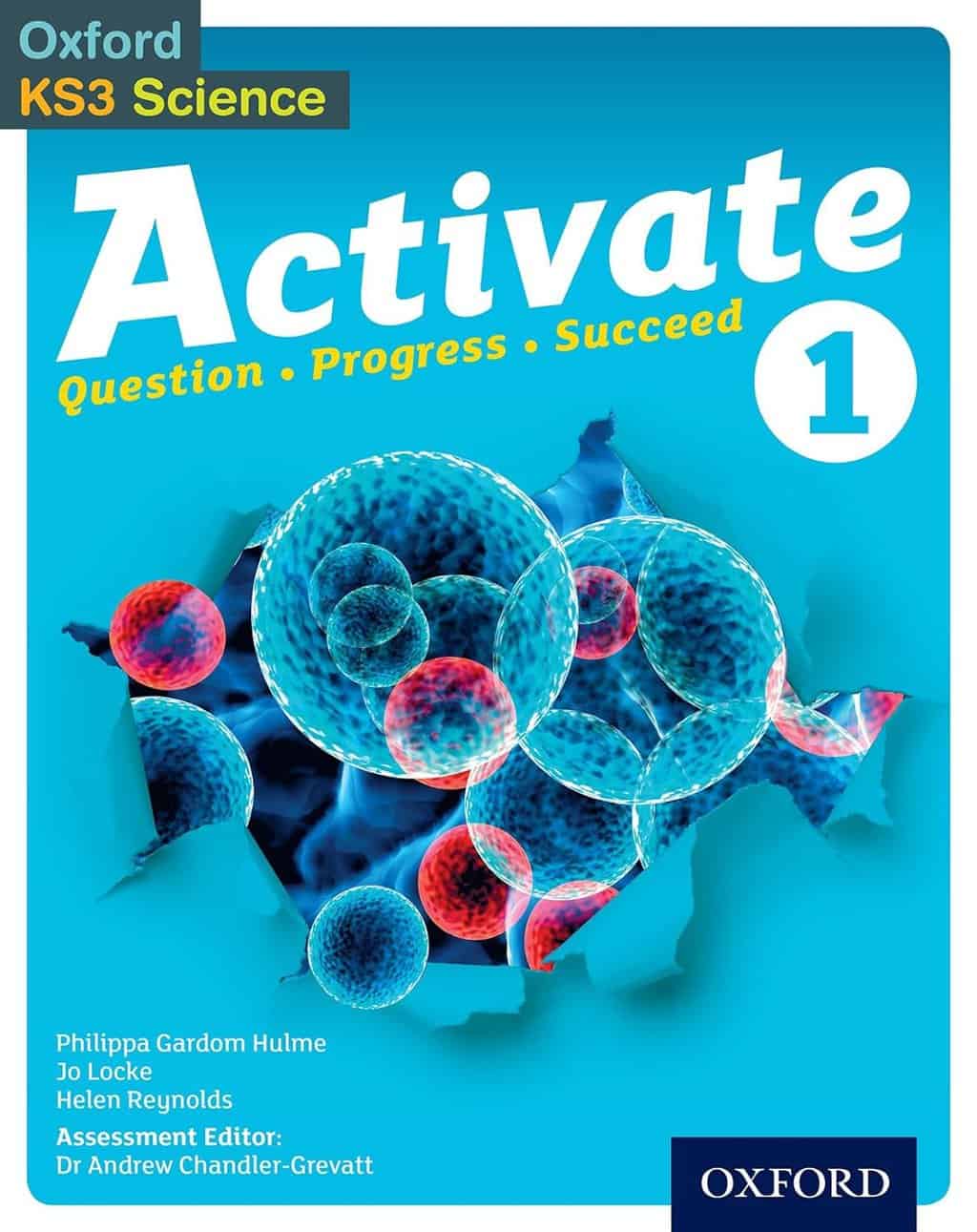
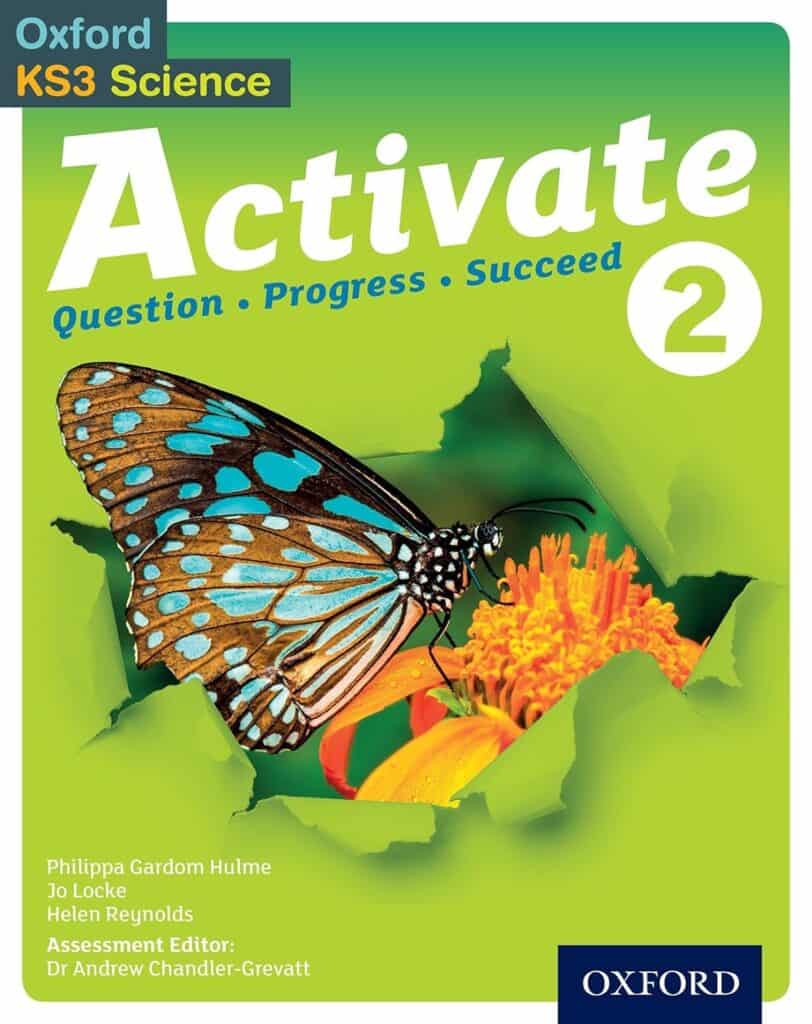
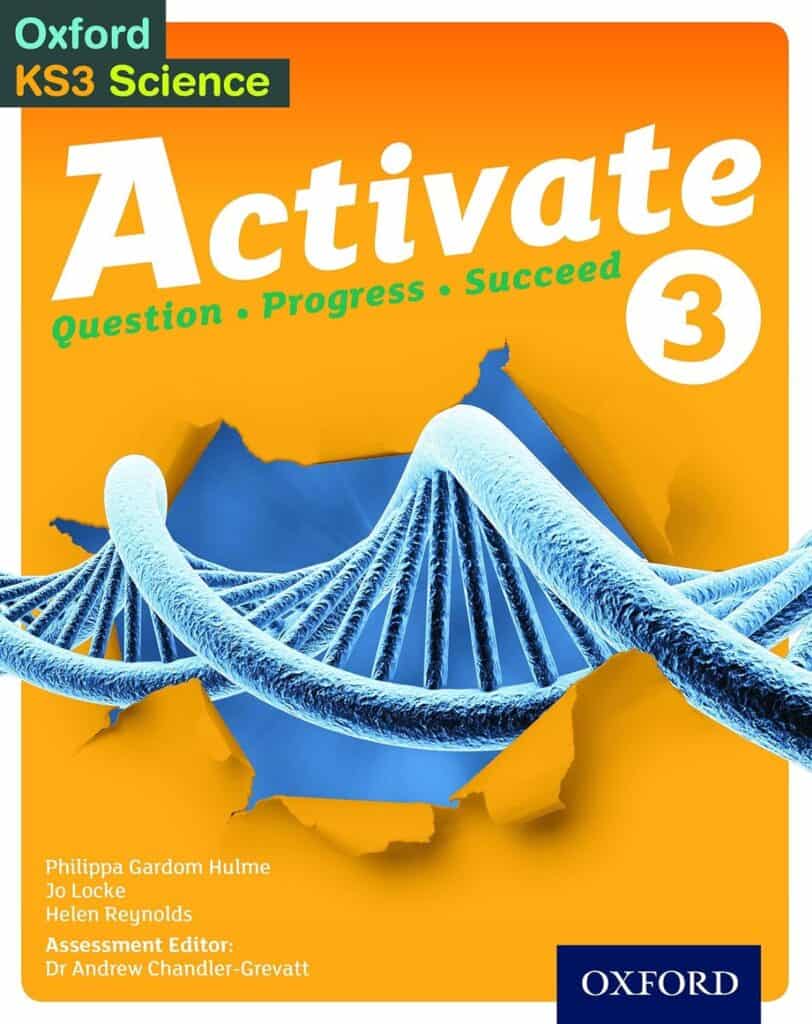
- Activate 1 and 2 are designed to cover KS3 in two years. Many of our local schools use these two books only. Activate 3 is extra (and I feel the most interesting book!) in that it covers science in a contextual way i.e. how science is actually used on a day-to-day basis. There are two whole chapters on crime scene science, for example, which my two absolutely loved.
- The exact same content can also be bought in books which have just one science in each; this is good if you know you don’t want to cover a particular science. Each book contains everything that is in Activate 1, 2 and 3 above.
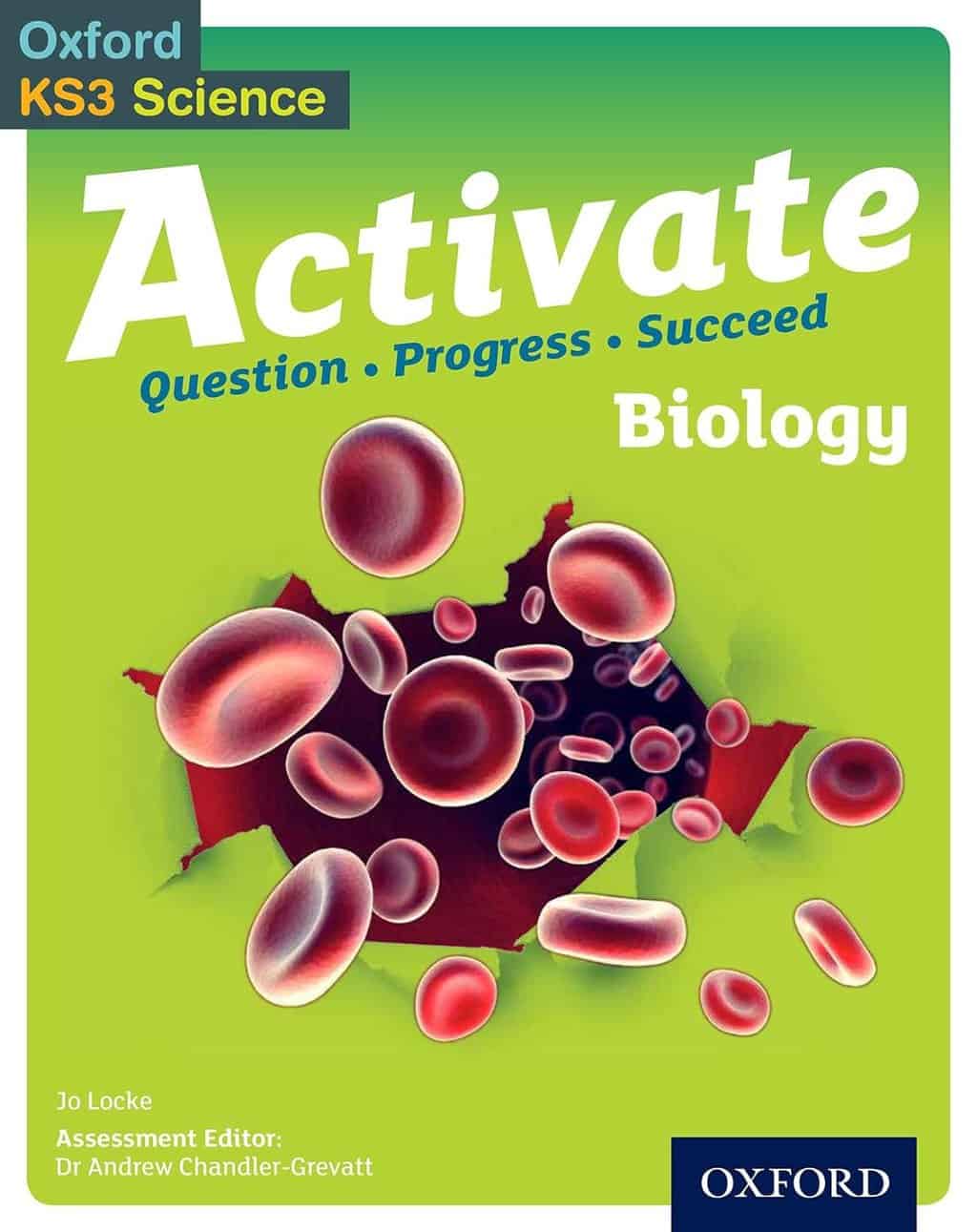
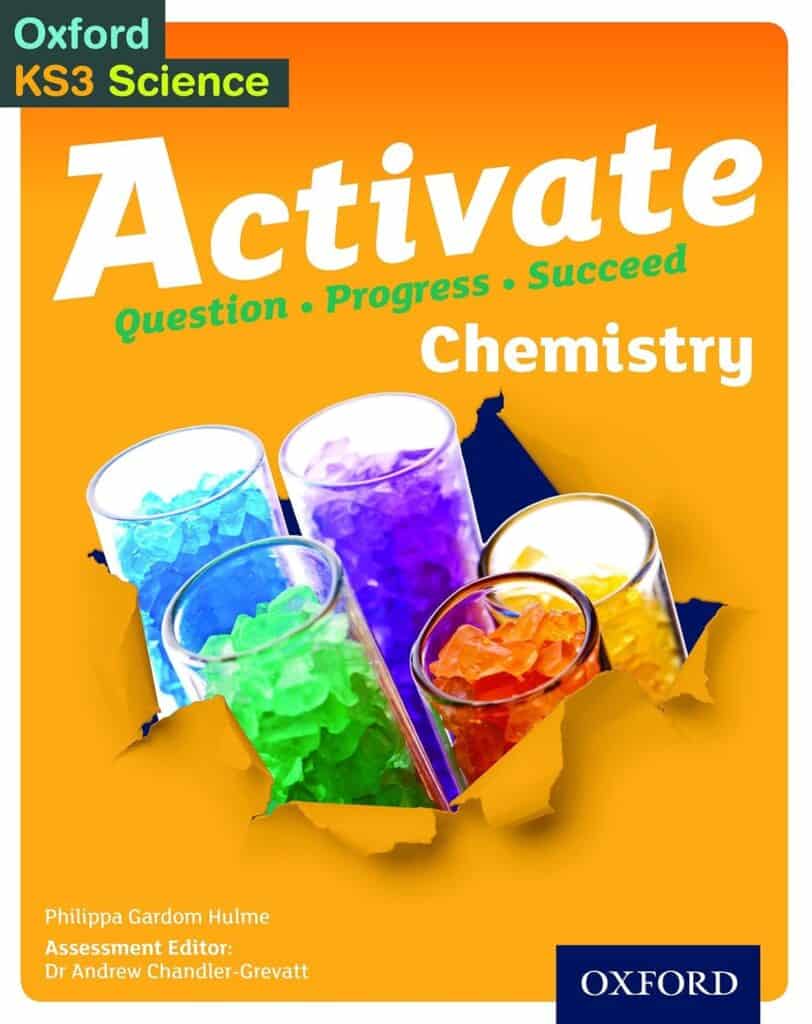
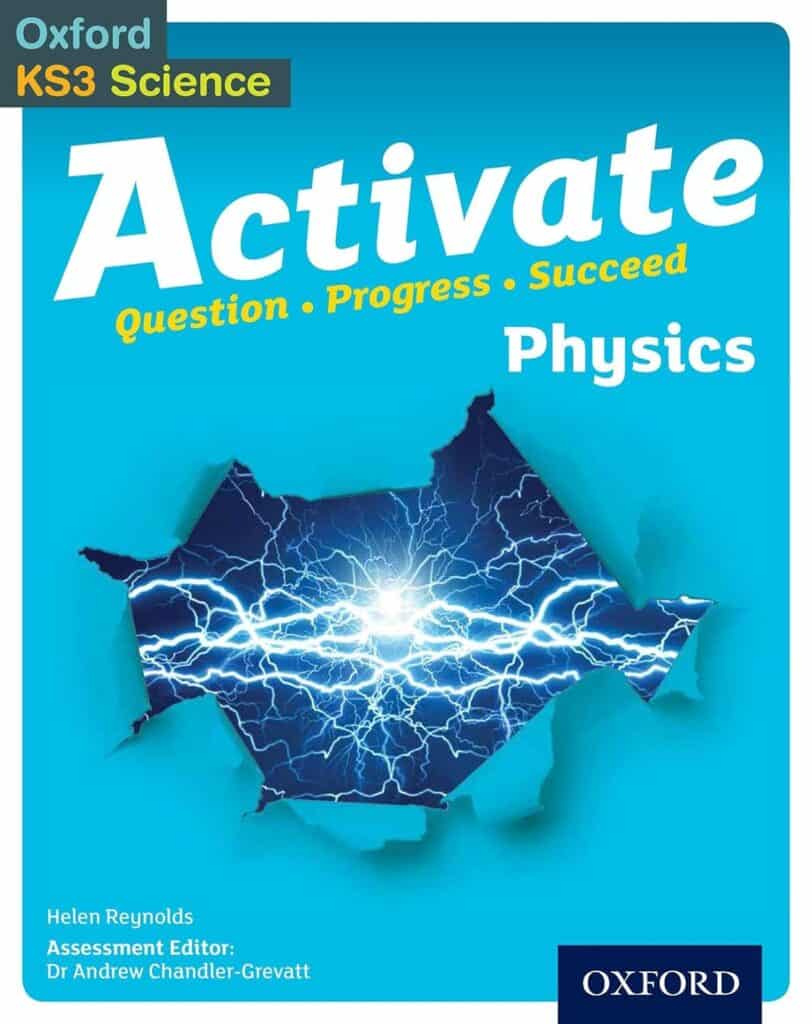
The great thing about this series is that all answers to the questions in the textbooks are freely available online on the OUP website.
KS3 Science workbooks chosen
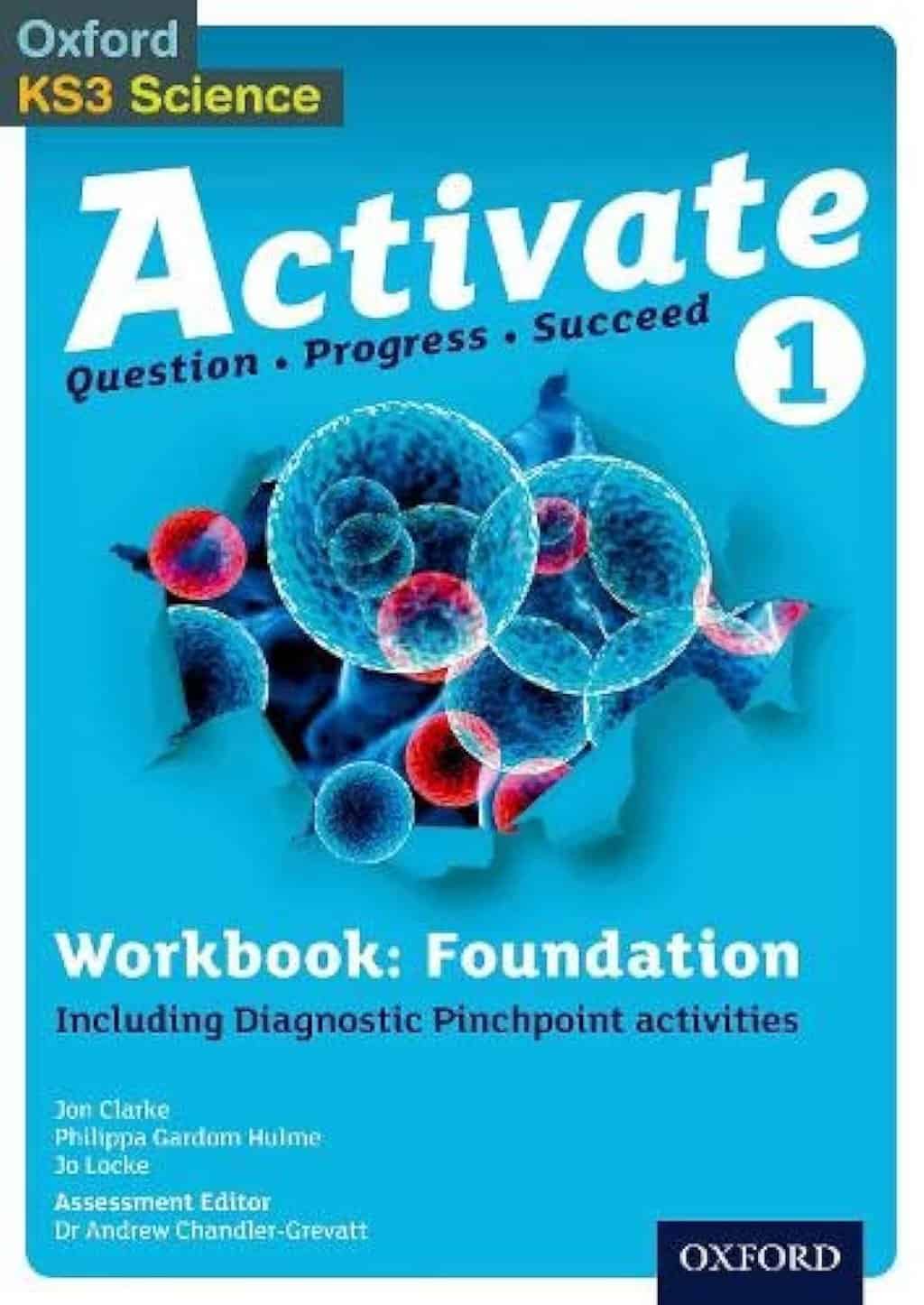
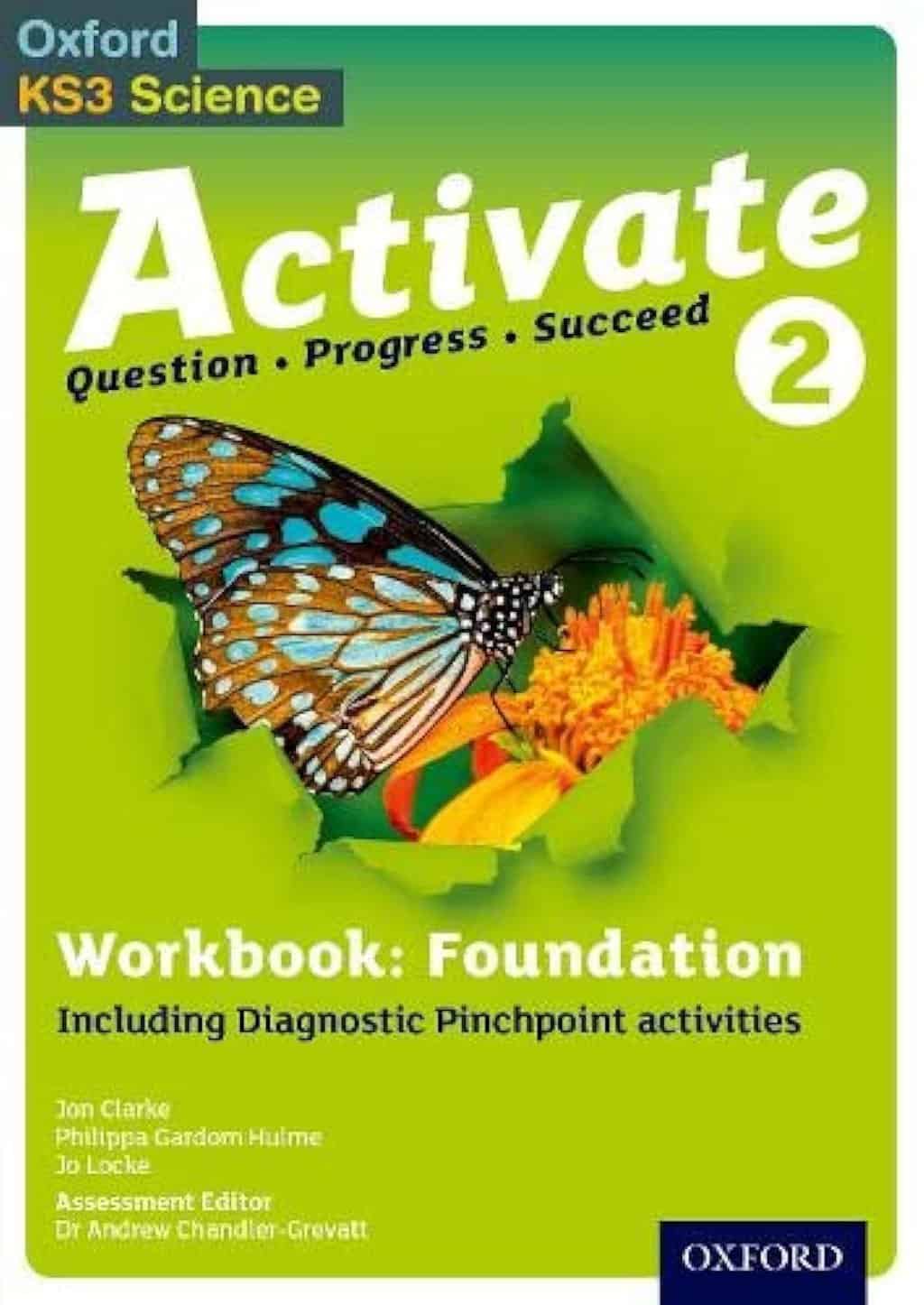
In addition to the textbooks above, there are two accompanying workbooks for each of Activate 1 and 2; one is at the foundation level and one is at the higher level. Answers to all questions are included in the back of each book.
When we started off with Activate 1, Aggie worked with the higher level workbook and Peggy the foundation level as she’s 18 months younger. These differing levels are therefore great if you want to cover the same material with children at different stages.


Workbooks: foundation or higher level?
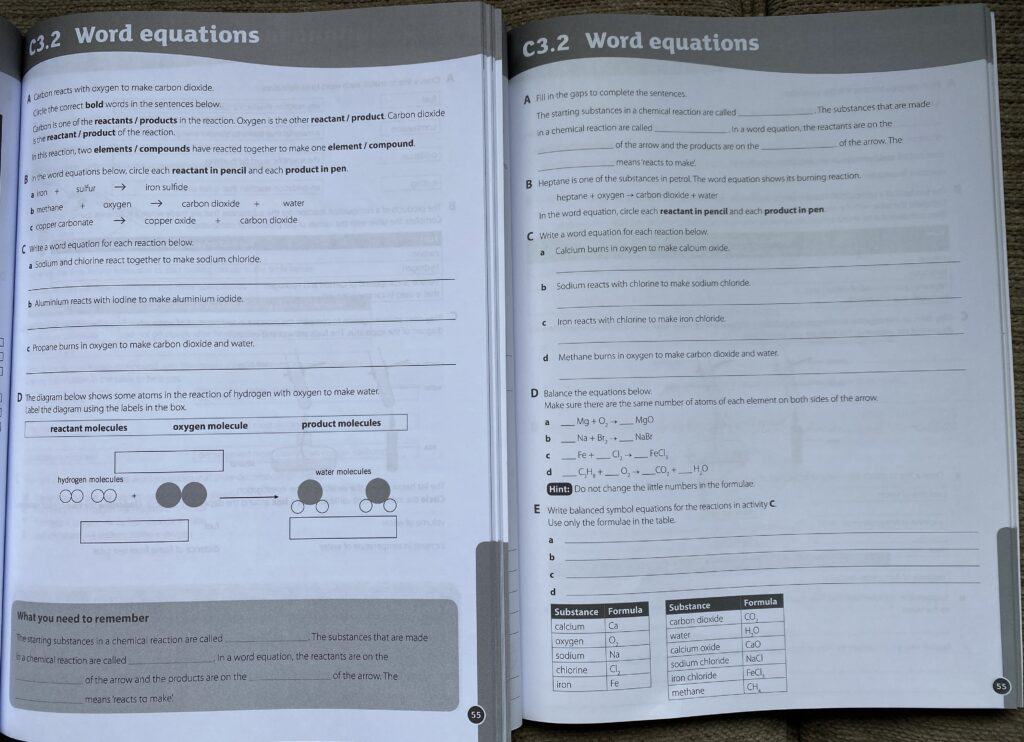
Below are two examples of two pages from the workbooks on the same topic. The one on the left is from the foundation book and the one on the right is the higher level book. The foundation book has more prompts for answering the questions and more tick-boxes and match-up exercises. The higher level book has more questions where a paragraph of writing is required and there are few or no prompts. The higher is definitely more challenging and makes you think beyond just the theory; it’s checking application of the new knowledge. The foundation one, however, is more fact-based and checking understanding of the theory. Both books include the same fill-in-the-gap section which summarises that topic. If you want thorough coverage, you could potentially use both workbooks alongside each other.

Why did we choose these KS3 science textbooks?
Content
These books comprehensively cover all the KS3 science curriculum which is important to us as both girls will do all three science GCSEs and likely go on to do them at A Level too.
The books are broken down into the separate sciences and again into good-sized chapters on each topic. We find that the chapters are a good length and we can usually complete one in around six weeks, normally working on a double page spread in each session.

We absolutely love Activate 3. Rather than straight theory of science, this applies some of what you’ve learned in books 1 and 2 to science in the real world. I think we could happily spend a whole year on this book! There are two chapters on crime scene science alone which we thoroughly enjoyed looking at.
Layout and Looks

The pages are very colourful with plenty of pictures and diagrams and the text is broken down into small paragraphs under headings. There are key words which have definitions in the glossary at the back of the book and there’s either a fantastic or a foul fact on each double page.
At the end of each section there are summary questions which start off comprehension-style and then go deeper. Answers to all these questions are available on the Oxford University Press website.

End of chapter questions
At the end of each chapter there is a really handy summary of all the key points addressed in that chapter and then plenty of exam-style questions to have a go at. Again, the answers for all these can be found online here.

How did we use Activate?
We follow the same routine for each subject:
- We go through a double-page spread together, reading out the contents and looking at the pictures and diagrams. We answer the summary questions together verbally.
- We do an activity that I’ve organised related to these pages. This can be carrying out an experiment, watching a video or completing a worksheet from, say, Twinkl. I can always find something to supplement the topic and I always try to get it as hands-on as possible.
- The girls then move onto their workbooks where they work on the relevant pages as independently as possible (this may be later that day or later in the week). Some of the questions in the higher level book can be pretty tricky so we often help with those. The girls mark these themselves and correct their answers accordingly.
- Each girl then writes down the key words (they’re always listed) from that double-page in their exercise books (we have one for each separate science). They then find the definition in the glossary at the back of the book and copy this out into their book. This helps them get the definitions into their memory and to practise actually writing and spelling the scientific words.
Additional Activate resources
These books are very common in schools and Oxford University Press has lots of lessons, resources and assessment tools included in their Kerboodle online teaching packages. There are also teacher guides for each book. These are all seriously expensive though so I’ve not bothered looking at them. We don’t feel like we need anything else beyond the textbooks, workbooks and other resources from a good-old Google search!




Science related posts
Tour of Blackburn Birth Centre
Categories
Careers, life skills and volunteering | Biology | Science | UK Day trips – near Manchester
Fungal Forage at Tatton Park
Categories
Natural World | Biology | Science | Trips | UK Day trips – near Manchester
CSI Workshop at Think Forensic
Categories
Biology | Chemistry | Law, politics and citizenship | Science | Trips | UK Day trips – near Manchester
Tour of Energy House 2.0
Categories
Art, Design and Technology | Environmental Management iGCSE | Physics | Science | Trips | UK Day trips – near Manchester
Tour of the Engineering Department Building at the University of Manchester
Categories
Trips | Careers, life skills and volunteering | Physics | Science | UK Day trips – near Manchester
Lancaster University Physics Open Day
Categories
Chemistry | Physics | Science | Trips | UK Day trips – near Manchester
