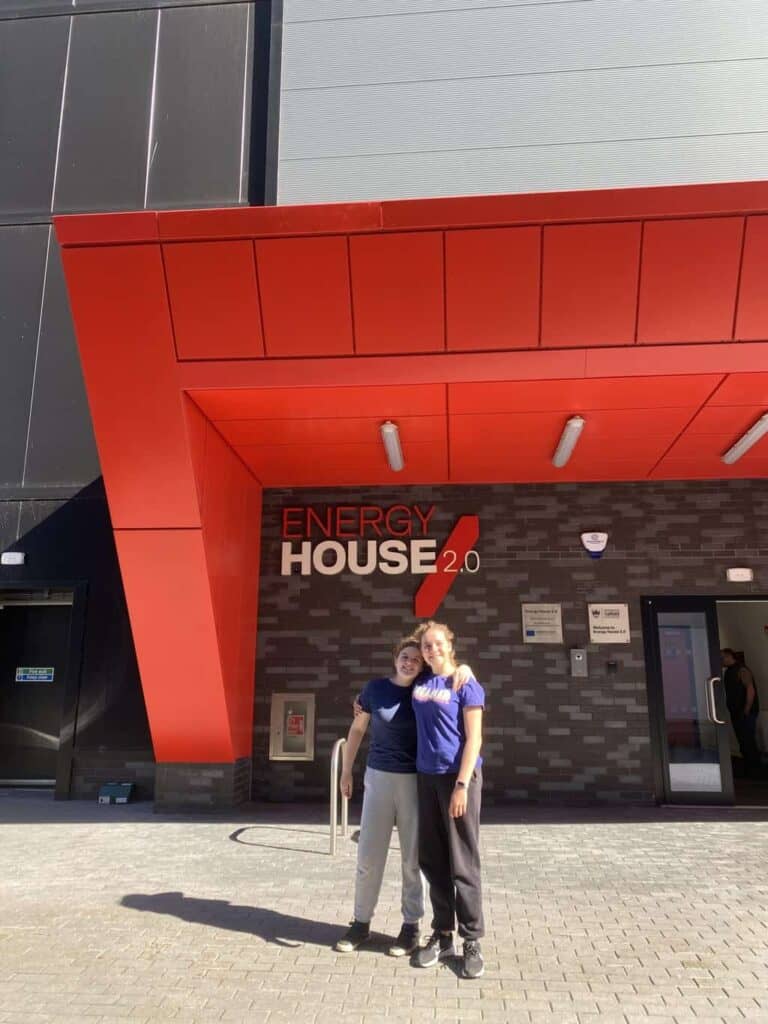
We caught part of a programme on the BBC about heat pumps (admittedly not the most enthralling of topics) and the presenters were looking at a state-of-the-art facility at the University of Salford. Dom casually uttered the words, “I wonder if they do tours?” and within the hour we’d booked onto an annual public open day which happened to be the next month!
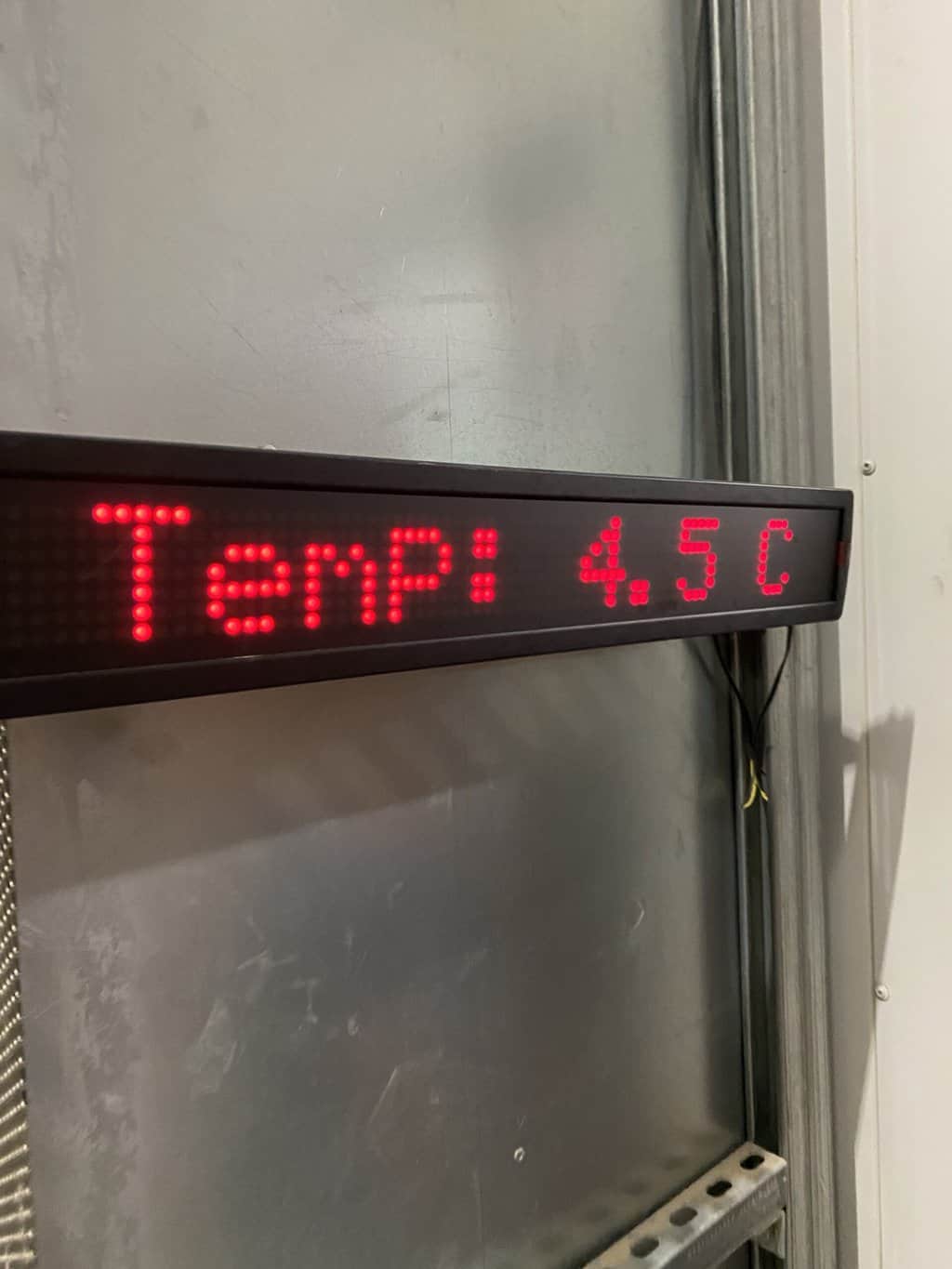
Energy House 2.0 was opened in February 2022 and is the largest research facility of its type in the world. Within the Energy House there are two environmental chambers each able to accommodate two detached houses. Under controlled conditions, they can recreate a wide variety of weather conditions with temperatures ranging between -20C to + 40C and simulated wind, rain, snow and solar radiation. It was an uncomfortable 4.5C when we were there which was quite a contrast to the 28C outside!
Buildings account for 40% of the UK’s carbon footprint. To achieve net zero, the building industry needs to design new buildings but, more importantly, find comprehensive upgrades and retrofit solutions for existing housing stock.
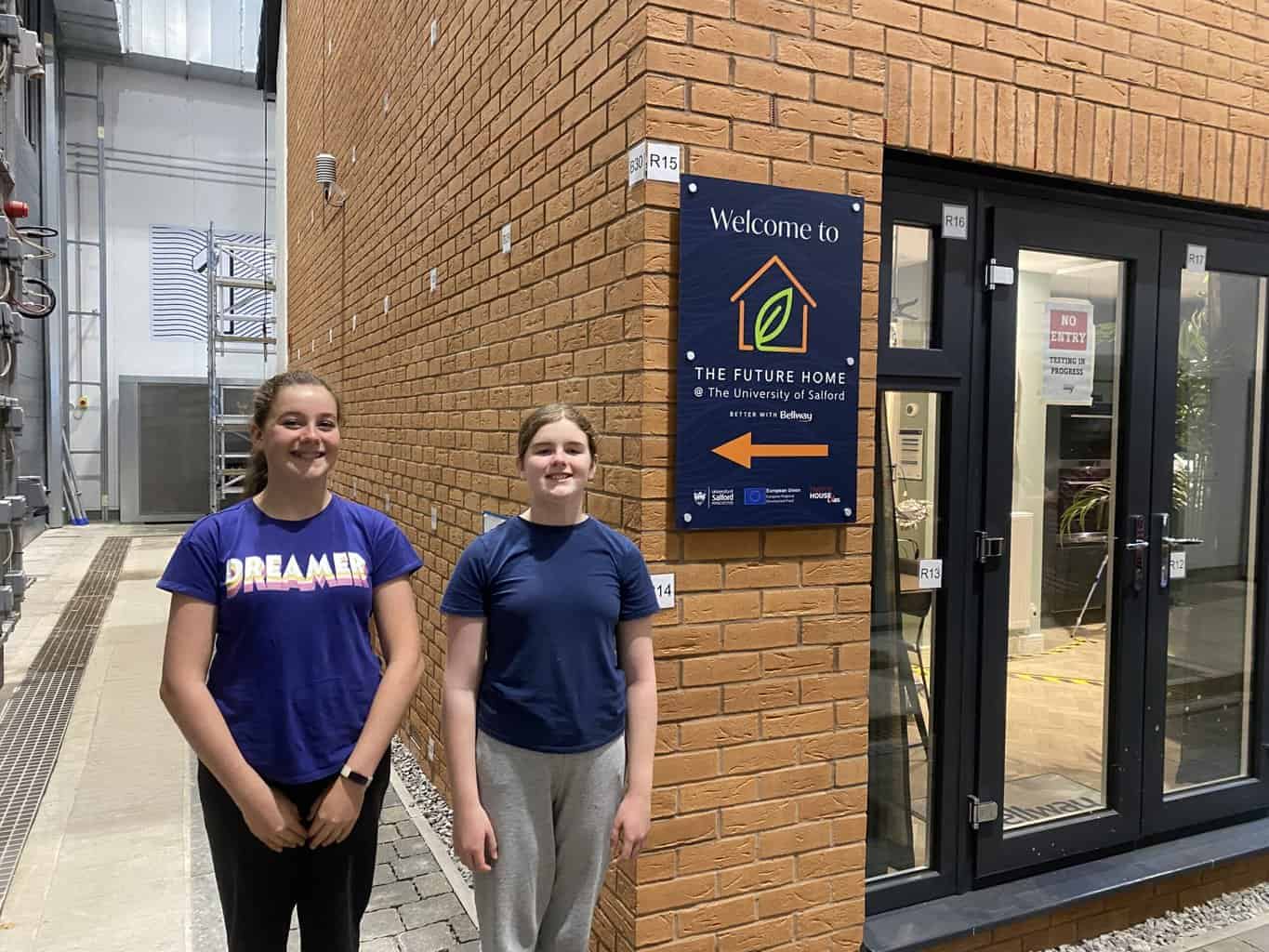
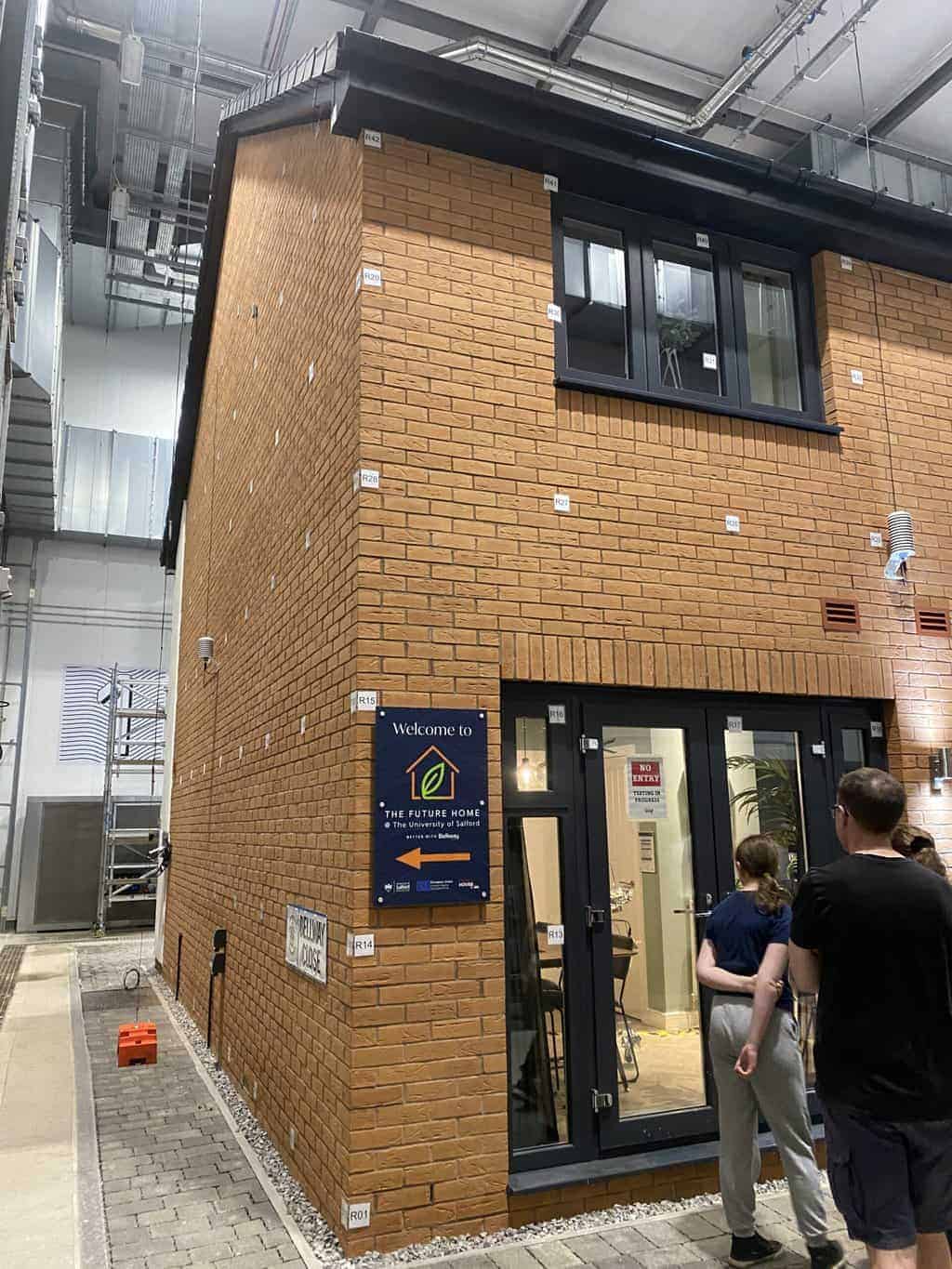

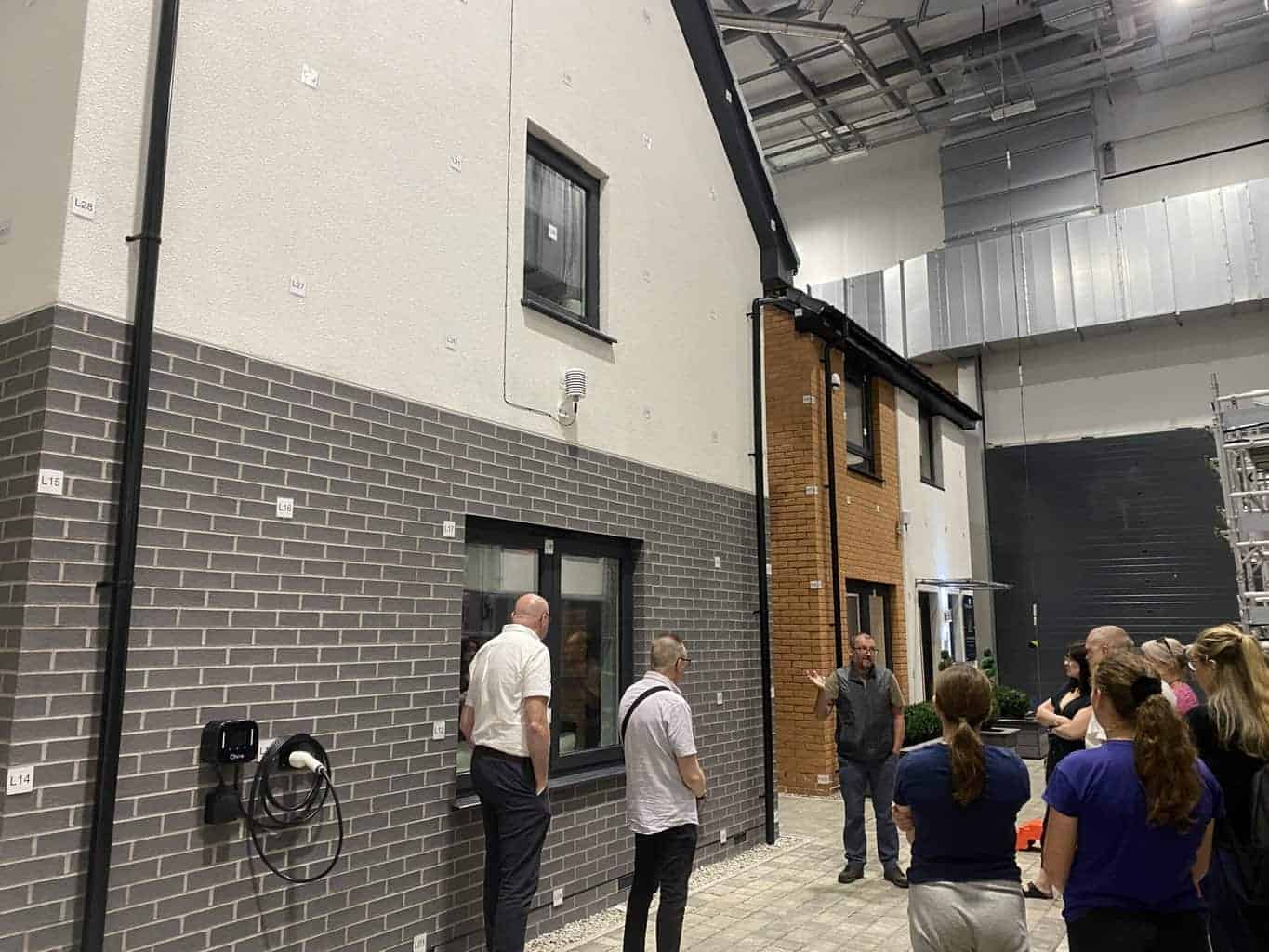
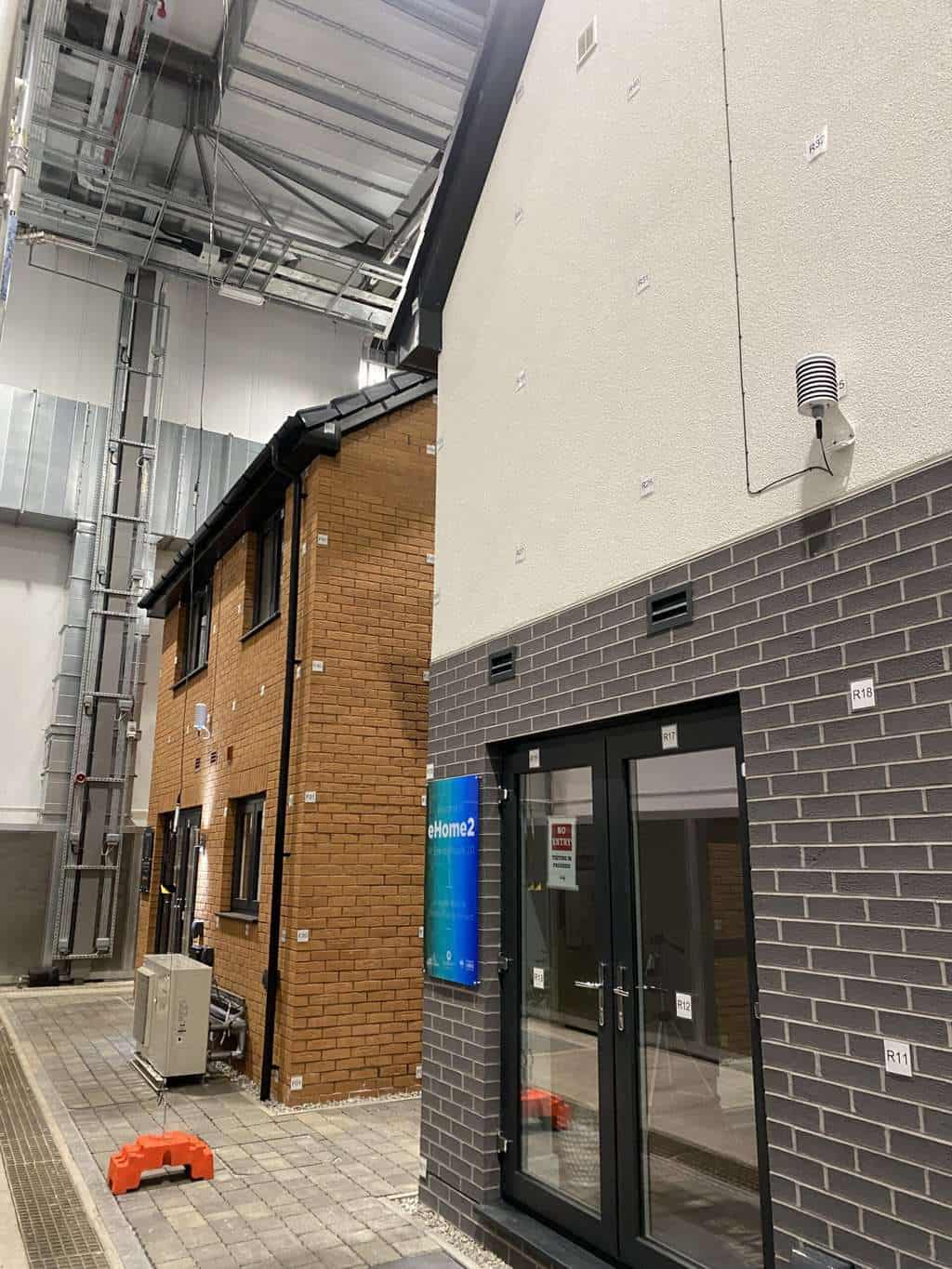
We were given a thirty minute tour of the facility where research projects are currently being run in partnership with Barratt Homes, Bellway Homes and Saint-Gobain. They’re all working together to come up with workable low carbon solutions to achieve net zero. In one chamber they’ve built two three-bedroom houses with the new technology they think is the solution. The houses are covered in sensors so they can test how efficient this equipment is.
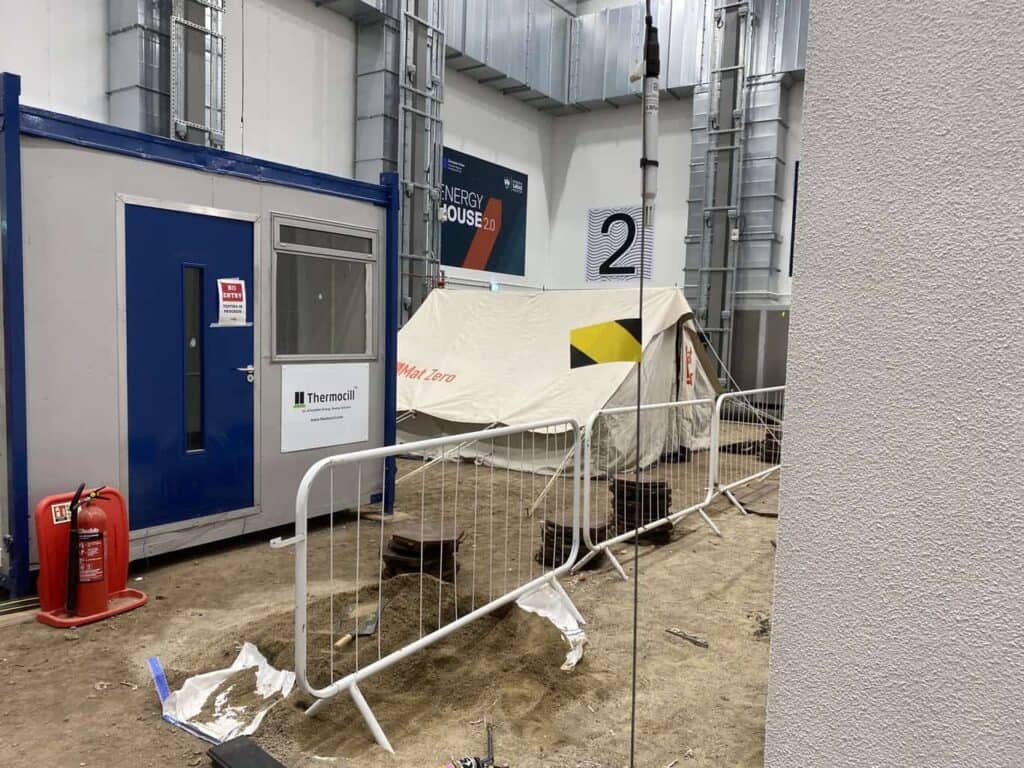
In the second chamber they had two separate projects being tested. One was a very low cost carbon neutral prefabricated house (a solution to net zero cheap housing) and the second was a project being run by Mat Zero. This one is super inspiring. It started out as a 3rd year research project at University and has now turned into a potential solution for refugees and disaster relief operations all around the world. An energy hub, which can be powered by solar, wind or mains, heats up a mat which can go inside tents to make them more liveable in at night. The energy hub also provides USB charging points for phones, a rechargeable and detachable lamp and can support other household items like a radio or fan. All of this can be provided off-grid and can make lives a lot more comfortable for families living in refugee camps. The system was being tested in different temperatures in the second chamber whilst we were there.
This tour was absolutely fascinating. We all got to see how engineers and scientists are working on a real life problem and trying to come up with workable solutions. This is science in action rather than just theoretical science. The girls were definitely introduced to more possible career options!